BIBLE HOMESYeshua Literal Version 한국어
Menu

Bible Study · The Torah and "Legalism"

Those Who Love the Torah Are Not "Legalists"Reading 35 commonly misused passages from the original text

Passages 35Structure 4 parts · 23 imagesText YLV · OSHB · RP 2018
תּוֹרָהTorah
But his delight is in the Torah of YHWH, and in his Torah he meditates day and night
But his delight is in the Torah of YHWH, and in his Torah he meditates day and nightPsalm 1:2

Short answer

  1. What Yeshua rebuked was not keeping the Torah. It was abandoning the commandment of God and holding to human tradition (Mark 7:8–9), and being full of anomia (Torah-lessness) within (Matt 23:28).
  2. Scripture calls those who love and do the Torah "blessed" (Ps 1:1–2), "great" (Matt 5:19) and "righteous before God" (Luke 1:6).
  3. Salvation is by grace (Acts 15:11). But Acts 15, Col 2:16–17, Gal 4:10, Romans 14 and Hebrews 8–10 do not say "you do not need to keep the Torah or the appointed times." God calls these days "My moedim" (Lev 23:2).
In this study35 passages

Each passage is read in the order Common reading → Text · original → Right reading. Where scholars disagree, every major view is given with its difficulties.

Introduction What this study sets right

Three teachings are commonly heard in churches. First, the Pharisees and scribes were "literalists" who held to the letter of Scripture, and that is why Yeshua rebuked them. (Many churches rightly teach that the Pharisees held to the tradition of the elders, Mark 7; yet the "literalist" label is also widely used.) Second, the appointed times of Leviticus 23 were all fulfilled in Messiah, and only their meaning remains. Third, passages such as Acts 15, Colossians 2, and Galatians 4 show that believers do not need to keep the Torah or the appointed times.

This study takes every passage these three teachings commonly rely on, without leaving one out, and looks, one by one, at what the text and the original languages actually say.

One thing must be clear from the start. Salvation is not received by keeping the Torah; it is received by grace (Acts 15:11). What this study corrects is the opposite error: calling those who love and keep the Torah "legalists" or "literalists," and treating the appointed times that God calls "My moedim" as if they had passed away.

Mark 7:8

"Neglecting the commandment of God, you hold to the tradition of men — the washing of pitchers and cups and many other such things you do."

Mark 7:9

He was also saying to them: "You are experts at setting aside the commandment of God in order to keep your tradition.

Part 1Why Were the So-Called "Literalists" Rebuked?

The Pharisees, scribes, lawyers, Sadducees, Nicodemus, the Samaritan woman, and the disciples are often given as examples of "literalism." Calling the misunderstandings of Nicodemus, the Samaritan woman, and the disciples a "literal reading" is a way of describing the double meanings in John and the other Gospels, and that in itself is not a problem. The problem comes when these examples are grouped with the Pharisees and used as grounds to call anyone who keeps the commandments a "literalist." In the text, none of these people were rebuked for keeping Scripture to the letter. We will look at each one.

1Matthew 12:1–8The Disciples in the Grain Field
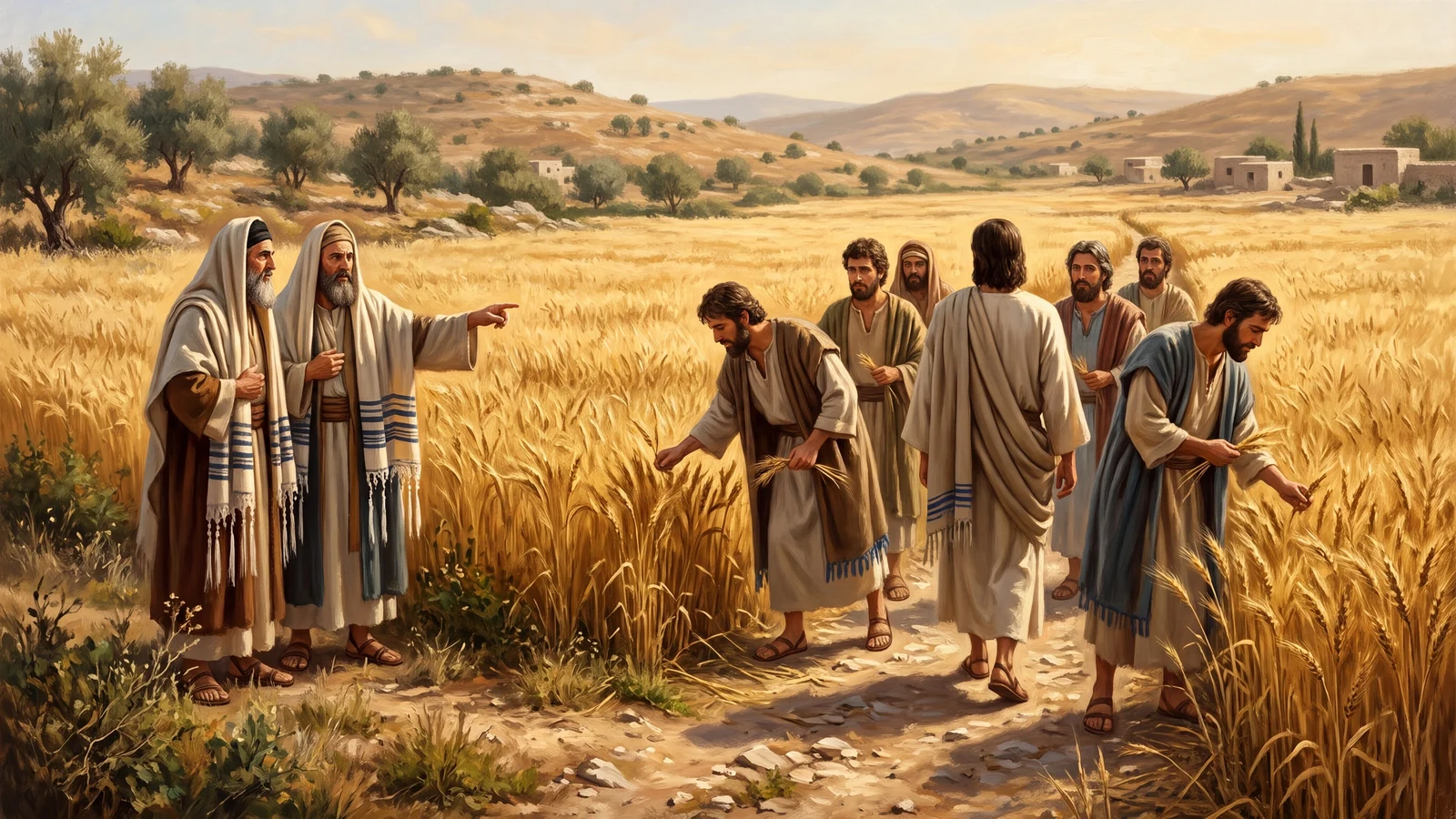
His disciples became hungry and began to pick heads of grain and eat
His disciples became hungry and began to pick heads of grain and eatMatthew 12:1
Common reading

The Pharisees condemned the disciples by applying the Sabbath rules to the letter. Yeshua put people above rules.

Text · YLV
Matthew 12:2

But the Pharisees seeing this said to Him: "Behold, Your disciples are doing what is not permitted to do on the sabbaton(referring to every Moed of Leviticus 23)."

Matthew 12:7

And if you had known what this means — 'I desire mercy and not sacrifice' — you would not have condemned the innocent.

What the original shows
  • The Torah allows plucking a neighbor's grain by hand and distinguishes it from putting a sickle to it: "then you may pluck ears with your hand; but a sickle you shall not wave over the standing-grain of your neighbor" (Deut 23:26; 23:25 in most English Bibles). What the Pharisees objected to was doing this on the sabbaton (12:2).
  • Yeshua answers from Scripture: David eating the bread of the Presence when he was hungry (12:3–4); "have you not read in the nomos(law)" about the priests working in the temple on the sabbatons (12:5); "something greater than the temple is here" (12:6); Hosea 6:6 ("For mercy I desired, and not sacrifice," 12:7); "the Son of Man is Lord of the sabbaton" (12:8).
  • The conclusion is a verdict. Yeshua calls the disciples ἀναιτίους, "the innocent" (12:7). Interpreters differ on whether the disciples' act went against only the tradition of the elders, or stood in some tension with the Torah yet was innocent like the examples of David and the priests. Either way, Yeshua's verdict is "innocent," and the Pharisees' fault was that, not knowing the mercy of Hos 6:6, they condemned the innocent. Many scholars also stress that 12:6 and 12:8 ground the verdict in Yeshua's own authority as one greater than the temple.
Right reading

The Pharisees condemned the innocent not because they read the Torah to the letter, but because they did not know the will of God who desires mercy (Hos 6:6). Yeshua corrected them from the Torah and the Prophets.
2Matthew 15:1–9Transgressing (15:3) and Nullifying (15:6) the Commandment for the Sake of Tradition

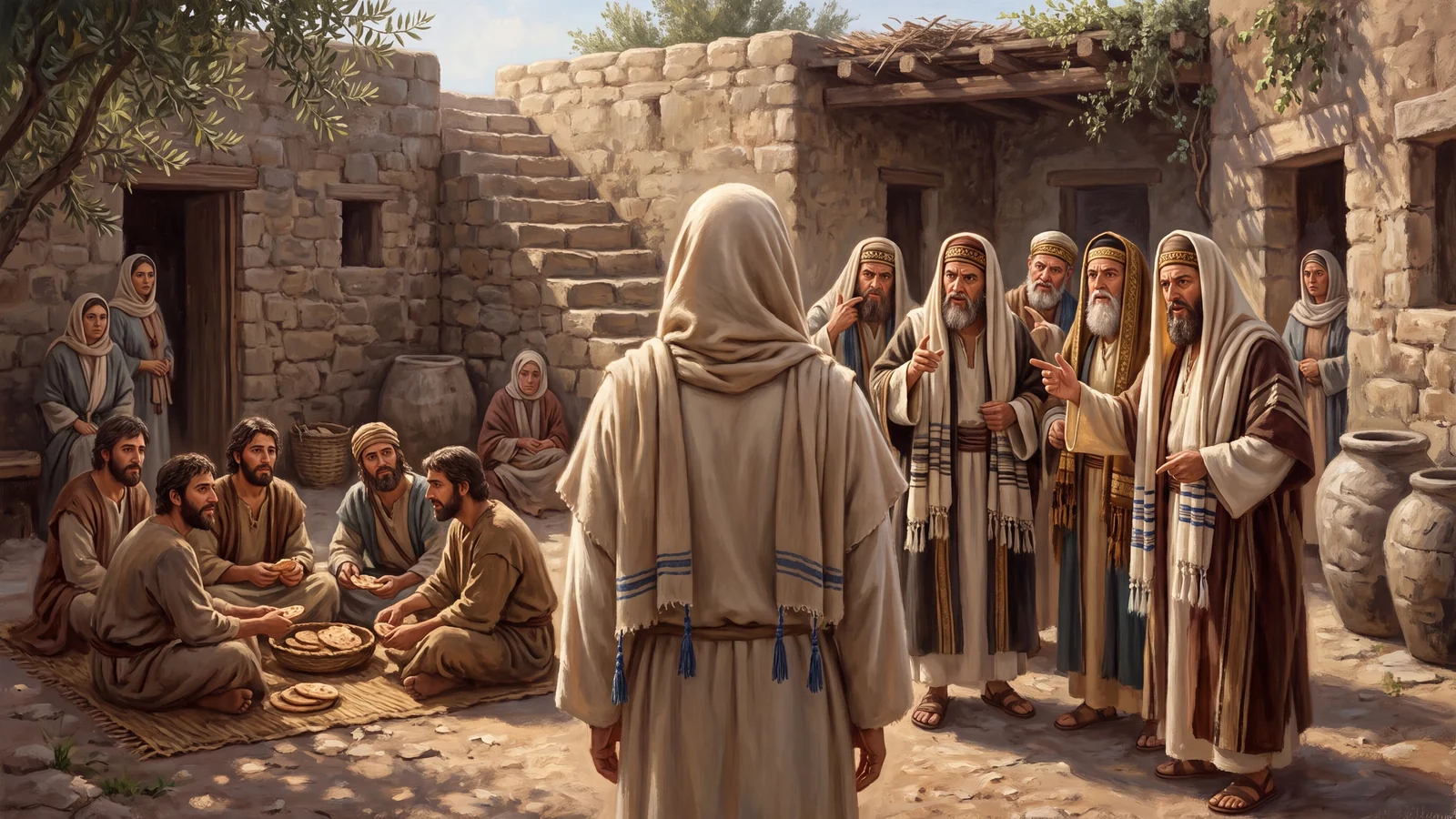
For they do not wash their hands when they eat bread
For they do not wash their hands when they eat breadMatthew 15:2
Common reading

This passage is often rightly read as a rebuke of the elders' tradition that nullified the commandment to honor parents. But as this scene is used as the example of "Pharisees bound by form," the label "human tradition" is sometimes attached even to those who keep the ordinances of the Torah (the appointed times, the food laws).

Text · YLV
Matthew 15:3

And He answered and said to them: "Why do you also parabaíno(going-ahead-and-departing, transgressing) the commandment of God for the sake of your tradition?

Matthew 15:6

he is not to honor his father or his mother.' And so you have nullified the commandment of God for the sake of your tradition.

What the original shows
  • In 15:2 what the Pharisees raised was "the paradosis (tradition) of the elders." Hand-washing was not a commandment of the Torah but a tradition of the elders.
  • Yeshua answers with the same verb, parabaino. What the disciples transgressed was a human tradition; what the Pharisees transgressed was τὴν ἐντολὴν τοῦ θεοῦ, "the commandment of God."
  • The commandment Yeshua cites in 15:4 is the Torah itself: "Honor your father and mother" (Exod 20:12).
  • In 15:6 the RP 2018 text reads ἠκυρώσατε τὴν ἐντολὴν τοῦ θεοῦ, "you have nullified the commandment of God." The critical text widely used today reads "word" (λόγον) here. In Mark 7:13 both texts read logos.
  • The device was the doron (offering) of 15:5. By calling what should have supported one's parents "an offering to God," they made it unnecessary to keep Exod 20:12.
  • The quotation from Isaiah in 15:8–9: they honor Him with their lips while their heart is far away, "teaching as doctrines the commandments of men."
  • The dispute that follows (15:10–20) ends with "to eat with unwashed hands does not defile the man" (15:20). Some read 15:11 as setting aside the food laws; others limit it to the hand-washing question with which the chapter begins and ends (15:2, 20).
Right reading

Yeshua stood on the side of keeping the Torah's commandment and rebuked the human tradition that made people transgress and nullify it. Using this passage to lower the Torah turns His words upside down.

3Matthew 23:1–36The Eight "Woes"

Common reading

The Pharisees and scribes were obsessed with the form and details of the law, and chapter 23 is a rebuke of that legalism.

Text · YLV
Matthew 23:3

therefore all that they tell you to observe, observe and do, but do not do according to their deeds — for they say things and do not do them.

Matthew 23:4

They tie up heavy burdens, hard to bear, and lay them on men's shoulders, but they themselves are unwilling to move them with so much as a finger.

Matthew 23:16

Woe to you, blind guides who say: 'Whoever swears by the temple, that is nothing; but whoever swears by the gold of the temple is obligated.'

What the original shows
  • 23:2–3: Yeshua says that whatever those seated in "the chair of Moses" tell them, "observe and do." Interpreters differ on whether this "all" is limited to when they read the Torah of Moses, is an ironic concession, or accepts the authority of their teaching while rejecting their practice. Either way, the reason for the rebuke is λέγουσιν γὰρ καὶ οὐ ποιοῦσιν, "they say things and do not do them."
  • In RP 2018 "woe" (οὐαί) appears eight times (23:13, 14, 15, 16, 23, 25, 27, 29). The critical text lacks 23:14 and so has seven.
  • 23:4: the "heavy burdens" are ones they themselves "tie up," and they will not move them with a finger. The text does not say whether these were traditions beyond Scripture or harsh applications of the Torah.
  • 23:16–22: an oath by the temple is nothing, but an oath by the gold of the temple binds. This was not reading the Torah to the letter; it was making a way around oaths.
  • 23:29–35: they adorn the tombs of the prophets, yet Yeshua says they will kill the prophets He sends (23:34).
Right reading

What chapter 23 rebukes is not keeping the commandments, but teaching without doing, tying up burdens for others, evading oaths, and killing the prophets. This is not what loving the Torah looks like.

4Matthew 23:23The Weightier Things of the Nomos

Common reading

It is commonly taught as a rebuke of a hypocrisy that lost its priorities, as in "do these without neglecting those." But it is sometimes reduced to "the small commandments do not matter; only love and justice matter."

Text · YLV
Matthew 23:23

Woe to you, scribes and Pharisees, hypocrites! For you tithe mint and dill and cummin and have neglected the weightier provisions of the nomos(law) — krisis(judgment) and mercy and faithfulness; but these are the things you should have done without neglecting the others.

What the original shows
  • τὰ βαρύτερα τοῦ νόμου — the weightier things "of the nomos." Justice (mishpat), mercy and faithfulness are not a new teaching outside the Torah but weighty commandments within it. Micah 6:8 says the same ("to do judgment (mishpat), and to love mercy").
  • At the end of the verse: ταῦτα ἔδει ποιῆσαι κἀκεῖνα μὴ ἀφιέναι — "these are the things you should have done without neglecting the others." "The others" are the tithes just mentioned. The same words appear in Luke 11:42.
Right reading

The Pharisees' fault was not tithing even the small things, but "neglecting" (ἀφήκατε) the weightier commandments of the Torah. It means "do the weightier things without neglecting the small," not "the small may be neglected."

5Matthew 23:28Full of Anomia Within

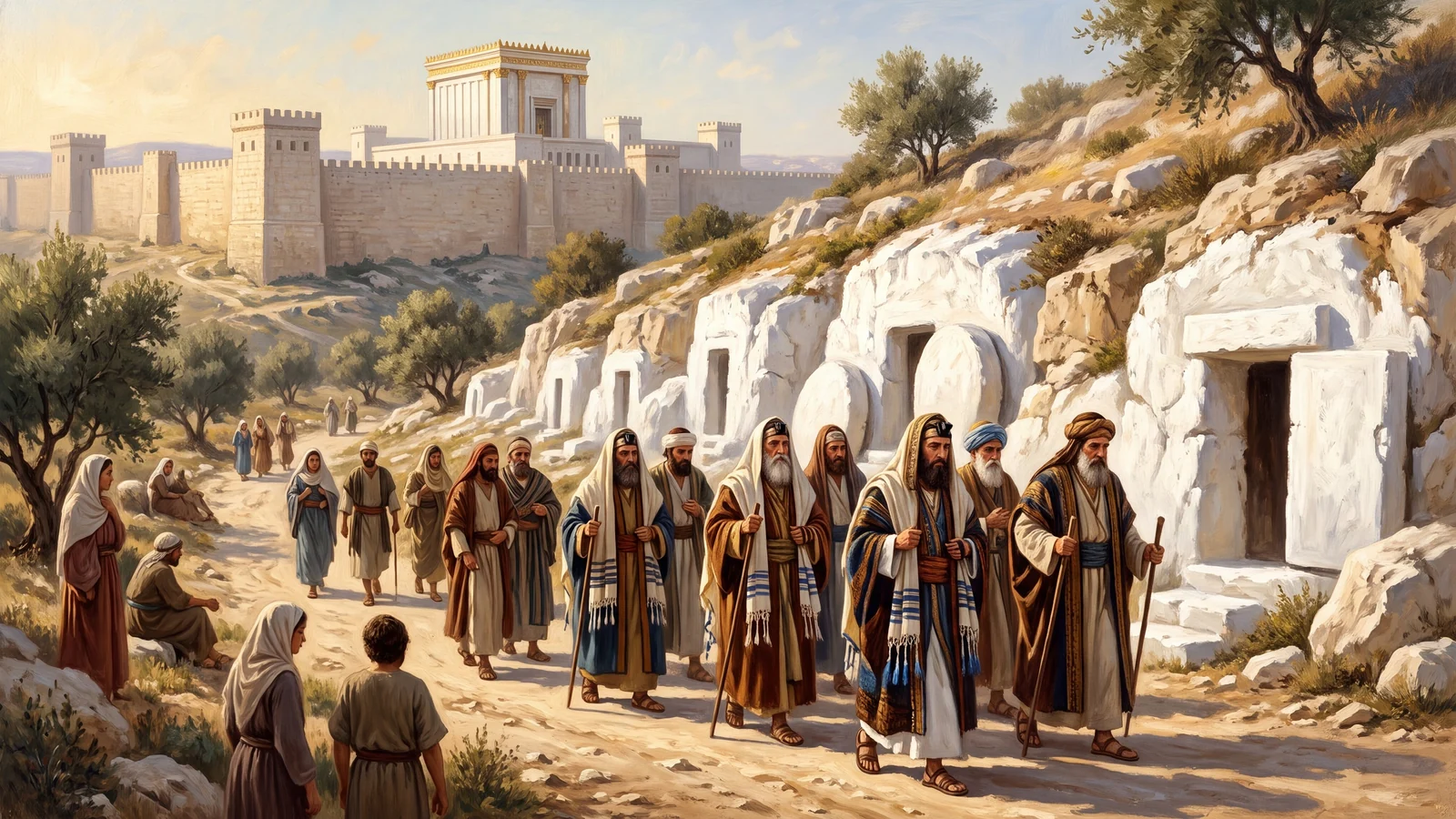
You are like whitewashed tombs which on the outside appear beautiful
You are like whitewashed tombs which on the outside appear beautifulMatthew 23:27
Common reading

The Pharisees kept the Torah strictly, but without heart they became hypocrites. So people who earnestly try to keep the Torah are called "Pharisaic."

Text · YLV
Matthew 23:28

So you too outwardly appear righteous to people, but inwardly you are full of hypocrisy and anomia(Torah-lessness).

What the original shows
  • μεστοί ἐστε ὑποκρίσεως καὶ ἀνομίας — what fills them within is anomia. Anomia is formed from ἄνομος, a- (without) + nomos (law): "without nomos." 1 John 3:4 defines it: "sin is anomia."
  • 23:25–27 says the same: clean outside, but inside full of robbery and adikia (unrighteousness); like whitewashed tombs, full of uncleanness within. (Adikia in 23:25 is the RP 2018 reading; the critical text reads ἀκρασίας, self-indulgence.)
Right reading

The Pharisees' problem was not too much Torah but, within, no Torah. Rebuking those who love the Torah with this verse reverses Yeshua's diagnosis.

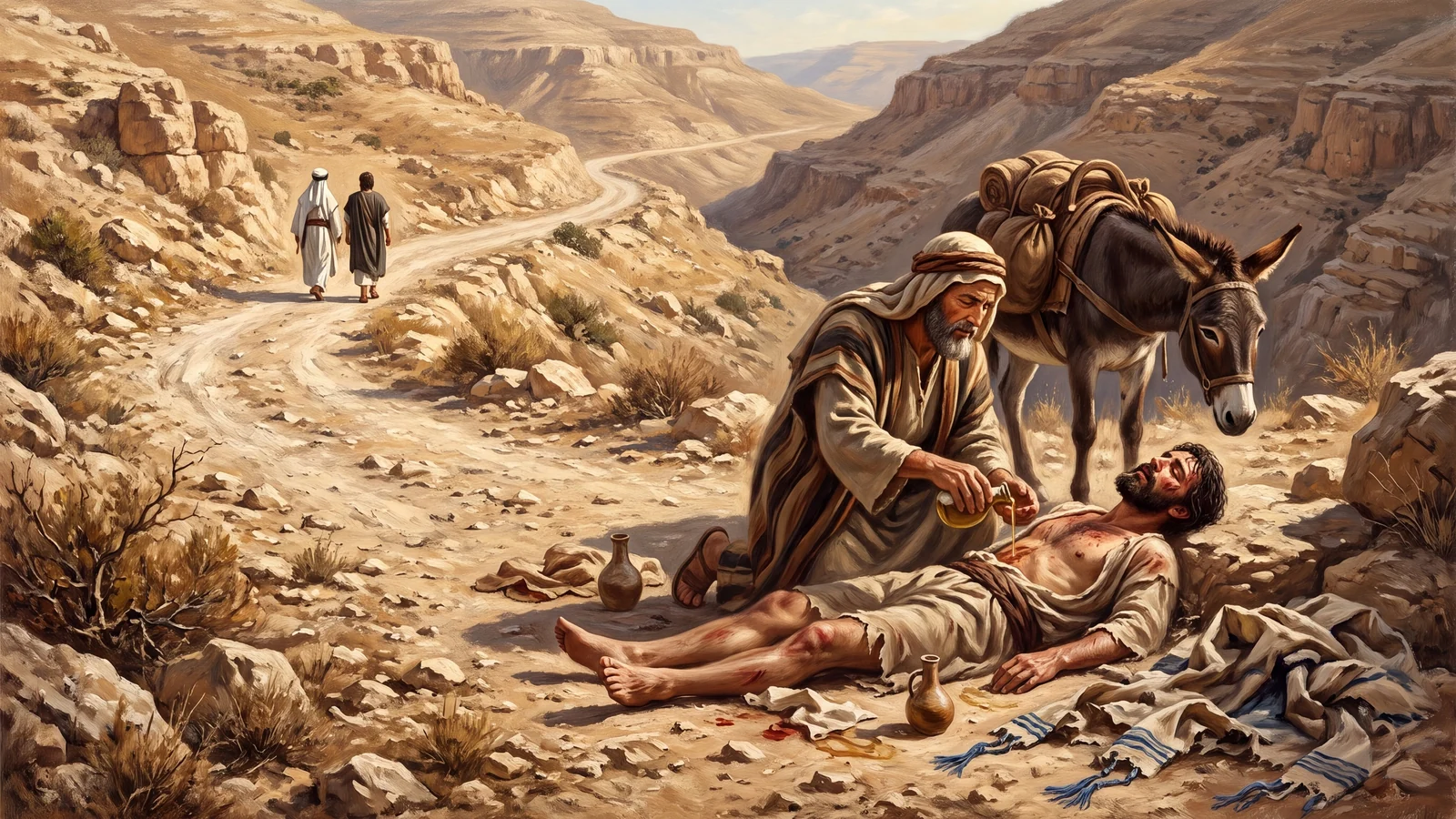
6Luke 10:25–37The Lawyer and the Samaritan

Went to him and bound up his wounds, pouring on oil and wine
Went to him and bound up his wounds, pouring on oil and wineLuke 10:34
Common reading

Many sermons rightly point to the self-justification of 10:29. But the lawyer is also described as someone "obsessed with the details of the law who missed the heart of love."

Text · YLV
Luke 10:26

He said to him, "What is written in the nomos(law)? How do you read it?"

Luke 10:27

He answered, "You shall love the Lord your God with all your kardia(heart, soul-domain) and with all your psyche(soul) and with all your ischus(strength) and with all your dianoia(thought), and your neighbor as yourself."

Luke 10:28

He said to him, "You have answered correctly; do this and you will live."

Luke 10:29

But wishing to justify himself, he said to Yeshua(Jesus), "And who is my neighbor?"

What the original shows
  • Yeshua sends him to the Torah for the answer ("What is written in the nomos?"). The lawyer answers with Deut 6:5 and Lev 19:18.
  • Yeshua says Ὀρθῶς ἀπεκρίθης, "You have answered correctly," and τοῦτο ποίει καὶ ζήσῃ, "do this and you will live" (imperative + future). He affirms the very words of the Torah. Some read this as the real way of life, others as words meant to show that no one can do it fully; but Yeshua's next words are also "Go and do the same" (10:37).
  • The problem is 10:29: θέλων δικαιοῦν ἑαυτόν, "wishing to justify himself," he tried to narrow the circle of his neighbor.
  • The Torah already commands love even for the sojourner: "the sojourner who sojourns with you … you shall love him as yourself" (Lev 19:34). Yeshua's conclusion is "Go and do the same" (10:37).
Right reading

The lawyer was not obsessed with details; knowing the Torah correctly, he narrowed the scope of "neighbor" in order to justify himself. Yeshua told him to "do" the Torah — broadly and as it stands.

7Luke 11:37–46At a Pharisee's Table

Common reading

The Pharisees and lawyers focused on the details of the law and missed its essence, love and mercy.

Text · YLV
Luke 11:38

The Pharisee was surprised when he saw that He did not first wash before the meal.

Luke 11:42

But woe to you Pharisees! For you tithe mint and rue and every garden herb, and neglect krisis(judgment) and the love of God; these you ought to have done without neglecting the others.

Luke 11:46

And He said, "Woe to you lawyers also! For you load people with burdens hard to bear, and you yourselves will not touch the burdens with one of your fingers.

What the original shows
  • The washing in 11:38 (ἐβαπτίσθη, washing by immersion) was a purity tradition before meals, not a commandment of the Torah (Matt 15:2, "the tradition of the elders").
  • 11:39–41: clean on the outside, but inside full of greed and wickedness.
  • 11:42: as in Matt 23:23, "these you ought to have done without neglecting the others." The tithe too is not to be neglected.
  • 11:46: the "burdens hard to bear" are ones they load on others, and they do not touch them with one finger.
Right reading

Here too the rebuke is for presenting tradition as commandment, passing over the justice and love of God, and loading burdens on others while not bearing them.

8Matthew 22:23–33The Sadducees

Common reading

The Sadducees accepted only the written Torah and, finding no explicit resurrection there, denied it; they are often described as reading Scripture too literally.

Text · YLV
Matthew 22:29

But Yeshua(Jesus) answered and said to them: "You are mistaken, not understanding the graphai(written-scriptures) nor the dynamis(power) of God.

Matthew 22:32

'I am the God of Abraham and the God of Isaac and the God of Jacob'? God is not the God of the dead but of the living."

What the original shows
  • Yeshua's diagnosis is μὴ εἰδότες τὰς γραφάς, "not understanding the graphai (Scriptures)." They erred not because they read Scripture too literally, but because they did not know it.
  • The ground on which Yeshua proved the resurrection is the written words of Exod 3:6: "I am … the God of Abraham … the God of Isaac … the God of Jacob." In these words spoken long after the patriarchs had died, God is still their God. The Hebrew is a verbless sentence; Matt 22:32 in Greek, like the Septuagint, has Ἐγώ εἰμι ("I am"). In 22:31 Yeshua calls this "what was spoken to you by God."
  • Some explain that the Sadducees accepted only the five books of Moses as authoritative, so Yeshua deliberately proved it from the Torah (Exod 3:6).
Right reading

The Sadducees were rebuked not for reading Scripture literally but for not knowing it. Yeshua, rather, proved the resurrection from the written words themselves.

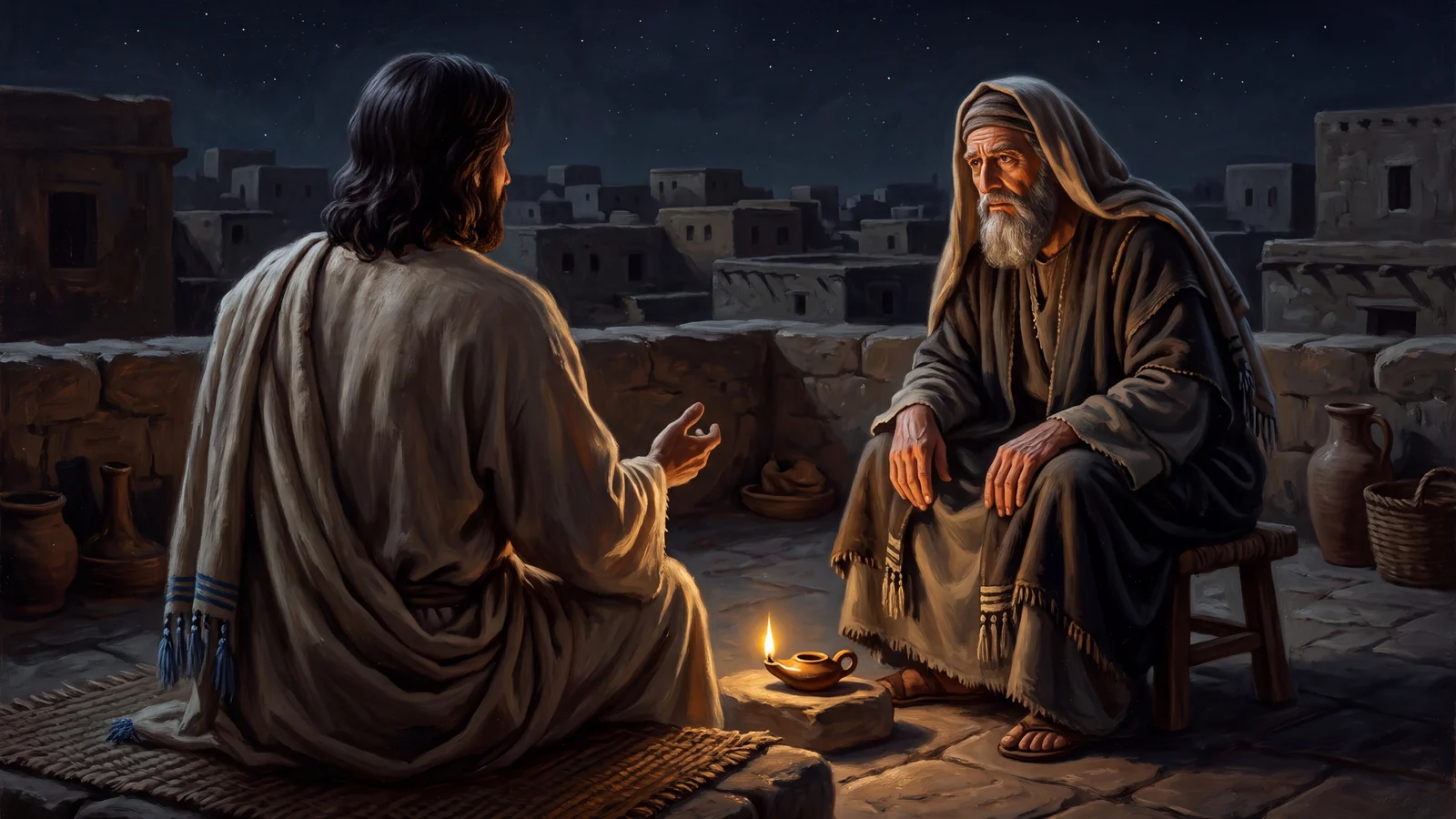
9John 3:1–10Nicodemus

This man came to Yeshua(Jesus) by nyx(night)
This man came to Yeshua(Jesus) by nyx(night)John 3:2
Common reading

Nicodemus took the spiritual word about being born again literally, as physical birth.

Text · YLV
John 3:4

Nicodemus said to Him, "How can a man be born when he is old? He cannot enter a second time into his mother's womb and be born, can he?"

John 3:5

Yeshua(Jesus) answered, "Truly, truly I say to you, unless one is born of water and pneuma(spirit), he cannot enter into the kingdom of God.

John 3:10

Yeshua(Jesus) answered and said to him, "Are you the teacher of Israel and do not understand these things?

What the original shows
  • ἄνωθεν in 3:3 carries both "from above" and "again." Nicodemus heard "again" (3:4).
  • Yeshua's rebuke is in 3:10: "Are you the teacher of Israel and do not understand these things?" — he did not know what a teacher of Israel should have known, what was already in Scripture.
  • "Water and spirit" resembles the promise of Ezekiel 36: "I will sprinkle clean water upon you" (36:25), "my spirit (ruach) I will put within you, and I will cause you to walk in my statutes (chuqqim), and you shall keep my judgments (mishpat) and do them" (36:27). Linking John 3:5 to this text is an interpretation, but a highly persuasive one that fits the rebuke of 3:10. Other readings of "water and spirit" include the contrast of physical and spiritual birth (3:6), John's water immersion and the Spirit, and "water, that is, Spirit."
Right reading

Nicodemus mishearing one word has nothing to do with the "literalism" charged against those who love the Torah. Yeshua said he did not know what Scripture had already said — and if the link to Ezekiel holds, the new spirit there is the spirit that "causes" one to walk in His statutes and judgments.

10John 4:7–15 · 4:22The Samaritan Woman

Common reading

The Samaritan woman took the spiritual word about living water literally, as well water.

Text · YLV
John 4:10

Yeshua(Jesus) answered and said to her, "If you knew the dorea(free-gift) of God, and who it is who says to you, 'Give Me a drink,' you would have asked Him, and He would have given you living water."

John 4:15

The woman said to Him, "Sir, give me this water, so I will not be thirsty nor come all the way here to draw."

John 4:22

You worship what you do not know; we worship what we know, for Salvation is from the Jews.

What the original shows
  • ὕδωρ ζῶν, "living water," can also mean flowing, springing water, so the woman understood it as water springing up in the well (4:11, "the well is deep; where then do You get that living water?").
  • There is not a word in this scene rebuking anyone for keeping commandments. Yeshua says instead, "You worship what you do not know … salvation is from the Jews" (4:22), and goes on to speak of worship "in spirit and truth" (4:21–24).
Right reading

A first misunderstanding of a figure of speech cannot be bundled with the "literalism" charged against those who love the Torah. This is not a passage that rebukes obedience to the Torah.

11Matthew 16:5–12The Disciples and the Leaven

Common reading

The disciples took the saying about leaven literally, as talk about bread.

Text · YLV
Matthew 16:6

And Yeshua(Jesus) said to them: "Watch out and beware of the zyme(leaven, corruption) of the Pharisees and Sadducees."

Matthew 16:12

Then they understood that He did not say to beware of the leaven of bread, but of the teaching of the Pharisees and Sadducees.

What the original shows
  • The disciples first heard it as talk about bread (16:7), but soon understood (16:12).
  • The leaven meant τῆς διδαχῆς τῶν Φαρισαίων καὶ Σαδδουκαίων, "the teaching of the Pharisees and Sadducees." This passage does not spell out the content of that teaching. Some read it as the unbelief behind the demand for a sign just before (16:1–4), others link it to Luke 12:1 ("the leaven of the Pharisees, which is hypocrisy"); within Matthew it also connects with the teaching that nullified the commandment by tradition (15:6) and did not know the Scriptures (22:29).
Right reading

The disciples' brief misunderstanding has nothing to do with literalism. What this passage warns against is not the Torah but the teaching of the Pharisees and Sadducees, which in Matthew set the commandment aside by tradition (15:6) or did not know the Scriptures (22:29).

12John 7:19None of You Carries Out the Nomos

Common reading

This verse is sometimes read as "no one can keep the Torah." So the Torah is not something to strive to keep.

Text · YLV
John 7:19

Did not Moses give you the nomos(law), and yet none of you carries out the nomos(law)? Why do you seek to kill Me?"

What the original shows
  • The subject is "none of you" (οὐδεὶς ἐξ ὑμῶν). "You" is the audience present, including those seeking to kill Yeshua (7:20, 25), and the charge is that none among them carries out the nomos. It is not a general principle that no human can keep it.
  • The second half of the same verse is the evidence: "Why do you seek to kill Me?" — they claimed to keep the Torah while seeking to break "You shall not murder."
  • In 7:22–23 Yeshua argues from their own practice of circumcising on the sabbaton "so that the nomos of Moses will not be broken" (ἵνα μὴ λυθῇ ὁ νόμος Μωσέως), and in 7:24 says, "krino(judge) with righteous krisis(judgment)."
Right reading

This verse does not say the Torah cannot be kept; it is an indictment of people who claimed to have the Torah while plotting murder.

13Romans 2:21–23Boasting in the Nomos While Transgressing It

Common reading

It is often rightly read as a rebuke of hypocrisy between words and deeds. But the picture of "a Jew boasting in the Torah" is sometimes laid over everyone today who tries to keep the Torah.

Text · YLV
Romans 2:21

you then who teach another, do you not teach yourself? The one who proclaims not to steal, do you steal?

Romans 2:22

The one who says not to commit adultery, do you commit adultery? The one who abhors idols, do you rob temples?

Romans 2:23

You who boast in nomos(law), through your transgression of the nomos(law) do you dishonor God?

What the original shows
  • What Paul rebukes is διὰ τῆς παραβάσεως τοῦ νόμου — "through your transgression of the nomos." Stealing, adultery and robbing temples are all transgressions of the Torah.
  • Just before, 2:13 says: "it is not the hearers of the nomos who are righteous before God, but the doers of the nomos who will be justified." (Interpreters differ on whether this describes people who actually keep the nomos, or states a principle that leads into the gospel. Paul's larger aim in 1:18–3:20 is to show that Jews and Gentiles alike are under sin, 3:9, 19–20.)
Right reading

The fault here is not keeping the Torah but teaching it while transgressing it. This is not a verse for rebuking those who seek to do the Torah.

14James 2:10–11Stumbling at One Point Makes One Accountable for All

Common reading

Since breaking one means breaking all, no one can keep the whole Torah, so salvation is by grace. The conclusion that salvation is by grace is right, but some go further and call any effort to keep the Torah legalism.

Text · YLV
James 2:8

If you truly fulfill the royal nomos(law) according to the graphe(written-scripture), "You shall love your neighbor as yourself," you are doing well.

James 2:9

But if you show partiality, you are committing sin and are convicted by the nomos(law) as transgressors.

James 2:10

For whoever keeps the whole nomos(law) but stumbles at one point has become accountable for all of it.

James 2:11

For He who said, "Do not commit adultery," also said, "Do not murder"; if you do not commit adultery but you murder, you have become a transgressor of the nomos(law).

James 2:12

So speak and so act as those who are to be krino(judge)d under the nomos(law) of freedom.

What the original shows
  • 2:8 quotes Lev 19:18 and says that fulfilling it is καλῶς ποιεῖτε, "you are doing well."
  • The problem in 2:9 is showing partiality (προσωποληπτεῖτε, "you show partiality"), a sin "convicted by the nomos."
  • 2:11 gives the reason: the same One spoke both commandments. The Torah is the word of one God, so it cannot be kept selectively.
  • The conclusion in 2:12 is "So speak and so act."
  • Views: Many commentators (e.g., D. Moo, S. McKnight) read the "royal law" (2:8) and "the law of liberty" (2:12) as the Torah as taught by Messiah, centered on the love command. Even on that reading, the commandments James quotes in 2:11 ("Do not commit adultery," "Do not murder") are words of the Torah itself.
Right reading

James is not telling us to give up the Torah. He is saying not to keep the commandments selectively — like someone who speaks of loving their neighbor while showing partiality — and his conclusion is "so speak and so act."

Part 2Those Scripture Calls Blessed, Great and Righteous

In direct contrast to those rebuked in Part 1, Scripture describes those who love and do the Torah like this.

15Psalm 1:2Blessed Is the One Who Delights in the Torah

Common reading

Psalm 1 is a beloved passage, and "Torah" is often applied broadly to the whole word of God. But in that broadening, those who delight in and keep the commandments of the Torah itself today are sometimes seen as "legalists."

Text · YLV
Psalm 1:1

Blessed is the man (ish) who has not walked in the counsel of the wicked, and in the way of sinners has not stood, and in the seat of scorners has not sat.

Psalm 1:2

But his delight is in the Torah of YHWH, and in his Torah he meditates day and night.

What the original shows
  • בְּתוֹרַת יְהוָה חֶפְצוֹ — his delight (chefets) is in "the Torah of YHWH." The Torah is spoken of not as a burden but as a delight.
  • The New Testament says the same. Paul: "I delight in the nomos(law) of God according to the inner person" (Rom 7:22, συνήδομαι τῷ νόμῳ τοῦ θεοῦ). Paul says this in the middle of a struggle with "another law" in his members (7:23–24); even so, what he delights in is "the nomos of God."
  • Many Old Testament scholars hold that "Torah" in Ps 1:2, standing at the head of the Psalter, means God's instruction in its full breadth. That breadth includes the commandments of the Torah; it does not leave them out.
Right reading

Scripture calls the one who delights in the Torah and meditates on it day and night "blessed." Calling the same person a "legalist" amounts to rebuking the one Scripture calls blessed.

16Matthew 5:17–19Even One of the Least Commandments

Common reading

The Torah is often divided into moral, ceremonial and civil law, with the moral law remaining and the ceremonial law (appointed times, sacrifices, purity) fulfilled and ended in Messiah. Others read "I came to fulfill" (5:17) as "He has accomplished it, so there is no longer any need to keep it," or read "these commandments" only as the new words Yeshua gave in the Sermon on the Mount.

Text · YLV
Matthew 5:17

Do not think that I came to abolish the nomos(law) or the prophets — I did not come to abolish but to fulfill.

Matthew 5:18

For truly I say to you, until heaven and earth pass away, not one iota(smallest Greek letter) or one keraia(stroke of a letter) will pass away from the nomos(law) until all things are accomplished.

Matthew 5:19

Whoever then breaks one of the least of these commandments and teaches others to do the same will be called least in the kingdom of the heavens; but whoever keeps and teaches them will be called great in the kingdom of the heavens.

What the original shows
  • The infinitive καταλῦσαι (to abolish) appears twice in 5:17, and both times Yeshua denies it ("Do not think that I came to abolish," "I did not come to abolish"). Reading "to fulfill" (πληρῶσαι) as meaning "to abolish" would rebuild the very thing the verse denies.
  • 5:18 sets two time limits: "until heaven and earth pass away" (ἕως ἂν παρέλθῃ ὁ οὐρανὸς καὶ ἡ γῆ), and "until all things are accomplished" (ἕως ἂν πάντα γένηται). Until then not one iota or one stroke will pass from the nomos.
  • 5:19 draws an inference from 5:18 with οὖν (then/therefore). "These commandments" are the commandments of the nomos just mentioned. "Breaks" (λύσῃ, to loosen) shares its root with "abolish" (καταλῦσαι) in 5:17.
  • 5:19 states both sides: whoever breaks them and teaches others to do so will be called least; whoever keeps and teaches them will be called great.
  • Views: πληρῶσαι (to fulfill) is read as salvation-historical fulfillment — the Law and the Prophets reaching their goal in Messiah (e.g., D. A. Carson, R. T. France, W. D. Davies and D. C. Allison) — as bringing out the full meaning of the commandments (5:21–48), or as establishing the Torah. "Until all things are accomplished" in 5:18 is read as until the end of the world, or as accomplished in the cross and resurrection; and "these commandments" in 5:19 as the preceding commandments of the Torah (the majority view) or the teaching of 5:21–48 that follows. Whatever the reading, "I did not come to abolish" (5:17) and "until heaven and earth pass away" (5:18) still stand. The threefold division of the Torah is not found in the text.
Right reading

Yeshua called the one who keeps and teaches even the least commandments great in the kingdom of the heavens. If that person is a "legalist," then we are belittling the one Yeshua called great.

17Luke 1:6Blameless in All the Commandments and Ordinances

They were both righteous before God
They were both righteous before GodLuke 1:6
Common reading

Zechariah and Elizabeth are honored as models of faith. But because they walked in "all the commandments and ordinances" before the cross, many hold that their example does not apply as such to believers today.

Text · YLV
Luke 1:6

They were both righteous before God, walking blamelessly in all the commandments and dikaioma(ordinances) of the Lord.

What the original shows
  • δίκαιοι … ἐνώπιον τοῦ θεοῦ — righteous "before God." This is the exact opposite of the Pharisees, who appeared righteous to people (Matt 23:28, "outwardly appear righteous to people").
  • πορευόμενοι ἐν πάσαις ταῖς ἐντολαῖς καὶ δικαιώμασιν — they walked in "all" the commandments and dikaiomata. They did not keep them selectively.
  • Rom 8:4: "so that the dikaioma(ordinance) of the nomos(law) might be fulfilled in us who … walk … according to the pneuma(spirit)" (ἵνα τὸ δικαίωμα τοῦ νόμου πληρωθῇ ἐν ἡμῖν). There is a difference: Luke 1:6 is plural and describes the couple themselves walking (the participle πορευόμενοι), while Rom 8:4 is singular and speaks of something "fulfilled in us" (the passive πληρωθῇ). Even so, the same word dikaioma, in which Zechariah and Elizabeth walked, is used of New Testament believers: the dikaioma of the nomos is fulfilled "in us." (Some read Rom 8:4 as obedience actually worked out in the believer's life, others as Messiah's obedience imputed to the believer; the first reading fits the following words, "who walk according to the spirit.")
  • 1 John 5:3: "For this is the love of God — that we keep His commandments; and His commandments are not burdensome."
Right reading

At the very beginning of the New Testament, Zechariah and Elizabeth show what it looks like to love the Torah. Unlike the Pharisees, they were righteous "before God" and walked in "all" the commandments. The New Testament says that the dikaioma of the nomos is fulfilled in us who walk according to the spirit.

Part 3The Moedim of Leviticus 23: What Does the New Testament Say?

Leviticus 23's appointed times are often laid out in a chart, with a New Testament verse attached to each, teaching that only "the meaning fulfilled in Messiah" remains. The reasoning is: "the shadow (type) has become reality in Messiah, so the obligation to keep them as ceremonial law has ended." Below we open each verse in that chart along with its context. The New Testament does not abolish the appointed times; it shows God at work within them, and Acts and the letters record the apostles living by them. (The "shadow" of Col 2:17 and Heb 10:1 is treated in Part 4, sections 29 and 35.)

18Leviticus 23:2–3 · Hebrews 4:9The Moedim of YHWH and the Shabbat

The appointed times (moadim) of YHWH … these are My appointed times (moadim)
The appointed times (moadim) of YHWH … these are My appointed times (moadim)Leviticus 23:1–2
Common reading

The appointed times of Leviticus 23 were types pointing to Messiah, and the Sabbath, grounded in creation (Gen 2:2–3) and the Ten Commandments, is a separate matter from the annual feasts. The Sabbath remains as "the meaning of the rest God gives."

Text · YLV
Leviticus 23:2

Speak to the sons of Israel, and say to them: The appointed times (moadim) of YHWH, which you shall proclaim them holy convocations (miqra-qodesh), these are My appointed times (moadim).

Leviticus 23:3

Six days work shall be done, but on the seventh day is a Shabbat of Shabbaton, a holy convocation (miqra-qodesh); any work you shall not do; it is a Shabbat to YHWH in all your dwellings.

Hebrews 4:9

So then, a Sabbatismos(Sabbath-rest) remains for the people of God,

What the original shows
  • מוֹעֲדֵי יְהוָה … אֵלֶּה הֵם מוֹעֲדָי — "the moedim of YHWH … these are My moedim." Leviticus 23 calls the appointed times not Israel's, but "YHWH's" and "My" moedim.
On the seventh day is a Shabbat of Shabbaton, a holy convocation (miqra-qodesh)
On the seventh day is a Shabbat of Shabbaton, a holy convocation (miqra-qodesh)Leviticus 23:3
  • The list of moedim in Leviticus 23 begins with the Shabbat (23:3). Because 23:4 repeats the heading "these are the appointed times of YHWH," some read the Shabbat of 23:3 as a weekly baseline set before the annual feasts. Either way, under the heading of 23:2 — "the moedim of YHWH … My moedim" — the Shabbat stands first.
  • Heb 4:9: ἀπολείπεται σαββατισμὸς τῷ λαῷ τοῦ θεοῦ — "a Sabbatismos remains for the people of God." The verb is present tense: "remains." Some read the sabbatismos as keeping the Shabbat, others, following the Psalm 95 context of Hebrews 3–4, as God's rest yet to be entered (e.g., H. W. Attridge, W. L. Lane, F. F. Bruce). Either way, Hebrews says it "remains" for the people of God.
  • Yeshua went into the synagogue "according to His custom" (κατὰ τὸ εἰωθὸς αὐτῷ) on the day of the sabbatons (ἐν τῇ ἡμέρᾳ τῶν σαββάτων) (Luke 4:16), and Paul, "according to Paul's custom" (κατὰ δὲ τὸ εἰωθὸς τῷ Παύλῳ), reasoned from the Scriptures for three sabbatons (Acts 17:2).
Right reading

Leviticus 23 places the Shabbat first among the moedim and calls all these days "My moedim." The New Testament says a sabbatismos "remains" for the people of God.

19Passover1 Corinthians 5:7

In the first month, on the fourteenth of the month, between the evenings, is a Passover to YHWH
In the first month, on the fourteenth of the month, between the evenings, is a Passover to YHWHLeviticus 23:4–5
Common reading

Passover found its fulfillment in Messiah's sacrifice, so only its meaning remains (1 Cor 5:7).

Text · YLV
1 Corinthians 5:7

Clean out the old leaven so that you may be a new lump, just as you are unleavened; for Messiah(Christ) our Passover has been sacrificed for us.

What the original shows
  • καὶ γὰρ τὸ πάσχα ἡμῶν ὑπὲρ ἡμῶν ἐτύθη Χριστός — "Messiah our Passover has been sacrificed for us." Here "Passover" (τὸ πάσχα) refers to the Passover offering. (RP 2018 has ὑπὲρ ἡμῶν, "for us"; critical editions omit it.) The text plainly states that Messiah became our Passover offering.
  • Yet the first thing the same verse says is "clean out the old leaven." Paul does not say Passover is finished because it was fulfilled; he uses that very fact as the reason to keep the feast — "therefore" (5:8).
Right reading

Messiah is our Passover. Paul uses this fact not as a reason to abolish the feast but as a reason to keep it (section 20).

20Unleavened Bread1 Corinthians 5:8

Let us celebrate the feast … with the unleavened bread of sincerity and aletheia(truth)
Let us celebrate the feast … with the unleavened bread of sincerity and aletheia(truth)1 Corinthians 5:8
Common reading

The Feast of Unleavened Bread remains as the meaning "sincerity and truth" (1 Cor 5:8).

Text · YLV
1 Corinthians 5:8

Therefore let us celebrate the feast, not with old leaven nor with leaven of malice and wickedness, but with the unleavened bread of sincerity and aletheia(truth).

What the original shows
  • ὥστε ἑορτάζωμεν — "therefore let us celebrate the feast." ἑορτάζω is the verb "to celebrate a feast," in the hortatory (present subjunctive). 1 Corinthians was written to the ekklesia in Corinth, many of whom had come from the nations — "when you were nations" (1 Cor 12:2).
The feast (chag) of unleavened bread to YHWH; seven days you shall eat unleavened bread
The feast (chag) of unleavened bread to YHWH; seven days you shall eat unleavened breadLeviticus 23:6–8
  • "With the unleavened bread of sincerity and truth" is the "how" of keeping the feast: keep it not with old leaven but with unleavened bread.
  • The context of 5:1–8 is an exhortation to deal with sexual immorality in the ekklesia. So some read it as (a) an exhortation written around Passover (16:8, "until Pentecost"), joining the actual feast with a clean life, and others as (b) a picture of the whole Christian life as the Feast of Unleavened Bread. The difficulty for (b) is that Paul deliberately uses the verb "to celebrate a feast" in the hortatory. Under either reading, Paul does not speak of the feast as passed away.
  • Acts also uses Unleavened Bread as a calendar marker: "We sailed from Philippi after the days of Unleavened Bread" (Acts 20:6).
Right reading

1 Cor 5:8 is not a verse saying only the "meaning" of Unleavened Bread remains; it is Paul urging an ekklesia with many from the nations, "let us celebrate the feast."

21The First Sheaf (the "Firstfruits" of the Common Chart)1 Corinthians 15:20

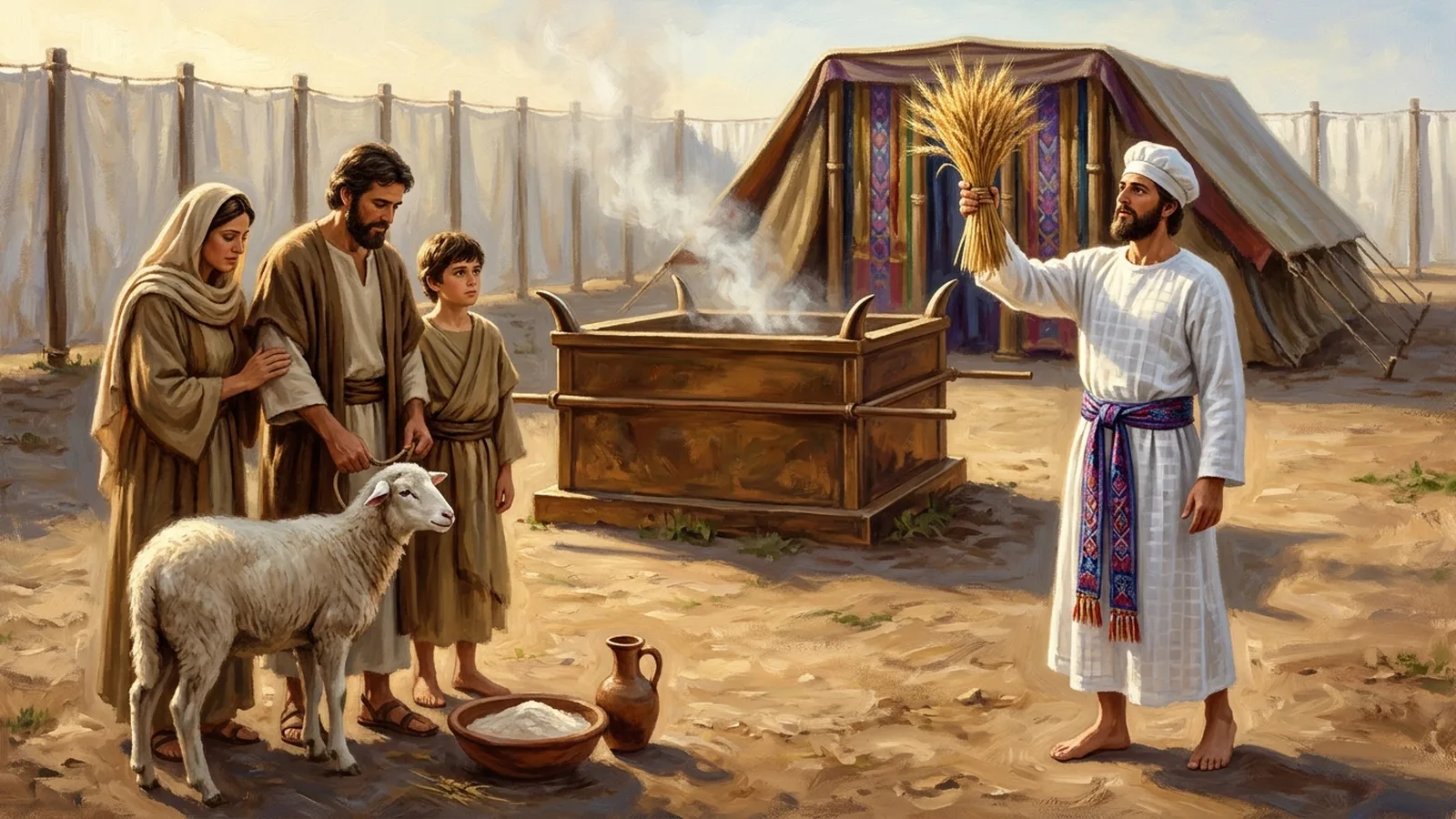
You shall bring a sheaf of the firstfruits of your harvest to the priest
You shall bring a sheaf of the firstfruits of your harvest to the priestLeviticus 23:9–14
Common reading

The Feast of Firstfruits means Messiah's resurrection (1 Cor 15:20).

Text · YLV
1 Corinthians 15:20

But now Messiah(Christ) has been raised from the dead, the first fruits of those who are asleep.

Leviticus 23:10

Speak to the sons of Israel, and say to them: When you come into the land which I am giving to you, and you reap its harvest, then you shall bring a sheaf of the firstfruits of your harvest to the priest.

Leviticus 23:11

And he shall wave the sheaf before YHWH for your acceptance; on the morrow after the Shabbat the priest shall wave it.

What the original shows
  • The day that corresponds to the resurrection is not "Firstfruits" but Nisan 16, the day the first sheaf (omer reshit עֹמֶר רֵאשִׁית, Lev 23:10) is waved. Scripture also calls it "the morrow after the Shabbat" (mimmochorat ha-Shabbat, 23:11).
  • The Septuagint renders the sheaf of Lev 23:10 as δράγμα ἀπαρχήν, "a sheaf of firstfruit." This is the very word ἀπαρχή (aparche) of 1 Cor 15:20, 23.
  • "Firstfruits" (bikkurim בִּכּוּרִים) is the name of Shavuot (Pentecost). The "firstfruits" (bikkurim) of Lev 23:17 are the two leavened loaves brought at Shavuot, and Num 28:26 says, "in the day of the first-fruits … in your weeks." The Septuagint also uses a different word at Lev 23:17, πρωτογενημάτων.
Right reading

Messiah becoming the aparche (first fruits) of those who are asleep corresponds to the first sheaf of Lev 23:10–11. Calling that day "Firstfruits" departs from Scripture's own names: Firstfruits (bikkurim) is Shavuot.

22Shavuot (Pentecost)Acts 2:1

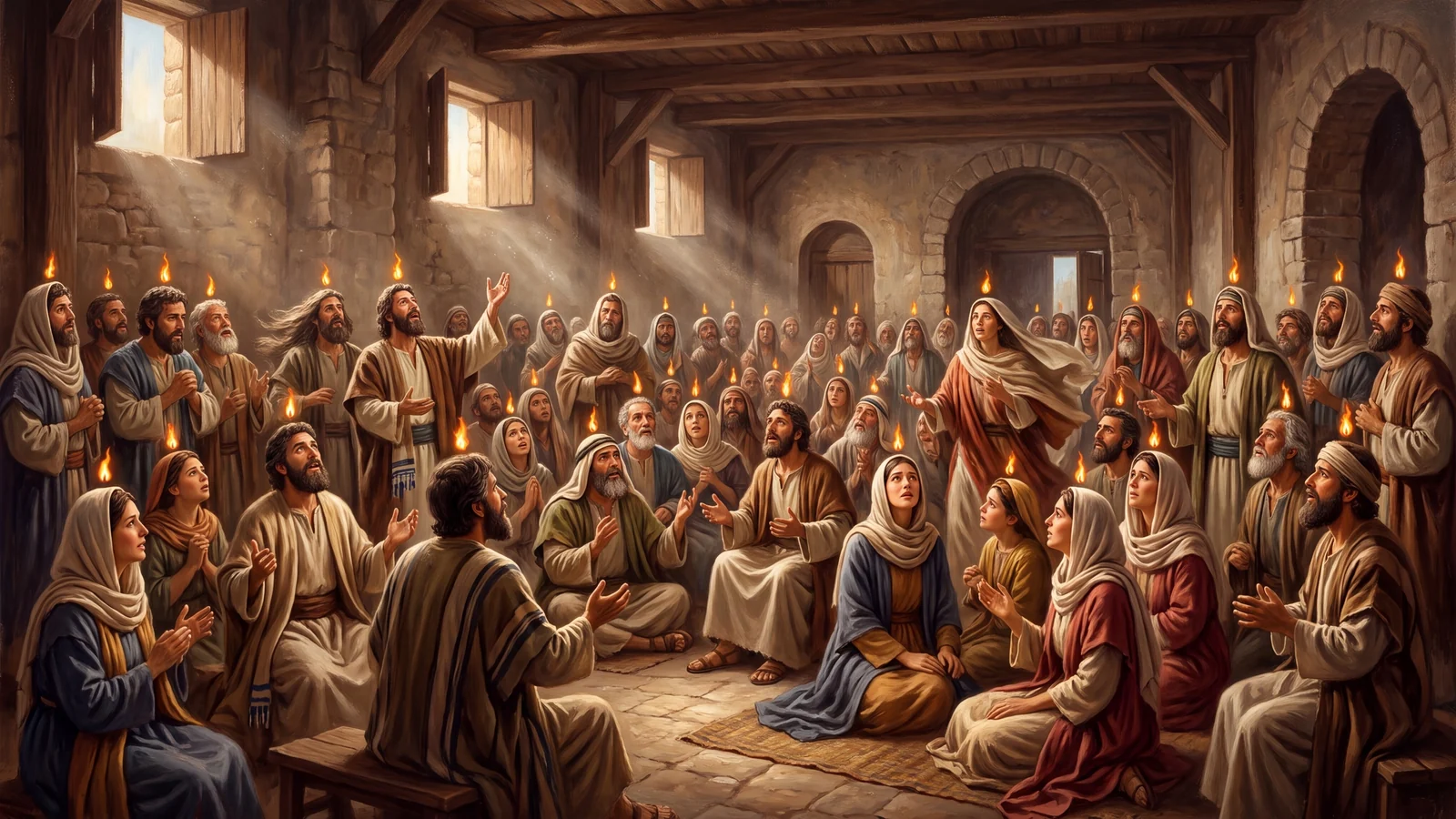
When the day of Pentecost was being fulfilled, they were all together with one mind in the same place
When the day of Pentecost was being fulfilled, they were all together with one mind in the same placeActs 2:1
Common reading

Pentecost was fulfilled in the coming of the Holy Spirit (Acts 2).

Text · YLV
Acts 2:1

And when the day of Pentecost was being fulfilled, they were all together with one mind in the same place,

Acts 20:16

For Paul had krino(decided) to sail past Ephesus so that he would not have to spend chronos(chronological-time) in Asia; for he was hurrying to be in Jerusalem, if possible, on the day of Pentecost.

What the original shows
  • ἐν τῷ συμπληροῦσθαι τὴν ἡμέραν τῆς Πεντηκοστῆς — "when the day of Pentecost was being fulfilled." The Spirit came on the very day Lev 23:15–21 appoints, and the disciples were gathered together on that day.
  • After the Spirit came, Paul still hurried to be in Jerusalem on the day of Pentecost (Acts 20:16), and planned around it: "I will remain in Ephesus until Pentecost" (1 Cor 16:8). Pentecost remained in the apostles' schedule and calendar.
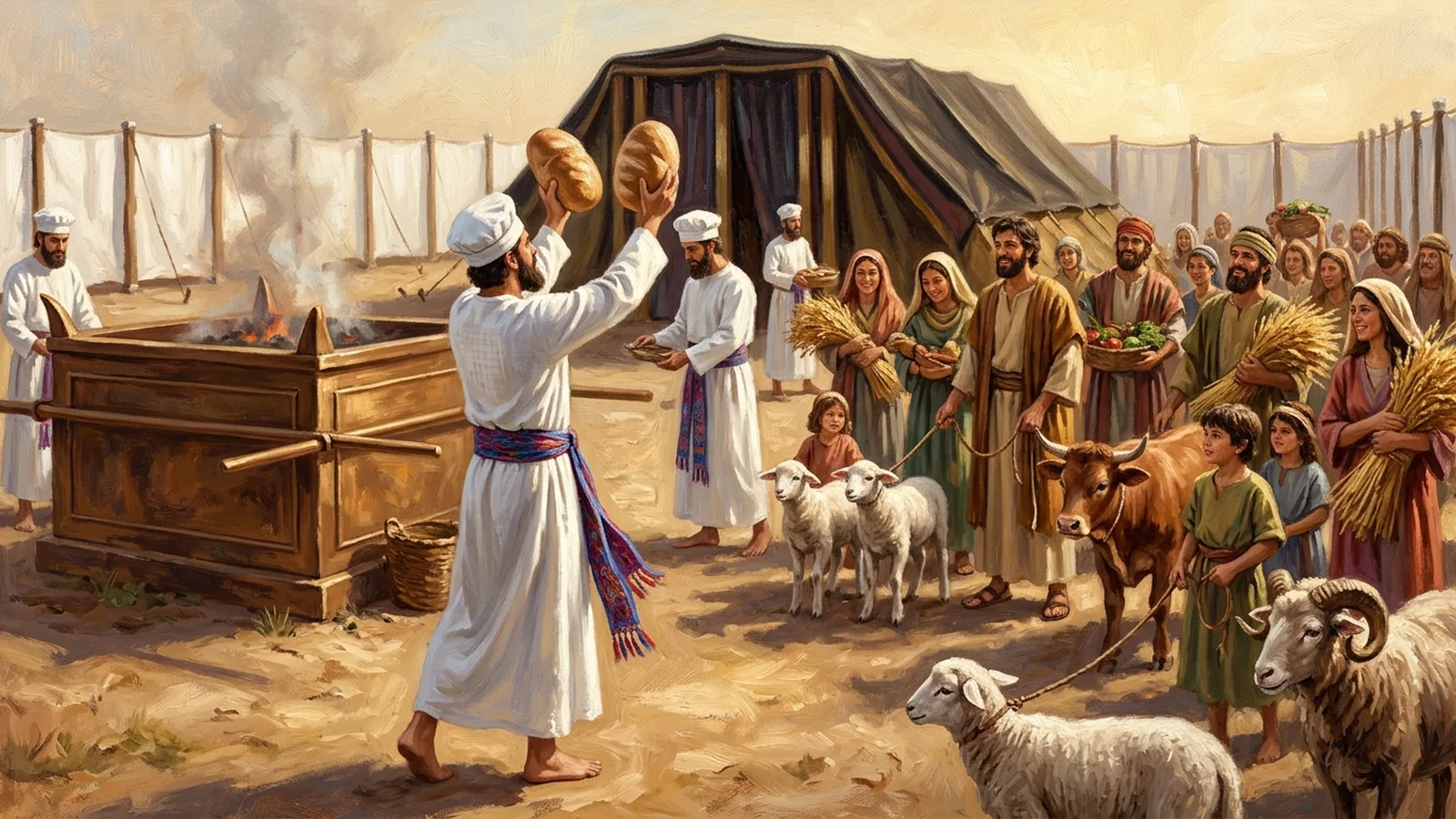
You shall count fifty days … you shall bring two wave loaves
You shall count fifty days … you shall bring two wave loavesLeviticus 23:15–22
  • Lev 23:21 calls this day "an everlasting statute (chuqqah) in all your dwellings throughout your generations."
Right reading

The Spirit did not come to abolish Shavuot; He came on the day of Shavuot. Afterward Paul still hurried to reach Jerusalem for it.

23The Feast of TrumpetsLeviticus 23:24

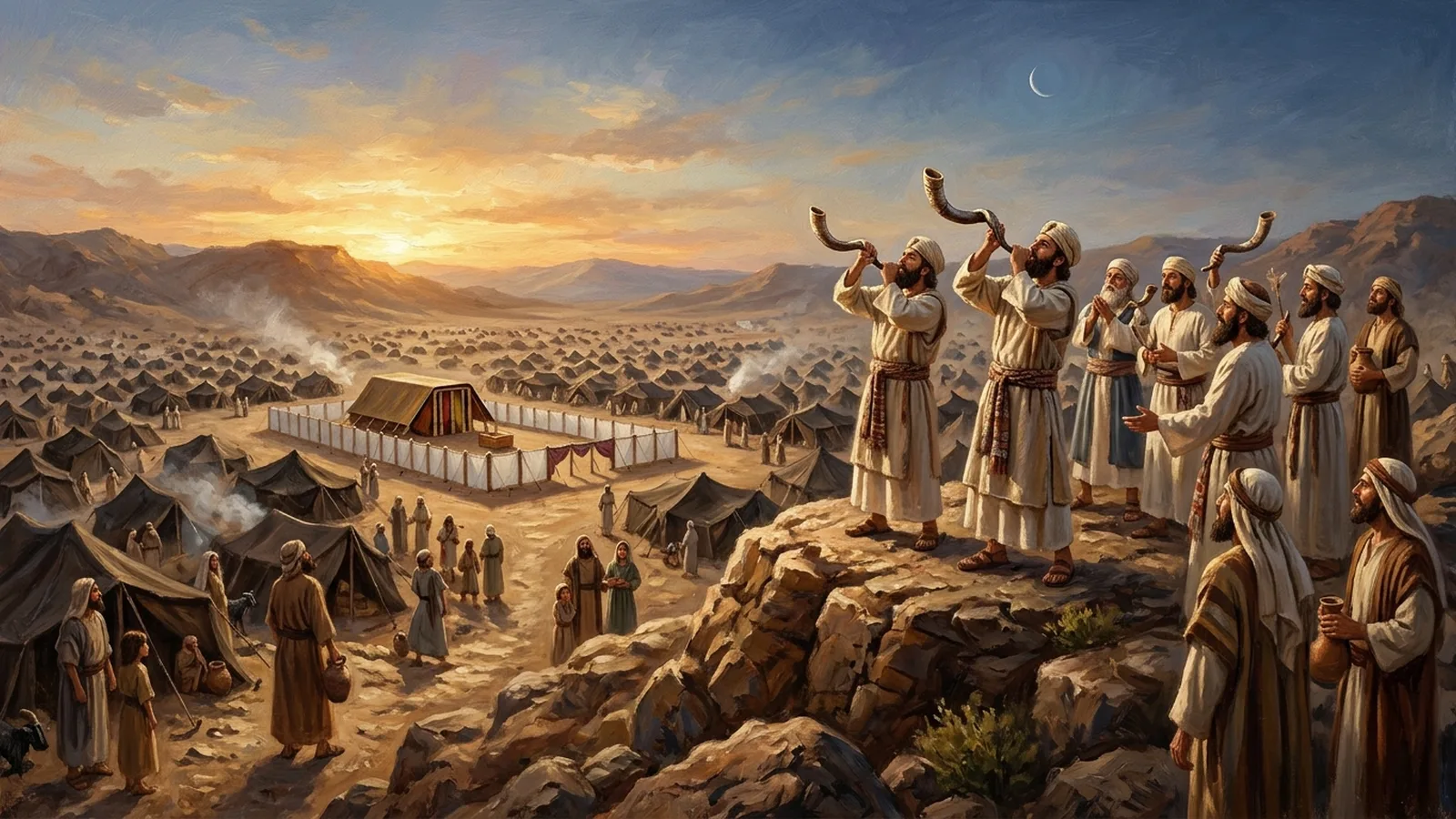
A Shabbaton, a memorial of trumpet blast, a holy convocation
A Shabbaton, a memorial of trumpet blast, a holy convocationLeviticus 23:23–25
Common reading

There is no direct New Testament command to keep the Feast of Trumpets.

Text · YLV
Leviticus 23:24

Speak to the sons of Israel, saying: In the seventh month, on the first of the month, shall be to you a Shabbaton, a memorial of trumpet blast, a holy convocation (miqra-qodesh).

1 Corinthians 15:52

in a moment, in the twinkling of an eye, at the last trumpet; for the trumpet will sound, and the dead will be raised imperishable, and we will be changed.

What the original shows
  • Lev 23:24 calls this day a "Shabbaton" (שַׁבָּתוֹן), a holy convocation with "a memorial of trumpet blast" (zichron teruah). This command remains in Leviticus 23.
  • That the New Testament does not repeat a command to "keep" the Feast of Trumpets is not the same as saying "do not keep it." Nor does the New Testament say the command of Leviticus 23 has been abolished.
  • The New Testament speaks of the end as "the last trumpet" (ἐν τῇ ἐσχάτῃ σάλπιγγι, 1 Cor 15:52). Linking this to the Feast of Trumpets is an interpretation; others link it to the trumpet at Sinai (Exod 19:16–19) or the trumpet that gathers the people at the end (Isa 27:13; Zech 9:14).
Right reading

The Feast of Trumpets stands as one of YHWH's moedim in Leviticus 23. That the same command is not repeated in the New Testament does not mean it has passed away.

24The Day of AtonementHebrews 9–10

On the tenth of this seventh month is the Day of Atonement
On the tenth of this seventh month is the Day of AtonementLeviticus 23:26–32
Common reading

The Day of Atonement was fulfilled in Messiah's perfect atonement (Heb 9–10).

Text · YLV
Leviticus 23:27

But on the tenth of this seventh month is the Day of Atonement; a holy convocation (miqra-qodesh) it shall be to you, and you shall afflict your souls (nephesh); and you shall bring near a fire-offering to YHWH.

Hebrews 9:7

but into the second only the high priest enters, and only once a year, not without blood, which he offers for himself and for the sins of the people committed in ignorance.

Acts 27:9

When considerable chronos(chronological-time) had passed and the voyage was now dangerous, since even the fast was already over, Paul began to admonish them

What the original shows
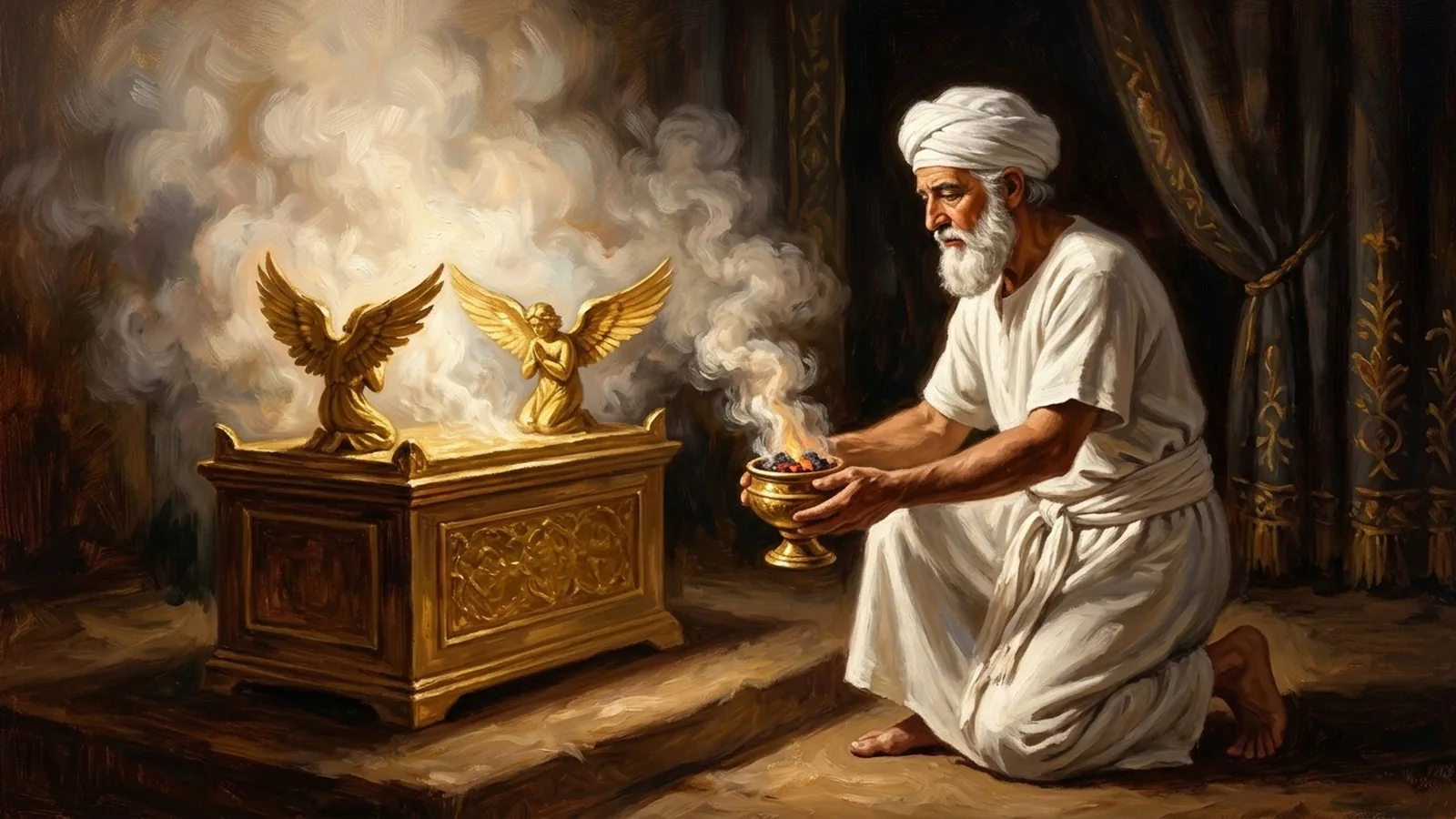
That the cloud of the incense may cover the cover that is upon the testimony (edut)
That the cloud of the incense may cover the cover that is upon the testimony (edut)Leviticus 16:11–13
  • Hebrews 9 uses the high priest's service on the Day of Atonement (entering the holy of holies once a year) as an example, explaining that Messiah entered once for all with His own blood. What Hebrews treats is the "sacrifice" and the "high priest" of atonement.
  • Lev 23:27–31 says on this day "you shall afflict your souls," "any work you shall not do," and calls it "an everlasting statute (chuqqah) throughout your generations" (23:31).
  • Luke dates Paul's voyage by τὴν νηστείαν, "the fast" (Acts 27:9). This shows the Day of Atonement still served as a marker of time for Luke and his readers.
  • The mainstream typological reading holds that the whole Day of Atonement ritual was fulfilled and ended in Messiah, on the basis of Heb 8:13, 10:1 and 10:9. Its difficulty is that what Hebrews directly says has ended is the sacrifice offered with the blood of animals (10:4, 8–9). Nothing in the text says that the "afflicting of souls" and "doing no work" of Lev 23:27–32 have ended.
Right reading

Hebrews states plainly that Messiah made atonement once for all. But what Hebrews explains is the sacrifice and the high priest; it does not say "the day called the Day of Atonement has passed away."

25The Feast of BoothsJohn 7 · Zechariah 14:16

If anyone is thirsty, let him come to Me and drink
If anyone is thirsty, let him come to Me and drinkJohn 7:37
Common reading

The Feast of Booths remains as the "meaning" of God dwelling with His people.

Text · YLV
John 7:2

Now the feast of the Jews, the Feast of Booths, was near.

John 7:37

Now on the last day, the great day of the feast, Yeshua(Jesus) stood and cried out, saying, "If anyone is thirsty, let him come to Me and drink.

Zechariah 14:16

And it shall come to pass, that everyone who is left of all the nations that came against Jerusalem shall go up year by year to bow down to the King, YHWH of hosts (tzevaot), and to celebrate the feast (chag) of Booths.

What the original shows
  • Yeshua went up to Jerusalem for the Feast of Booths (John 7:10), and on the last, great day of the feast He cried out, "If anyone is thirsty, let him come to Me and drink" (7:37). He revealed Himself within the feast.
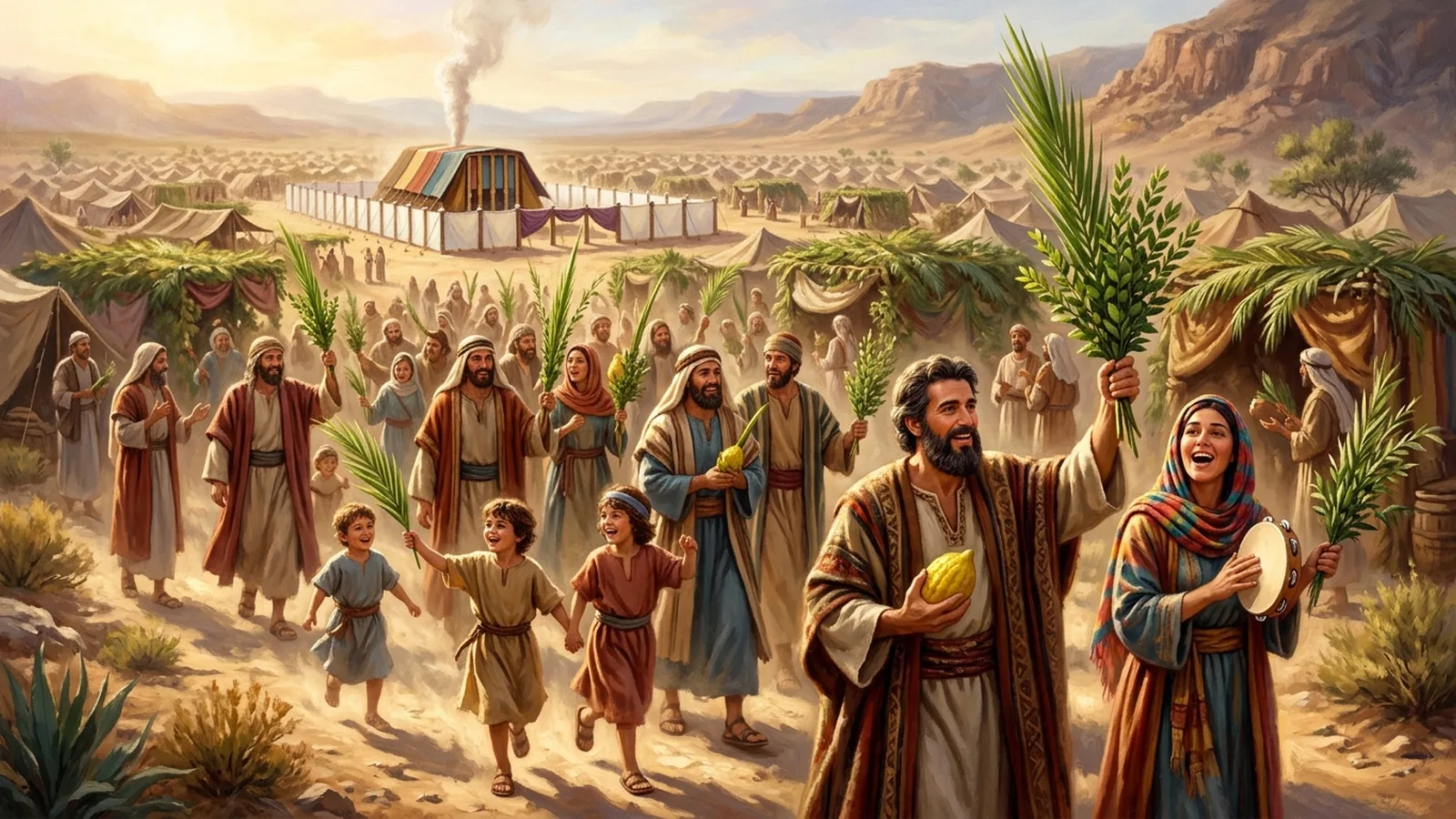
Fronds of palms, and a branch of a leafy tree, and willows of the brook; and you shall rejoice before YHWH your God seven days
Fronds of palms, and a branch of a leafy tree, and willows of the brook; and you shall rejoice before YHWH your God seven daysLeviticus 23:37–41
  • Lev 23:41: "you shall keep it a feast (chag) to YHWH seven days in the year; an everlasting statute (chuqqah) throughout your generations."
  • Zechariah says that those left of the nations will "go up year by year … to celebrate the feast (chag) of Booths" (14:16). Some read this as something to be fulfilled literally in the future, others as a picture of the worship of God's kingdom drawn in the feast language familiar at the time. Either way, as the prophet describes the coming day, he pictures the Feast of Booths not as passed away but as kept even by the nations.
Right reading

The Feast of Booths is not a day that remains only as a "meaning." It is a feast Yeshua went up to Jerusalem to keep, and the prophet calls it a feast that even the nations will keep year by year.

26Acts 15:1–29The Question the Jerusalem Council Addressed

The apostles and the elders came together to look into this matter
The apostles and the elders came together to look into this matterActs 15:6
Common reading

This reading grants that the first issue of Acts 15 was the condition of salvation. But it holds that the council also decided not to place circumcision and the ceremonial law (appointed times, purity) on Gentiles even in their life after salvation.

Text · YLV
Acts 15:1

Some men came down from Judea and began teaching the brothers, "Unless you are circumcised according to the custom of Moses, you cannot be saved."

Acts 15:5

But some of the sect of the Pharisees who had believed stood up, saying, "It is necessary to circumcise them and to direct them to observe the nomos(law) of Moses."

Acts 15:11

But we believe that we are saved through the charis(grace) of the Lord Yeshua(Jesus), in the same way as they also are."

What the original shows
  • The question that opened the council is 15:1: ἐὰν μὴ περιτέμνησθε … οὐ δύνασθε σωθῆναι — "unless you are circumcised … you cannot be saved." The issue was whether circumcision and keeping the nomos were "a condition of salvation."
  • "It is necessary … to direct them to observe the nomos of Moses" in 15:5 (δεῖ … τηρεῖν τὸν νόμον Μωυσέως) is a claim tied to the salvation condition of 15:1.
  • Peter's conclusion is 15:11: "we believe that we are saved through the charis (grace) of the Lord Yeshua." It is natural to read the "yoke" of 15:10, following the context of 15:1 and 11, as the burden of a salvation condition, though some read it as the practical weight of bearing the whole Torah.
Right reading

What Acts 15 clearly decided is that "Gentiles are not saved by circumcision and keeping the nomos, but by grace." It also laid four requirements on them. The text nowhere says "saved Gentiles must not keep the appointed times," or that they "do not need to."

27Acts 15:19–21The Four Requirements and Their Reason

For the soul (nephesh) of the flesh (basar) is in the blood
For the soul (nephesh) of the flesh (basar) is in the bloodLeviticus 17:8–12
Common reading

Gentiles were asked to keep only these few requirements; the rest of the Mosaic nomos that marked Israel (circumcision, food laws, appointed times) was not placed on them.

Text · YLV
Acts 15:19

Therefore I krino(judge, determine) that we do not trouble those who are turning to God from among the Gentiles,

Acts 15:20

but that we write to them that they abstain from things contaminated by idols and from sexual immorality and from what is strangled and from blood.

Acts 15:21

For Moses from ancient generations has in every city those who proclaim him, since he is read in the synagogues every sabbaton(referring to every Moed of Leviticus 23)."

What the original shows
  • The four (things polluted by idols, sexual immorality, what is strangled, blood) correspond to requirements the Torah places equally on the sojourner (ger) living among Israel: sacrifices offered anywhere other than YHWH's tent, which 17:7 links to sacrificing to goat-idols (Lev 17:7–9), not eating blood (17:10), pouring out the blood of hunted animals (17:13), and the sexual laws (18:26, "neither the native nor the sojourner").
  • Views differ on the four: (a) they are the sojourner laws of Leviticus 17–18; (b) they are an early form of the universal norms given to Noah; (c) they are a pastoral arrangement removing only what blocked table fellowship between Jewish and Gentile believers.
  • Under any of these views, the four are not "all" of the righteousness a believer is to do. The list does not include "You shall not murder" or "You shall not steal," and the common reading admits this. Nor, then, can one conclude that the appointed times or other commandments do not apply to Gentiles simply because they are not on this list.
For Moses from ancient generations has in every city those who proclaim him, since he is read in the synagogues every sabbaton
For Moses from ancient generations has in every city those who proclaim him, since he is read in the synagogues every sabbatonActs 15:21
  • 15:21 gives the reason with γάρ (for): Μωυσῆς γὰρ … κατὰ πᾶν σάββατον ἀναγινωσκόμενος — "for Moses … is read in the synagogues every sabbaton." This verse is often overlooked in the common reading.
  • There are three readings of this "for": (a) Gentile believers too would keep hearing and learning the writings of Moses week by week in the synagogue; (b) since there are Jews reading Moses in every city, these four things must be avoided so as not to cause them to stumble (the majority view); (c) the writings of Moses themselves already place these requirements on the sojourner. All three take for granted that the writings of Moses are read "every sabbaton."
Right reading

Acts 15:19–20 is not a complete list of righteousness saying "keep only these"; it is the essential requirements placed on Gentiles first turning to God. Underlying the reason for this decision (15:21) is the fact that Moses is read every sabbaton.

28Acts 15:28–29"These Essentials"

Common reading

The obligations placed on Gentile believers were limited to four.

Text · YLV
Acts 15:28

For it seemed good to the hagio(holy) pneuma(spirit) and to us to lay upon you no greater burden than these essentials:

Acts 15:29

that you abstain from things sacrificed to idols and from blood and from things strangled and from sexual immorality; if you keep yourselves free from such things, you will do well. Farewell."

What the original shows
  • μηδὲν πλέον ἐπιτίθεσθαι ὑμῖν βάρος πλὴν τῶν ἐπάναγκες τούτων — "to lay upon you no greater burden than these essentials." The "burden" (βάρος) here connects with the "yoke" of 15:10, that is, placing circumcision and the nomos as a condition of salvation.
  • As the common reading admits, this letter cannot mean "murder, theft, and false witness are permitted," so these four are not the complete list of the righteousness required of a believer. What the letter lifted was a "burden," not the commandments of God themselves.
  • Some Western manuscripts (Codex D and others) omit "things strangled" and add a form of the Golden Rule, reading the decree as purely ethical. RP 2018 has all four.
Right reading

Acts 15:28–29 lifted the burden imposed as a salvation condition; it did not reduce God's commandments to four.

29Colossians 2:16–17Let No One Judge You Regarding a Festival, New Moon or Sabbatons

Common reading

Festivals, new moons and Sabbaths are a shadow and the reality is Messiah, so there is no longer any need to keep them; and no one may judge believers over them.

Text · YLV
Colossians 2:8

See to it that no one takes you captive through philosophy and empty deception, according to the tradition of men, according to the stoicheia(elementary principles) of the world, rather than according to Messiah(Christ).

Colossians 2:16

Therefore no one is to krino(judge) you in regard to food or drink or in respect to heortes(festival) or new moon or sabbatons(referring to every Moed of Leviticus 23);

Colossians 2:17

things which are a shadow of what is to come; but the substance belongs to Messiah(Christ).

Colossians 2:21

"Do not handle, do not taste, do not touch!"

Colossians 2:22

(which all refer to things destined to perish with use) — in accordance with the commandments and teachings of men?

What the original shows
  • Who was judging: 2:8 warns against "philosophy and empty deception, according to the tradition of men (τὴν παράδοσιν τῶν ἀνθρώπων), according to the stoicheia of the world." 2:18 and 2:21–23 show what it was: the worship of angels (2:18), rules such as "Do not handle, do not taste, do not touch!" (2:21), severe treatment of the body, and "self-made worship" (ἐθελοθρησκεία). 2:22 says these rules are κατὰ τὰ ἐντάλματα καὶ διδασκαλίας τῶν ἀνθρώπων, "in accordance with the commandments and teachings of men" — the same words as the quotation from Isaiah in Matt 15:9 ("the commandments of men"). The judges the text describes put forward human tradition, asceticism and the worship of angels. Many scholars hold it was a mixed teaching that included Jewish elements (the circumcision question, 2:11; new moons and sabbatons); some describe it as a Jewish mystical piety that sought to join the worship of angels through fasting and visions (e.g., F. F. Bruce, C. E. Arnold). Either way, Paul's name for their teaching is not "Torah" but "the commandments and teachings of men."
  • What they judged: 2:16 says, regarding "food or drink, a festival, a new moon or sabbatons," "let no one judge you." This is not a command "do not keep them," but "do not let yourselves be judged." Some interpret it as the ascetics judging the Colossians' eating, drinking and keeping of feasts — in which case the Colossians were keeping the feasts. "Festival, new moon, sabbaths" is the standard Old Testament series for Israel's holy days (1 Chr 23:31; 2 Chr 2:4; 31:3; Ezek 45:17; Hos 2:11).
  • The tense of "shadow": 2:17 ἅ ἐστιν σκιὰ τῶν μελλόντων — "these are a shadow of things to come." The verb ἐστιν is present ("are"), and τῶν μελλόντων means "things to come." Paul does not say the shadow "was"; he says it "is" a shadow of things to come. Others read ἐστιν as a timeless present and "things to come" from the standpoint of when these days were given (compare Heb 10:1), or within the "already and not yet" of the kingdom.
  • "The body is of Messiah": τὸ δὲ σῶμα Χριστοῦ has no verb, so it is read two ways depending on which verb is supplied.
    • (a) "the substance (body) belongs to Messiah" — supplying ἐστιν, setting shadow against substance. The YLV translates it this way. Mainstream commentators who follow this reading explain that "things to come" means future from the viewpoint of when the feasts were first given (that is, Messiah), and that since the substance already belongs to Messiah, the binding force of the shadow has ended.
    • (b) "(let no one judge you, but let) the body of Messiah (the ekklesia) (judge)" — supplying again the verb "judge" from 2:16. Its support is that σῶμα refers to the ekklesia elsewhere in the same letter (1:18, 1:24, 2:19). Its difficulty is that the verb "judge" must be carried over from 2:16.
    • The difficulty for (a) is that Paul speaks of the shadow in the present tense (ἐστιν, "are") and uses τῶν μελλόντων ("things to come"). "The binding force has ended" is not in the text, and the command of 2:16 is not "do not keep them" but "do not let yourselves be judged."
Right reading

Col 2:16–17 does not say "do not keep the feasts"; it says "do not let yourselves be judged by those who put forward human tradition and asceticism." Paul speaks of festival, new moon and sabbatons in the present tense as "a shadow of things to come."

30Galatians 4:8–11Days, Months, Times and Years

Common reading

Paul warned against observing days, months, seasons and years, so keeping the appointed times of Leviticus 23 is returning to weak and worthless elementary principles. Since Paul said in 4:3 that "we too" (Jews) were enslaved under the stoicheia, Gentiles entering the calendar of the Torah would also be turning "back again" to their old slavery.

Text · YLV
Galatians 4:8

However at that time, when you did not know God, you were slaves to those which by nature are no gods.

Galatians 4:9

But now that you have come to know God, or rather to be known by God, how is it that you turn back again to the weak and worthless stoicheia(elementary principles), to which you desire to be enslaved all over again?

Galatians 4:10

You are paratereo(observe with hostile intent) days and months and kairos(appointed-times: Moedim) and years.

Galatians 4:11

I fear for you, that perhaps I have labored over you in vain.

What the original shows
  • Where they were returning: 4:8 says the Galatians were formerly slaves τοῖς μὴ φύσει οὖσιν θεοῖς, "to those which by nature are no gods." 4:9 says "you turn back again (πάλιν) … to which you desire to be enslaved all over again (πάλιν ἄνωθεν)." For these believers from the nations, the place to turn "back again" to is what they formerly served — those that are no gods. They had never kept the appointed times of Leviticus 23 before, so they could not turn "back again" to Leviticus 23.
  • The words used: 4:10 has ἡμέρας · μῆνας · καιροὺς · ἐνιαυτούς, "days, months, times, years." The Septuagint of Leviticus 23 renders moedim as ἑορταί (feasts) (23:2, 4, 37, 44) and uses καιρός once, in 23:4, "in their appointed times" (ἐν τοῖς καιροῖς αὐτῶν). Galatians 4:10 has none of ἑορτή, σάββατον or νουμηνία — unlike Col 2:16, which uses ἑορτή, νουμηνία and σάββατα directly. Rather, the cluster "times, days, years" resembles the Septuagint of Gen 1:14 (the lights set "for signs and for times (καιρούς) and for days and years (ἐνιαυτούς)").
  • The verb: παρατηρεῖσθε is used elsewhere in the New Testament of the Pharisees "watching closely" to accuse Yeshua (Mark 3:2; Luke 6:7; 14:1; 20:20) and of "watching" the city gates (Acts 9:24). Here, with days as its object, it is usually read as "scrupulously observing days." The YLV renders it "paratereo (observe with hostile intent)."
  • Views: There are two readings of the days, months, times and years of 4:10.
    • (a) The Jewish calendar (Shabbat, new moon, feasts, sabbatical year). This view appeals to "we too" in 4:3. Its difficulty is that 4:8 calls what they served "those which by nature are no gods," and the days God calls "My moedim" cannot be called that; also, the feast words of Leviticus 23 are not used. There is also a mediating view that Paul rebuked a superstitious, pagan-like "scrupulous observance" of the Jewish feasts. Supporters of (a) also note that "days, months, seasons, years" was a common way to summarize the Jewish calendar (compare Jubilees 6:32–38; 1 Enoch 72–82).
    • Another major view reads the stoicheia as cosmic or elemental powers tied to the heavenly bodies and the calendar (e.g., J. L. Martyn, M. de Boer, C. E. Arnold), which links 4:3 and 4:8–9 under one heading of slavery.
    • (b) Serving the auspicious days, months, seasons and years of pagan religion. This is the explanation (Troy Martin and others) that under pressure from the circumcision party they were turning back to their old pagan calendar. It fits "no gods" (4:8) and "again" (4:9) well. Its difficulty is that, since the whole letter is a dispute with those demanding circumcision, it needs an explanation of why Paul grouped that issue together with pagan customs as "stoicheia."
Right reading

Gal 4:10 does not use the feast names of Leviticus 23, and it speaks of believers from the nations turning "back again." The text does not support using this verse as proof that "keeping the appointed times of Leviticus 23 is returning to elementary principles."

31Galatians 5:1–6The Yoke of Slavery

Common reading

Keeping the obligations of the law is taking on the yoke of slavery again.

Text · YLV
Galatians 5:1

Keep standing firm therefore in the freedom with which Messiah(Christ) set us free, and do not be subject again to a yoke of slavery.

Galatians 5:2

Behold I, Paul, say to you that if you receive circumcision, Messiah(Christ) will be of no benefit to you.

Galatians 5:3

And I testify again to every man who receives circumcision, that he is under obligation to keep the whole nomos(law).

Galatians 5:4

You have been severed from Messiah(Christ), you who are seeking to be justified by nomos(law); you have fallen from charis(grace).

Galatians 5:6

For in Messiah(Christ) Yeshua(Jesus) neither circumcision nor uncircumcision means anything, but faith working through agape(love).

What the original shows
  • 5:2–3 says that whoever receives circumcision "is under obligation to keep the whole nomos." Then 5:4 states who that person is: οἵτινες ἐν νόμῳ δικαιοῦσθε, "you who are seeking to be justified by nomos." It reads as: to receive circumcision as the way to be justified is to enter, of one's own accord, the path of being justified by doing the whole nomos. The yoke of slavery is not the Torah itself but "seeking to be justified" by circumcision and the nomos. (Others read the yoke as the obligations of the Sinai covenant themselves, citing 4:24–25 and 5:3.)
  • The "New Perspective on Paul" in scholarship views circumcision, the food laws and the feasts as boundary markers distinguishing the Jewish people, and explains that Paul resisted imposing them on Gentiles.
  • 5:6 speaks of "faith working through agape," and 5:13–14 explains that love by quoting the Torah: "For the whole nomos is fulfilled in one logos, in the statement, 'You shall agape your neighbor as yourself'" (Lev 19:18). Some read this "fulfilled" as love replacing the commandments; many commentators (e.g., J. M. G. Barclay, T. R. Schreiner, S. Westerholm) read it as Spirit-led love accomplishing what the nomos aimed at, so that believers are no longer under the code's individual stipulations. In either case, the one statement that sums it up is itself a commandment of the Torah (Lev 19:18).
Right reading

What Gal 5:1–6 forbids is seeking to be justified by the nomos. In the same context Paul says the whole nomos is fulfilled in love.

32Romans 14:1–6The One Who Regards the Day and the One Who Does Not

Common reading

The Sabbath and the feasts, having been fulfilled in Messiah, have passed into the realm of freedom of conscience. Regarding certain days is left to each person's judgment and faith.

Text · YLV
Romans 14:1

Now receive the one who is weak in faith — not for diakrisis(discernment) of dialogismoi(reasoning, deliberations).

Romans 14:2

One person believes he may eat all things, but the one who is weak eats only vegetables.

Romans 14:5

One person krino(judges) one day above another; another krino(judges) every day — let each one be fully convinced in his own nous(intellect, spiritual domain).

Romans 14:6

The one who observes the day, observes it to the Lord; and the one who does not observe the day, to the Lord he does not observe it; and the one who eats, eats to the Lord — for he gives thanks to God; and the one who does not eat, to the Lord he does not eat, and he gives thanks to God.

What the original shows
  • 14:1 sets the scope: μὴ εἰς διακρίσεις διαλογισμῶν — "not for the purpose of passing judgment on opinions." The matter at hand is one on which opinions differ.
  • The example in 14:2 is "eats vegetables only." The Torah does not command eating only vegetables, so eating only vegetables is not itself a commandment of the Torah. Whether the motive was personal restraint, or avoiding meat sacrificed to idols or not drained of blood in the pagan market, the text does not say.
  • 14:5–6 has neither σάββατον nor ἑορτή, the feast words of Leviticus 23; it has only the general word ἡμέρα, "day." The text does not say which day.
  • Views: Readings of "day" differ.
    • (a) The Shabbat and the feasts. The difficulty is that the text has no such words, and 14:1 deals with matters of "opinion," while the days of Leviticus 23 are "My moedim," appointed by God Himself.
    • (b) Fast days or days of devotion set by individuals. Its support is that it appears alongside eating and not eating in 14:2–6. Its difficulty is that the text does not directly say which day.
    • (c) The Shabbat and feasts as kept by Jewish-born believers in Rome, who also ate only vegetables to avoid market meat (a widely held view; e.g., J. M. G. Barclay, M. Nanos). Paul also accepts the one who does not regard the day (14:6). Even on this reading, Paul's conclusion is that no one should despise or judge the one who keeps them (14:3–4); there is no word saying "do not keep them."
    • (d) Pagan lucky days or Roman festivals and fast days.
Right reading

Romans 14 tells believers not to judge one another in "matters of opinion." This chapter cannot be used as grounds to turn the days God appointed as "My moedim" into matters of "opinion," because the text does not name those days.

33Ephesians 2:14–16Breaking Down the Dividing Wall

Common reading

Messiah broke down the wall of the law that separated Jews and Gentiles, so the commandments that divided them (circumcision, food laws, feasts) are no longer binding.

Text · YLV
Ephesians 2:14

For He Himself is our eirene(peace), who made both groups into one and broke down the barrier of the dividing wall—the enmity—

Ephesians 2:15

having abolished in His sarx(flesh) the nomos(law) of commandments contained in dogmata(decrees), so that in Himself He might make the two into one new man, thus establishing eirene(peace),

Ephesians 2:16

and might reconcile them both in one body to God through the stauros(cross), by it having put to death the enmity.

What the original shows
  • What He broke down is τὸ μεσότοιχον τοῦ φραγμοῦ, "the dividing wall." τὴν ἔχθραν ("the enmity") appears twice, in 2:14 and 16. The τὴν ἔχθραν that follows (at the start of 2:15 in the Greek) is read either as the same thing as "the dividing wall" (as the YLV does: "the dividing wall—the enmity—"), or as the object of "abolished" in 2:15.
  • 2:15 has τὸν νόμον τῶν ἐντολῶν ἐν δόγμασιν, "the nomos of commandments contained in dogmata (decrees)." δόγμα can mean a decree of any authority (Luke 2:1; Acts 16:4). It also appears in Col 2:14, and δογματίζεσθε ("submit to decrees") in Col 2:20 refers, in Col 2:21–22, to rules following "the commandments and teachings of men."
  • The text calls the result "one new man" (2:15) and "fellow citizens with the holy ones … of God's household" (2:19). Set against 2:12, where the Gentiles were formerly "excluded from the commonwealth of Israel, and strangers to the covenants of promise," it is natural to read this as having come into that commonwealth together.
  • Views:
    • (a) He abolished the Torah itself. The difficulty is that this collides with Matt 5:17 ("I did not come to abolish") and Rom 3:31 ("we uphold the nomos").
    • (b) The distinguishing marks of the Torah that separated Jews and Gentiles (ceremonial law), such as circumcision, food laws and feasts, were abolished (compare J. D. G. Dunn's "boundary markers"). The difficulty is that the text does not specify what belongs to "the nomos of commandments."
    • (c) The human regulations (decrees) that separated Jews and Gentiles, and the hostility, were abolished. It fits the words "ἐν δόγμασιν" and "enmity." It faces the same difficulty: the text does not specify which decrees are meant.
    • (d) An older view (H. Schlier) reads the wall as a cosmic barrier between heaven and earth. The difficulty is that 2:11–13 speaks of Jews and Gentiles, the near and the far.
    • A widely accepted background explanation sees "the dividing wall" as alluding to the stone barrier (soreg) in the Jerusalem temple that separated the court of the Gentiles from the inner courts. That barrier was not set up by the Torah but built later.
Right reading

What Ephesians 2 broke down is the dividing wall of "enmity," and the result is not that Gentiles live apart without the Torah, but that they come into the commonwealth of Israel and the covenants of promise.

34Hebrews 8:6–13The New Covenant

Common reading

God's law has not disappeared entirely under the new covenant, but according to Heb 7:12 ("when the priesthood is changed, of necessity there takes place a change of nomos also") the system of law has changed: the ceremonial law (sacrifices, feasts) has been fulfilled and ended, and the moral law is written on the heart.

Text · YLV
Hebrews 8:8

For finding fault with them He says: "Behold, the days are coming, declares the Lord, when I will establish a new diatheke(covenant) with the house of Israel and with the house of Judah —

Hebrews 8:9

not like the diatheke(covenant) that I made with their fathers on the day when I took them by the hand to bring them out of the land of Egypt; for they did not continue in my diatheke(covenant), and so I paid no heed to them, declares the Lord.

Hebrews 8:10

For this is the diatheke(covenant) that I will make with the house of Israel after those days, declares the Lord: I will put my nomoi(laws) into their dianoia(thought), and write them on their kardiai(hearts, soul-domains), and I will be their God, and they shall be my people.

Hebrews 8:13

In speaking of a new diatheke(covenant), He makes the first one obsolete; and what is obsolete and growing old is ready to vanish away.

What the original shows
  • Where the fault lay: 8:7 says "if that first covenant had been faultless," and 8:8 says μεμφόμενος γὰρ αὐτοῖς — "finding fault with them." Most take "with them" as the object of "finding fault"; others attach αὐτοῖς to "He says," so that the fault lies with the first covenant itself (8:7). 8:9 gives the reason: "for they did not continue in my covenant."
  • The content of the new covenant: 8:10 διδοὺς νόμους μου εἰς τὴν διάνοιαν αὐτῶν καὶ ἐπὶ καρδίας αὐτῶν ἐπιγράψω αὐτούς — "I will put my nomoi (laws) into their minds, and write them on their hearts." This is "My Torah" (תּוֹרָתִי) of Jer 31:33. (The Septuagint, Jer 38:33, renders the singular "My Torah" with the plural νόμους.) The new covenant is not a covenant that removes the Torah but one that writes the Torah on the heart.
  • With whom: "the house of Israel and the house of Judah" (8:8). Hebrews 8 does not speak of Gentiles separately. (That Gentiles come to share in the covenants of promise is taught in Eph 2:12, 19.)
  • What becomes old: In 8:13 what becomes old is "the first," that is, the first covenant. And τὸ δὲ παλαιούμενον καὶ γηράσκον ἐγγὺς ἀφανισμοῦ — "what is obsolete and growing old is ready to vanish away." Not "has vanished," but "is ready to vanish" (ἐγγύς, near). Many link this with the destruction of the temple in AD 70, which came soon after.
  • Views: The "my nomoi" of 8:10 are read (a) as the "My Torah" of Jer 31:33, that is, the Sinai Torah written on the heart; (b) as a new law in which the priestly and sanctuary ordinances have changed, linked with "the change of nomos" in Heb 7:11–12, 18–19; (c) as the moral law only; or (d) as the whole Sinai law fulfilled and transformed in Messiah (new covenant theology). What Heb 7:12, the basis of (b), directly says is that as the "priesthood" changes, the nomos that goes with it changes, and the "former commandment" set aside in 7:18 is the one 7:16 calls the commandment of fleshly descent for priests; and what Jer 31:33 promises to write on the heart is "My Torah." The threefold division of the Torah is not found in the text.
Right reading

What is made new in Hebrews 8 is the covenant, and the content of that new covenant is God writing His nomoi (Jer 31:33, "My Torah") on the heart. Nothing in the text says the Torah disappears.

35Hebrews 10:1–10The Shadow and the Offering Once for All

Common reading

The sacrificial system of the law (ceremonial law) was a shadow and was fulfilled and ended in Messiah's sacrifice; the feasts belong to that shadow and ended with it.

Text · YLV
Hebrews 10:1

For the nomos(law) has but a shadow of the good things to come, not the true form of these realities, and it can never, by the same sacrifices that are offered continually every year, make perfect those who draw near.

Hebrews 10:4

for it is impossible for the blood of bulls and goats to take away sins.

Hebrews 10:9

then He added, "Behold, I have come to do your thelema(will), O God"; He does away with the first in order to establish the second.

Hebrews 10:10

And by that thelema(will) we have been sanctified through the offering of the body of Yeshua(Jesus) Messiah(Christ) once for all.

What the original shows
  • 10:1 says the nomos "has" (ἔχων, present participle) σκιὰν … τῶν μελλόντων ἀγαθῶν, "a shadow of the good things to come." It then states what "can never make perfect": "the same sacrifices that are offered continually every year." (RP 2018 reads the plural δύνανται, "they can never make perfect.")
  • Hebrews 8:5 and 9:9–10 also place the sanctuary, the gifts, and "foods and drinks and various washings" under the shadow and the parable. The feasts of Leviticus 23 are not named there.
  • 10:4: "it is impossible for the blood of bulls and goats to take away sins." The subject of this passage is the "sacrifice" that removes sin.
  • The "first" and "second" of 10:9 are identified by 10:8–9 itself. The first is "sacrifices and offerings and burnt offerings and sin offerings," and the second is the "will" (10:10) in "I have come to do Your will." Many commentators link "the first" with 8:7, 13 and take it as the whole system of the first covenant, but what 10:8–9 directly points to is the sacrifices.
  • Right after, 10:16 again quotes "I will put my nomoi on their hearts … and write them."
Right reading

What Heb 10:1–10 says is that the atoning sacrifices offered with the blood of animals were accomplished in Messiah's offering once for all. The same chapter goes on to quote the new covenant in which God writes His nomoi on the heart. Extending this to "the feasts ended too" goes beyond the text.

Summary What these passages say together

It is commonly concluded: "The appointed times of Leviticus 23 are not an obligation Gentile believers must keep. You may keep them if you wish, but do not make them a condition of salvation or a standard for judging others. And avoid both extremes."

Part of this is right. Salvation is received not by keeping the appointed times but by grace (Acts 15:11; Gal 5:4). It is also right not to make them a standard for judging people (Col 2:16; Rom 14:4).

But the passages cited for this view do not say "you do not need to keep the Torah or the appointed times." What the texts say is this:

  • Do not seek to be justified by circumcision and the nomos (Acts 15:1, 11; Gal 5:4).
  • Do not let yourselves be judged by human tradition and asceticism (Col 2:8, 16, 22).
  • Do not turn back again to the gods of the nations (Gal 4:8–9).
  • The atoning sacrifices once offered with the blood of animals were accomplished in Messiah's offering once for all (Heb 10:1–10).

And the same Scripture says:

  • God calls these days "My moedim" (Lev 23:2).
  • Paul urged an ekklesia with many from the nations, "let us celebrate the feast" (1 Cor 5:8).
  • The Spirit came on the day of Shavuot; Shavuot remained in Paul's plans (Acts 2:1; 20:16), and the fast still marked the calendar (27:9).
  • The new covenant is the covenant in which God writes His Torah on the heart (Heb 8:10; 10:16).

Those whom Yeshua and the apostles rebuked were not people who kept the Torah because they loved it. They were people who abandoned the commandments and held to human tradition, kept only what suited them, and were full of anomia within. Scripture calls those who love and do the Torah "blessed" (Ps 1:1–2), "great" (Matt 5:19) and "righteous before God" (Luke 1:6).

Get Involved

You are invited to join the movement of sharing the Scriptures and love