
The Only Sign · Chapter 1 of 47
A Sign Measured in Time
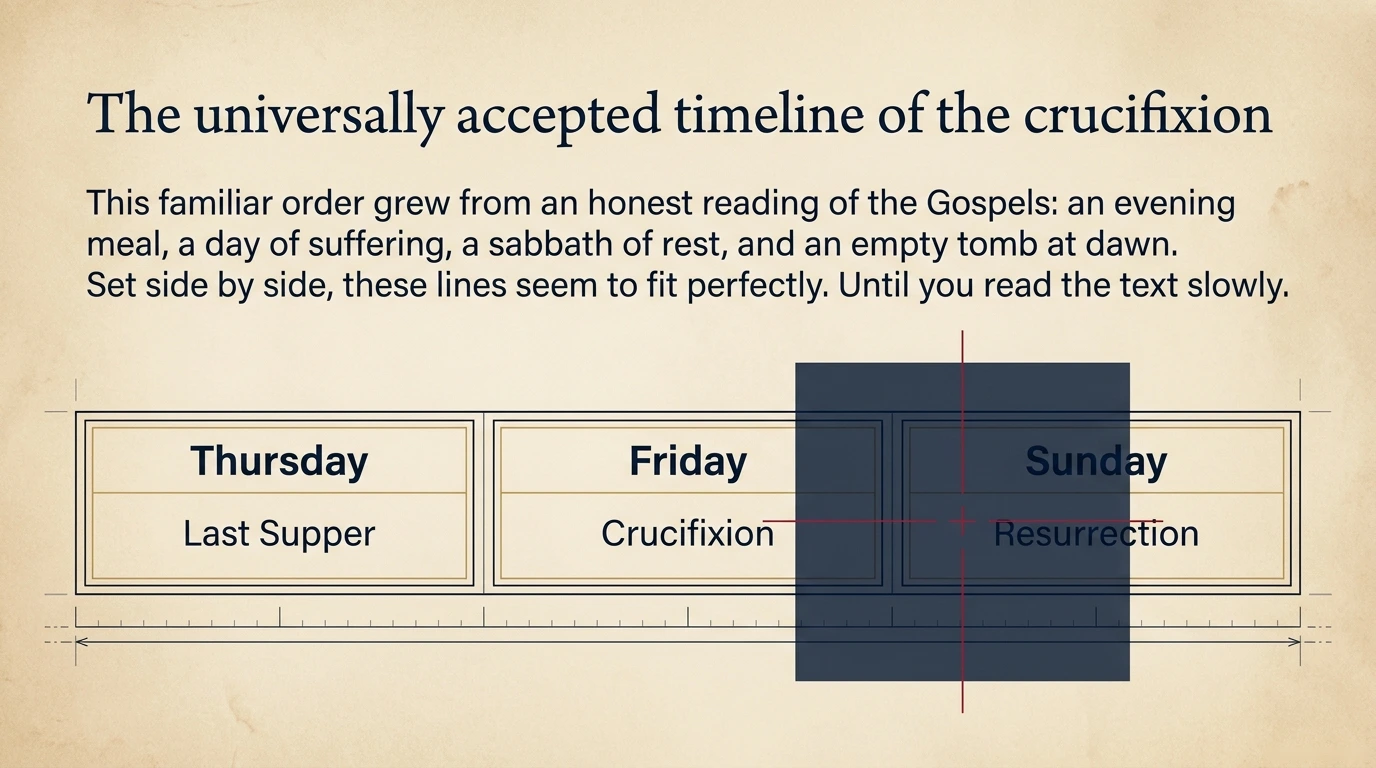
Ask almost anyone who has spent time in a church how the last days of Yeshua ran, and you will hear the same order. He ate the Last Supper with His disciples on Thursday evening, He was crucified on Friday and died that afternoon, and He rose on Sunday morning. The order is printed in calendars, preached every spring, and kept by churches all over the world. It has become so familiar that most people assume the Bible says it in so many words.
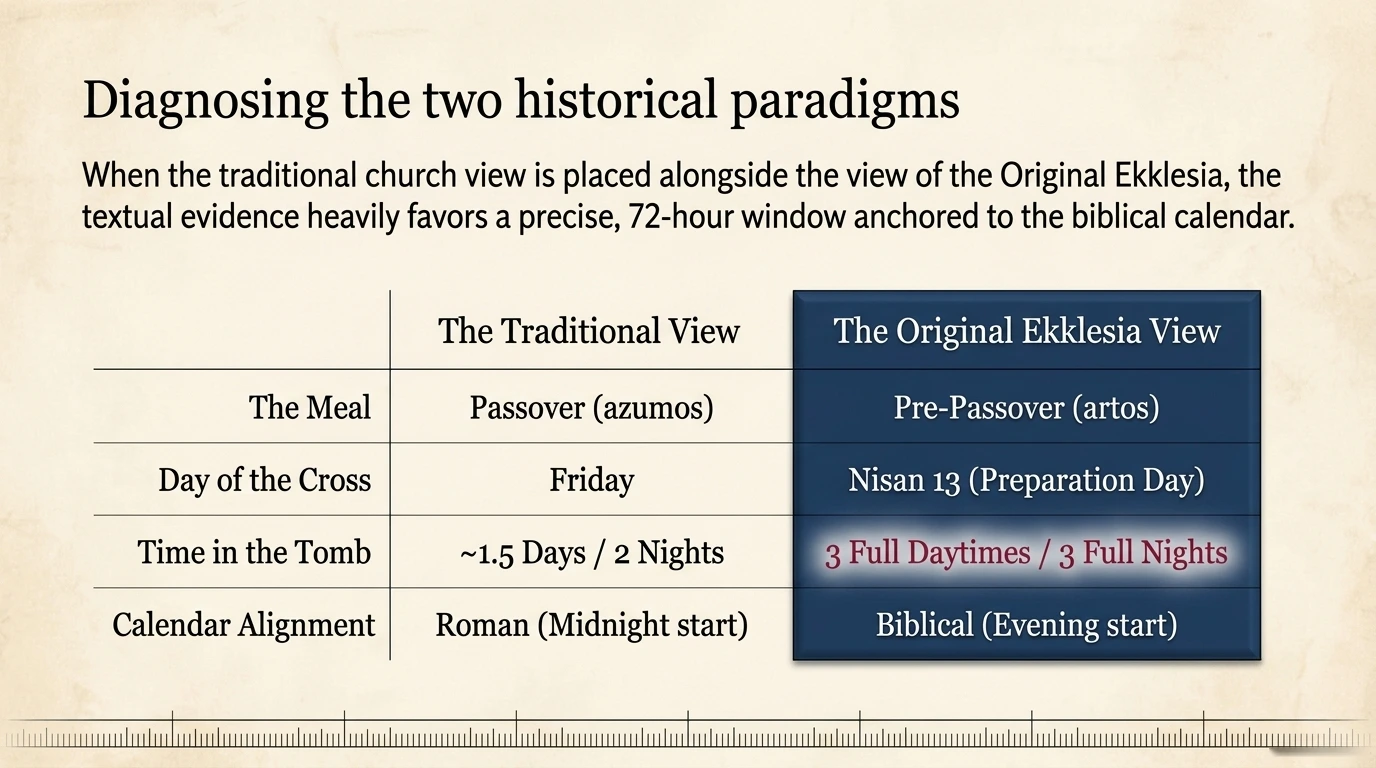
This order did not come from carelessness. It grew out of honest reading. The first three Gospels tell how the disciples went ahead to prepare the Passover, and so the supper has long been taken to be the Passover meal itself. The Gospels call the day of the cross a day of preparation, and the sabbath that followed it has long been taken to be the weekly Sabbath. And they tell how the women came to the tomb very early on the morning it was found empty. Set side by side, these lines seem to fit a short span of time: an evening meal, a day of suffering, a sabbath of rest, and an empty tomb at dawn.
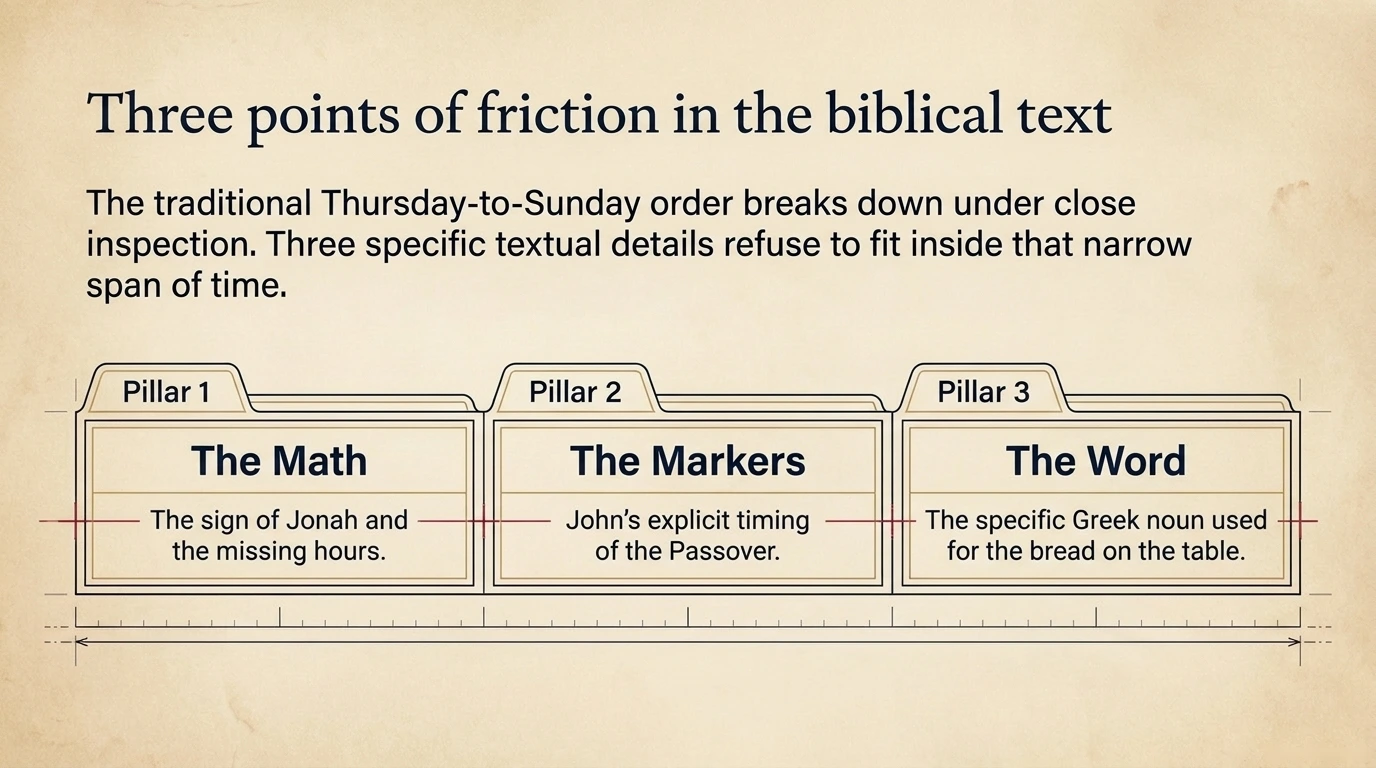
Yet when the text is read slowly, three things will not fit inside that span. The first of them is the only sign Yeshua said He would give.
No Sign but the Sign of Jonah
Some of the scribes and Pharisees once came to Him and asked for proof.
Matthew 12:38-40 Then some of the scribes and Pharisees answered, saying: "Teacher, we want to see a sign from You." But He answered and said to them: "An evil and adulterous generation seeks a sign, and no sign will be given to it except the sign of Jonah the prophet. For just as Jonah was in the belly of the great fish for three days and three nights, so will the Son of Man be in the heart of the earth for three days and three nights.
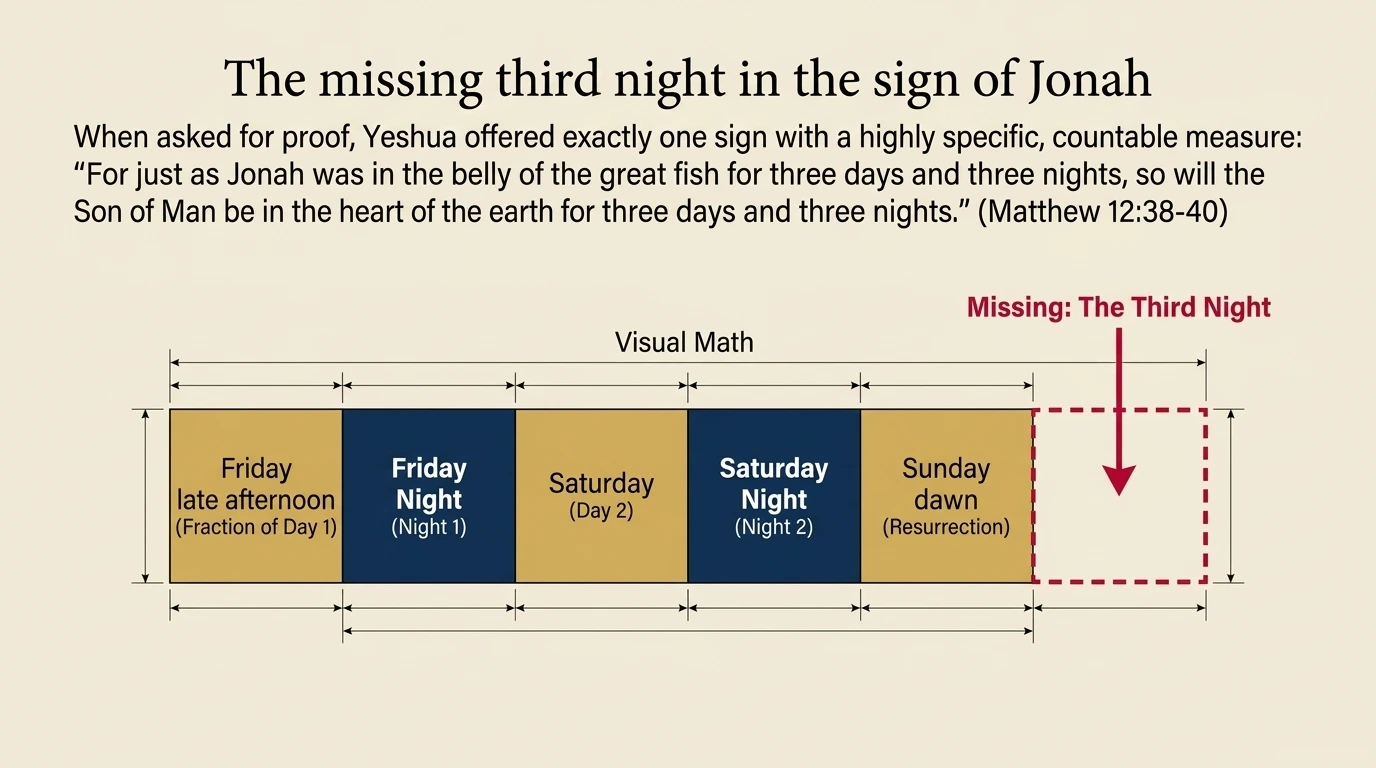
They asked for “a sign,” and He answered that “no sign will be given to it except the sign of Jonah the prophet.” He named one sign and only one, and He gave it a measure that can be counted: “so will the Son of Man be in the heart of the earth for three days and three nights.”
He did not say it only once. On another day, when Pharisees and Sadducees came to test Him with the same request, He gave the same answer.
Matthew 16:4 An evil and adulterous generation seeks a sign, and a sign will not be given to it except the sign of Jonah the prophet." And He left them and went away.
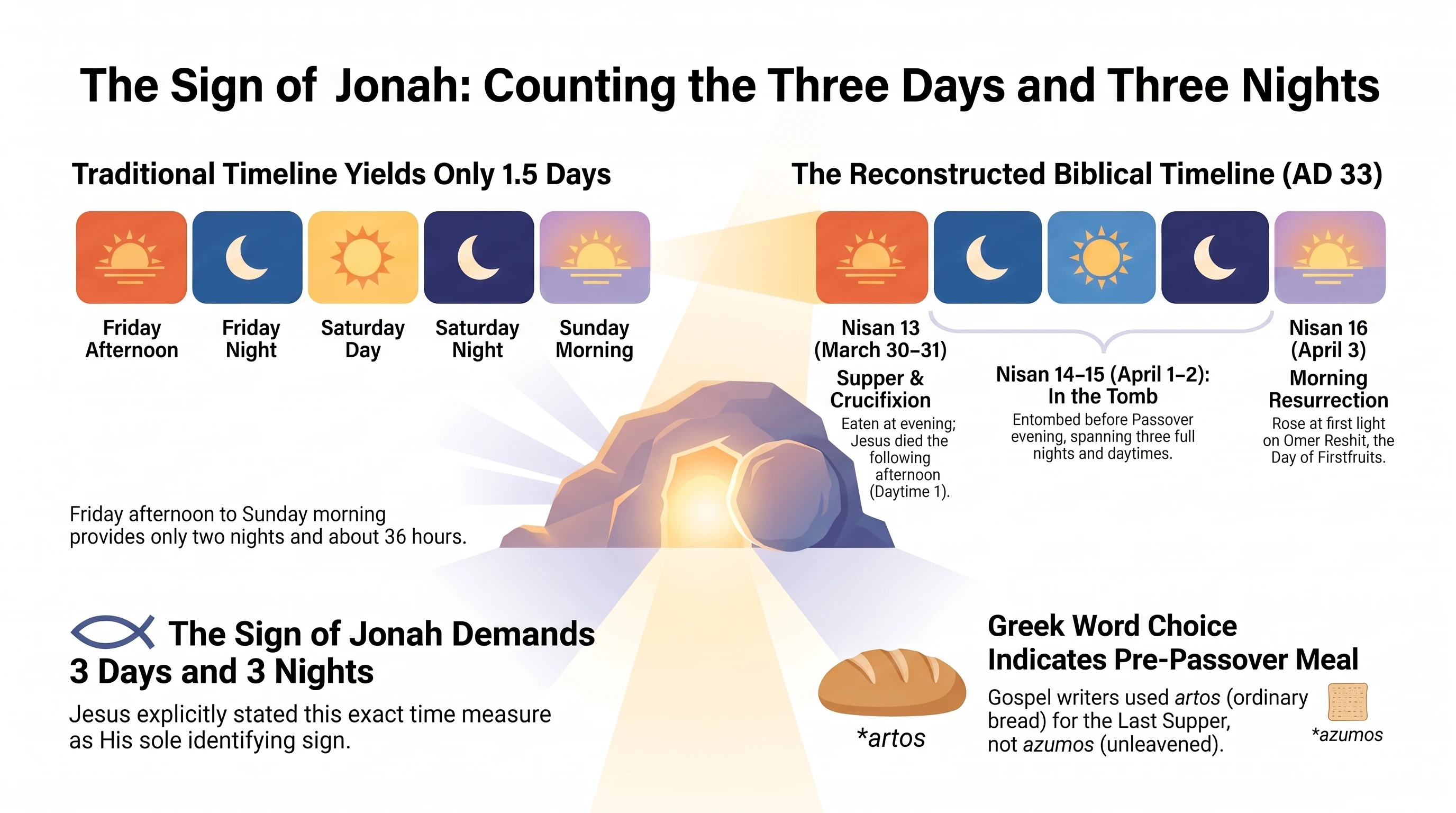
A sign He gave twice is a sign meant to be checked, so check it against the traditional order. From a death in the middle of the afternoon to an empty tomb before dawn two mornings later, you have the last hours of one daytime, one whole daytime, and two nights. Counted by the hours, that is about a day and a half and two nights, and even if every part of a day is counted as a whole day, the nights still come to two. However the hours are arranged, the third night is not there.
Three Problems
The sign of Jonah is the first problem, and it is the plainest. There are two more.
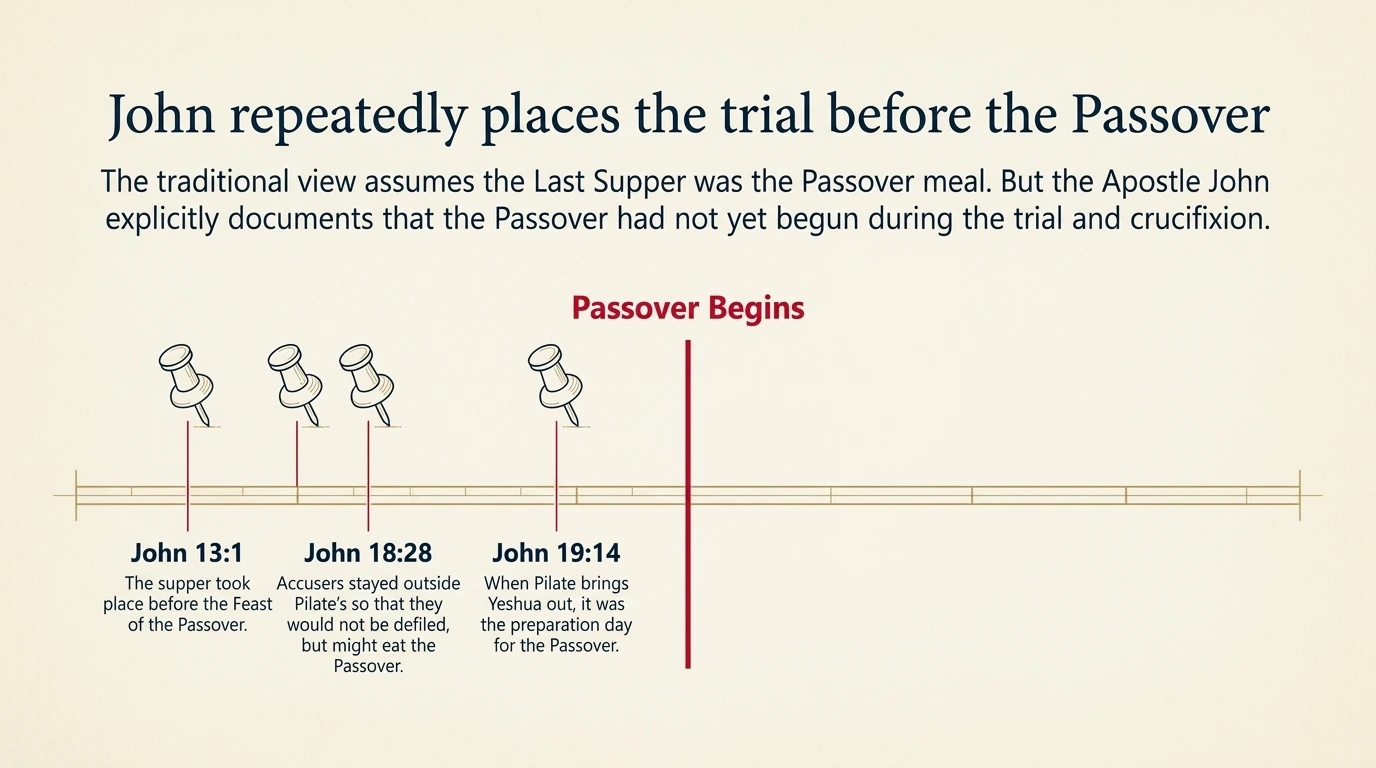
The second lies in the markers of time that the apostle John recorded. John says that the supper took place “before the Feast of the Passover” (John 13:1). He says that on the morning of the trial, the men who brought Yeshua to the Roman governor would not go inside his headquarters, “so that they would not be defiled, but might eat the Passover” (John 18:28). They had not eaten it yet. And when Pilate brought Yeshua out to be judged, John says, “it was the preparation day for the Passover” (John 19:14). Each of these points the same way: the suffering and death of Yeshua took place before the Passover had begun.
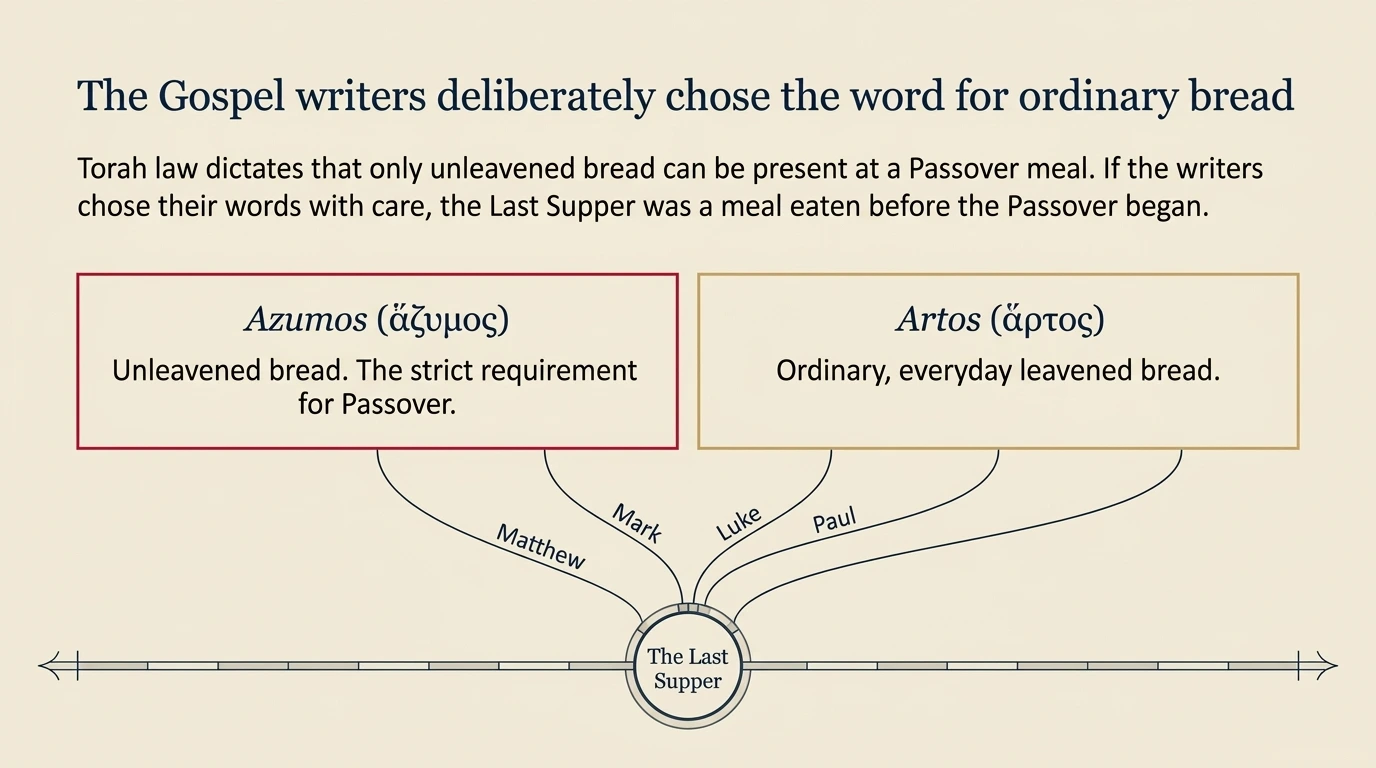
The third problem lies in a single word. If the Last Supper was the Passover meal, the bread on the table had to be unleavened bread, which the Jews call matzah. The Torah allowed no other bread at that meal. The Greek language has a precise word for unleavened bread, azumos ἄζυμος ad'-zoo-mos, and the Gospel writers use it whenever they mean the feast or its bread. Yet when Matthew, Mark, and Luke tell how Yeshua took bread at the supper, all three write artos ἄρτος ar'-tos, the common, everyday word for bread, normally the kind made with leaven. Paul, handing on the same account to the believers in Corinth, writes the same word. If the writers chose their words with care, then the meal was not the Passover itself but a meal eaten before the Passover began.
What This Book Will Do
This book takes up those three threads: the sign of three days and three nights, John’s markers of time, and the words the Gospel writers chose. It tests them against the text itself, against the calendar of appointed times that God gave in Leviticus 23, and against the witness of the earliest churches. It does not ask you to take anyone’s word for it. Every verse that an argument rests on is quoted in full, so that you can weigh it yourself.
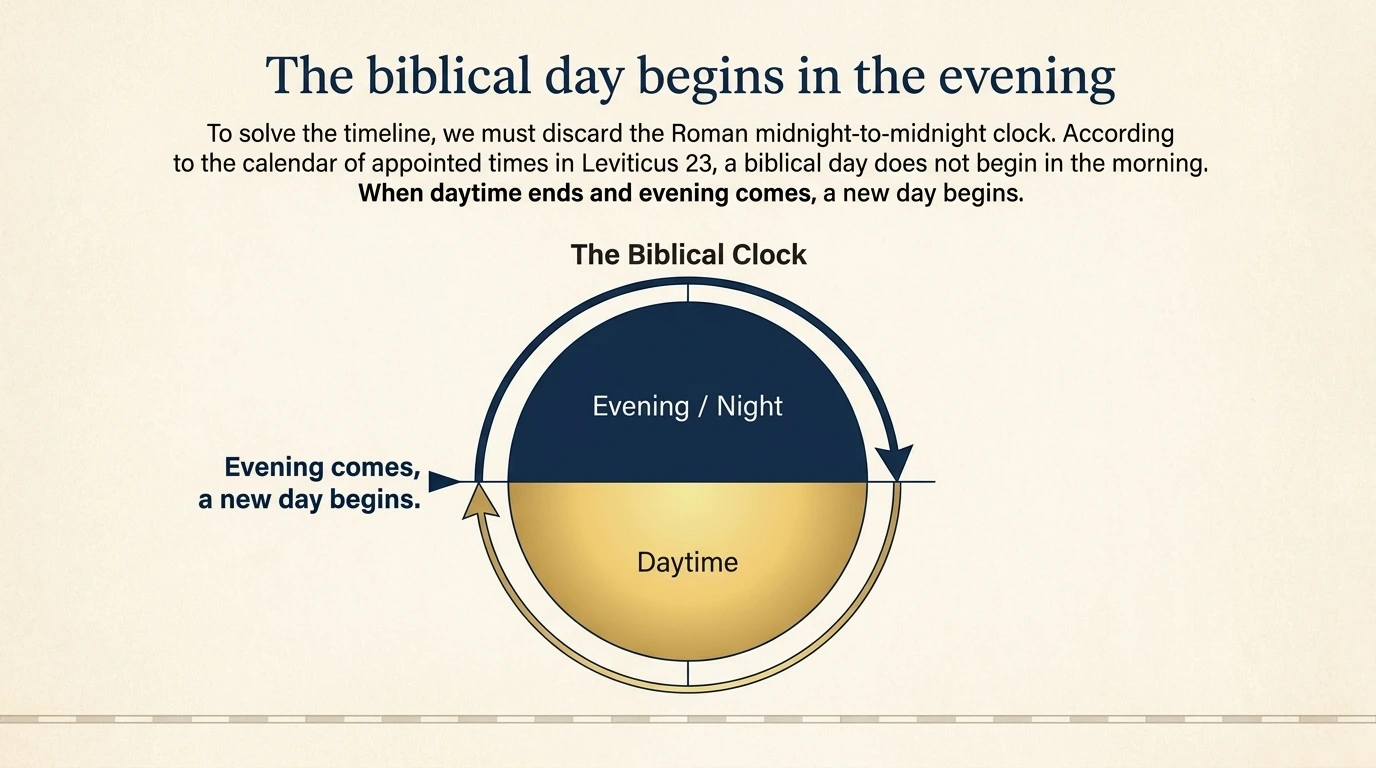
What comes out of that testing is a picture that holds together from the inside. It begins with a simple fact about the Bible’s calendar: a biblical day does not begin in the morning; when the daytime ends and evening comes, a new day has begun. Read that way, the Last Supper was eaten in the evening that opened the thirteenth day of the first month, Nisan. Yeshua died at the ninth hour of the daytime of that same thirteenth day, which John calls the preparation day for the Passover. Because He entered death while it was still daytime, that daytime is the first daytime of the sign. Joseph of Arimathea and Nicodemus laid His body in the tomb that afternoon and finished their work by late afternoon, before the evening that opened the fourteenth day, the Passover. And He rose very early in the morning of the sixteenth day, at first light, on the day of Omer Reshit, when the first sheaf of the harvest was waved before God. Counted in the Bible’s own way, that is three daytimes and three nights in the heart of the earth, exactly as He said.
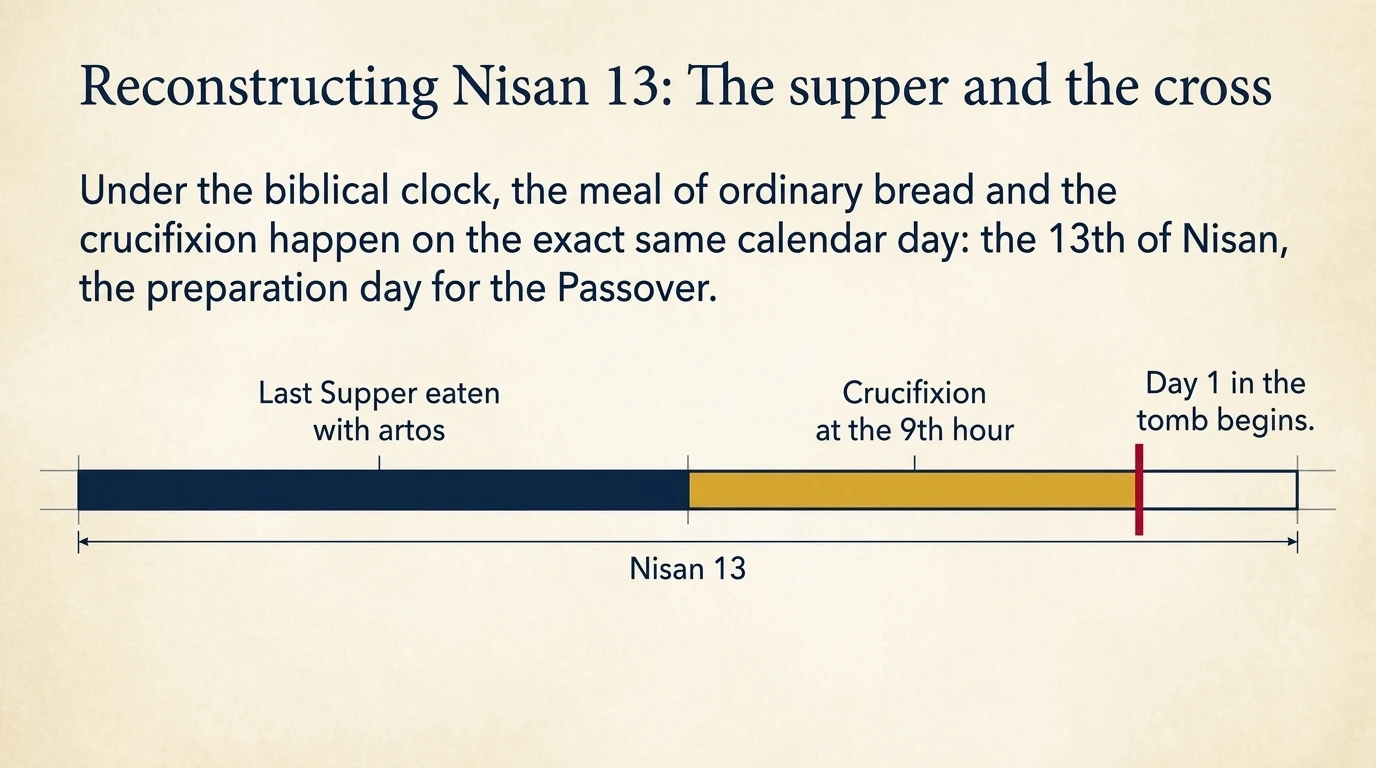
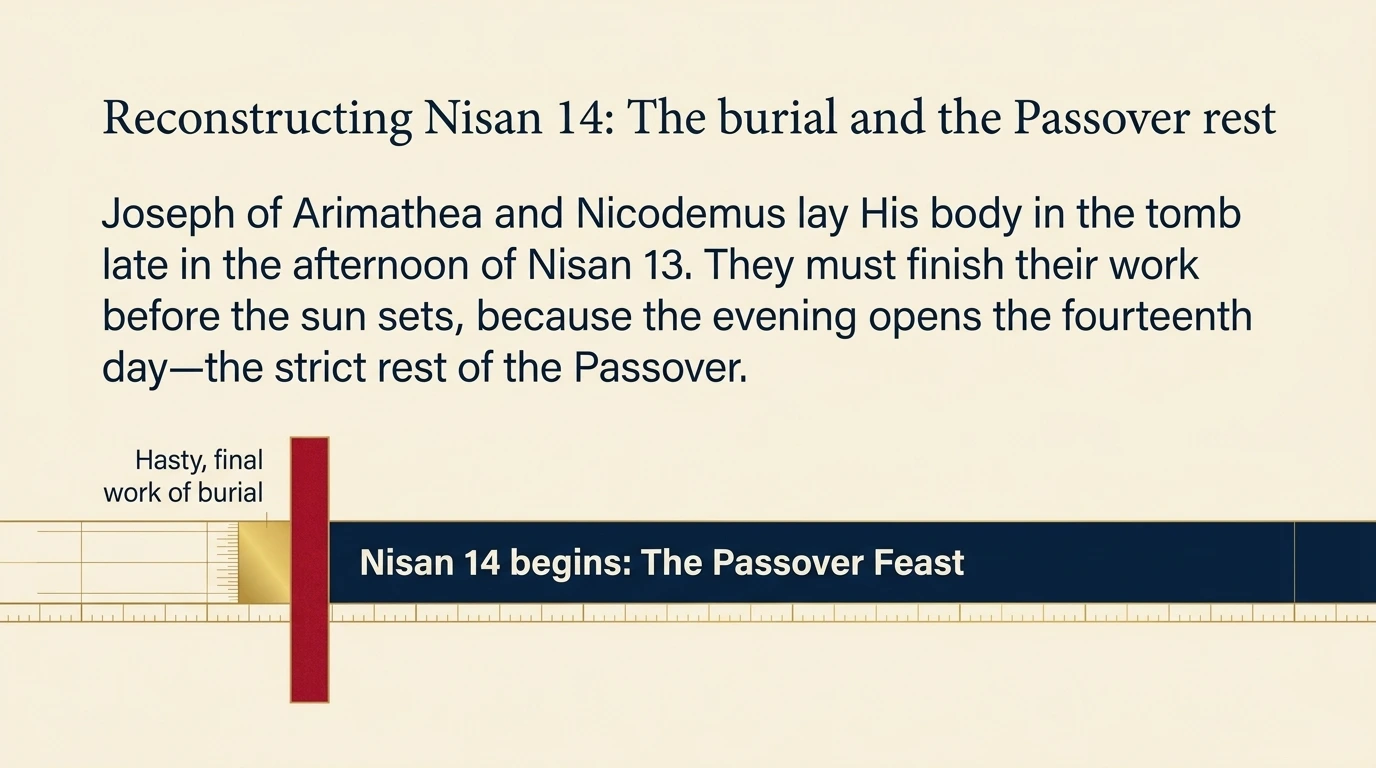
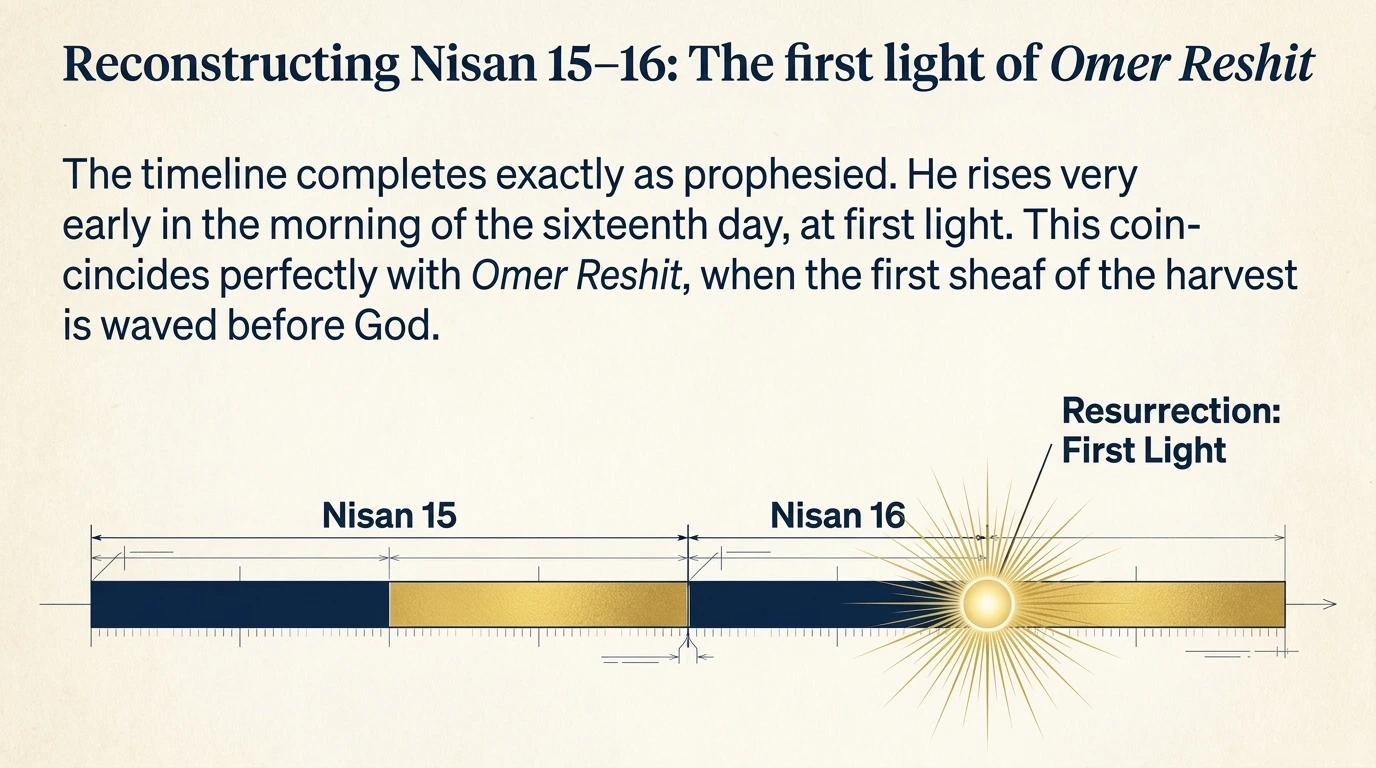
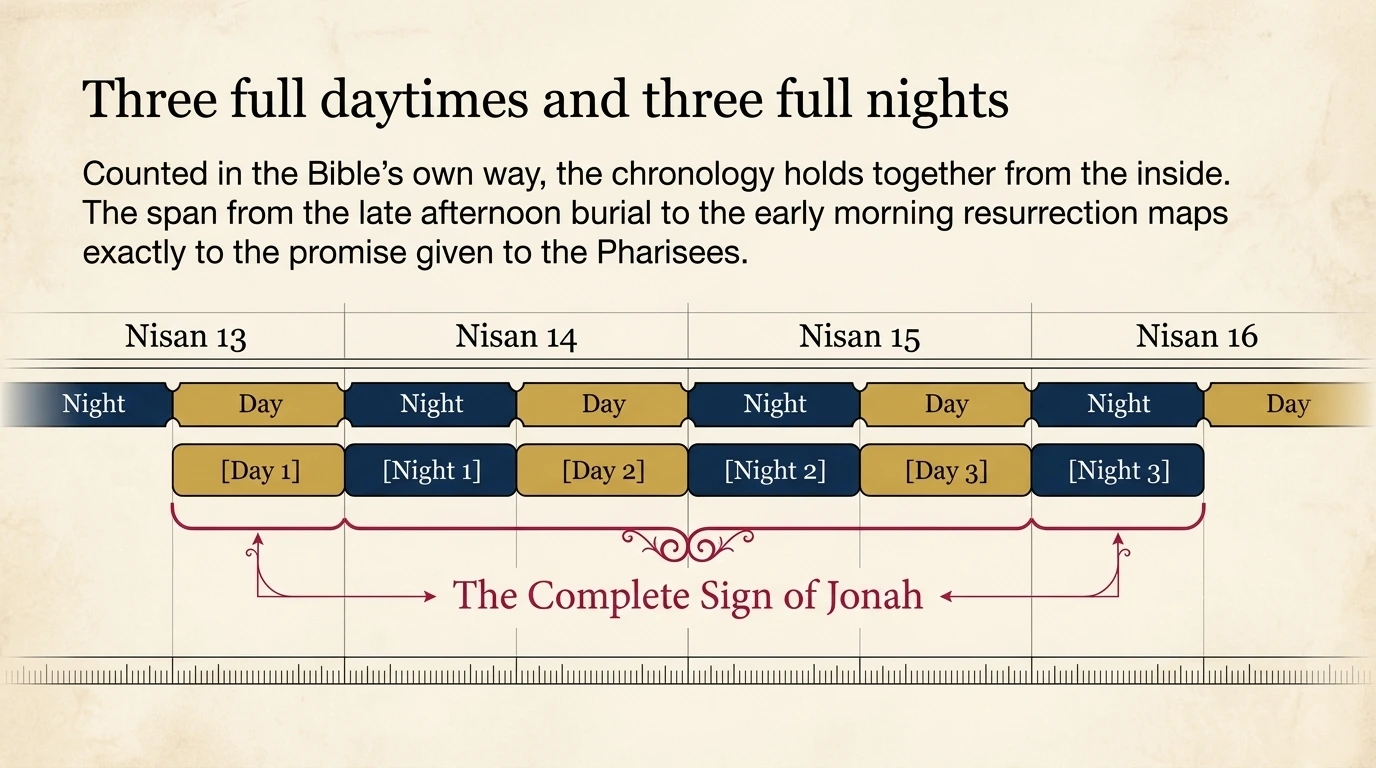
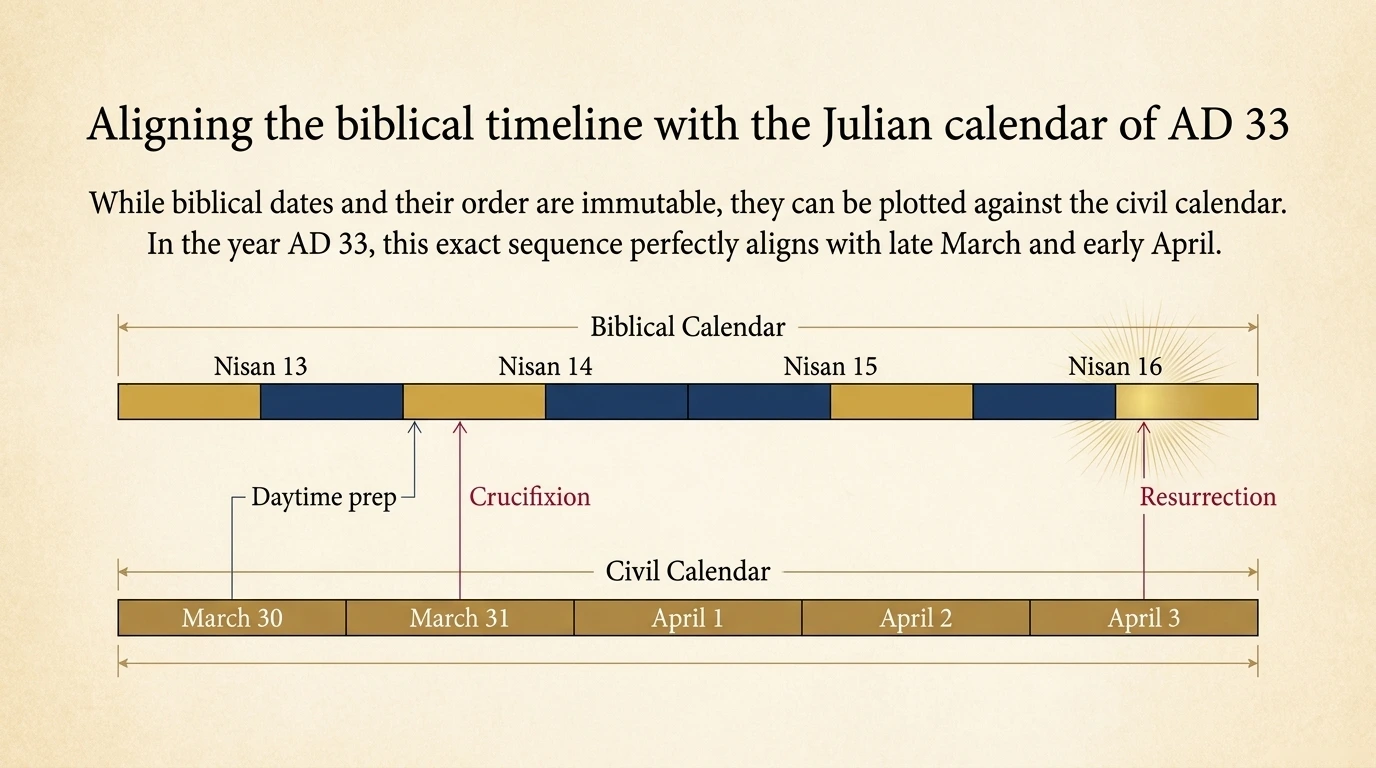
The year was AD 33. By the civil calendar, the disciples prepared the supper in the daytime of March 30 and ate it that evening; Yeshua died in the daytime of March 31; and He rose very early on the morning of April 3. These civil dates follow the AD and BC calendar calculation now in use, the one almost all Jews use as well. If that calculation were ever found to be wrong, the civil dates would be recalculated to match, but the biblical dates and their order would not move. Chapter 36 explains why it was that year, and Chapter 43 sets the biblical and the civil dates side by side.
If you have read Book 3 of this series, you will remember that it closed with a short bridge to this very picture and promised the details here. If you have not, nothing in these pages depends on it.
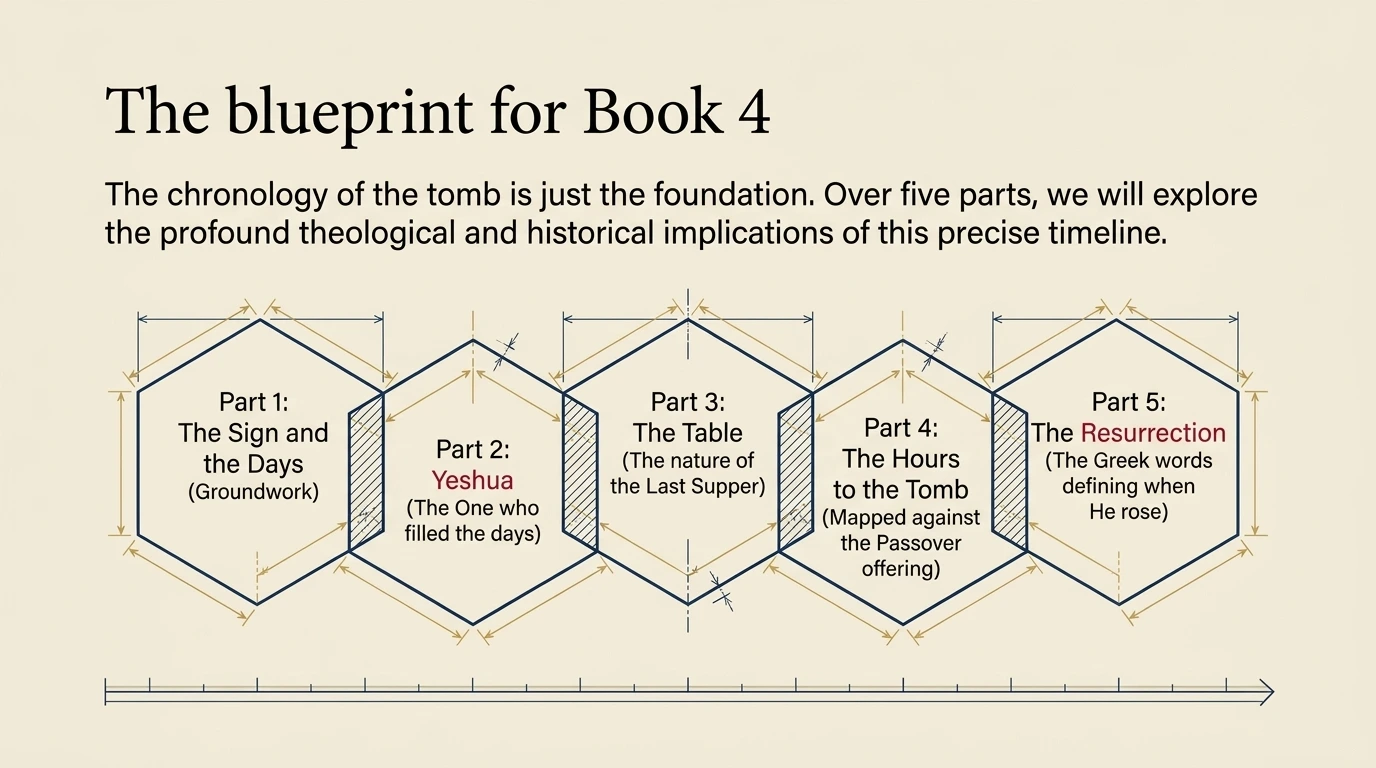
The book has five parts. Part One lays the groundwork: the sign itself and the way Scripture counts a day. Part Two turns from the days to the One who filled them, and to the name the angel gave Him before He was born: Yeshua. Part Three takes us to the table of the Last Supper and asks what kind of meal it was. Part Four follows the hours from the supper to the tomb and sets them beside the Passover offering. And Part Five reads the Greek words that tell when He rose.
The place to begin is the sign He named. Before we count anything, we should hear exactly what the book of Jonah says, in the order in which it says it.