St. Paul on Trial · Chapter 1 of 47
Justified, Then Walking
One night your phone tells you that a new version of its operating system is ready. You tap “install” and go to bed, and in the morning everything looks different. The icons and menus have changed, and the old, clumsy code of version 1.0 is gone. No one mourns it, and no one keeps a copy. The new system has replaced the old one, and that is the whole purpose of an update.
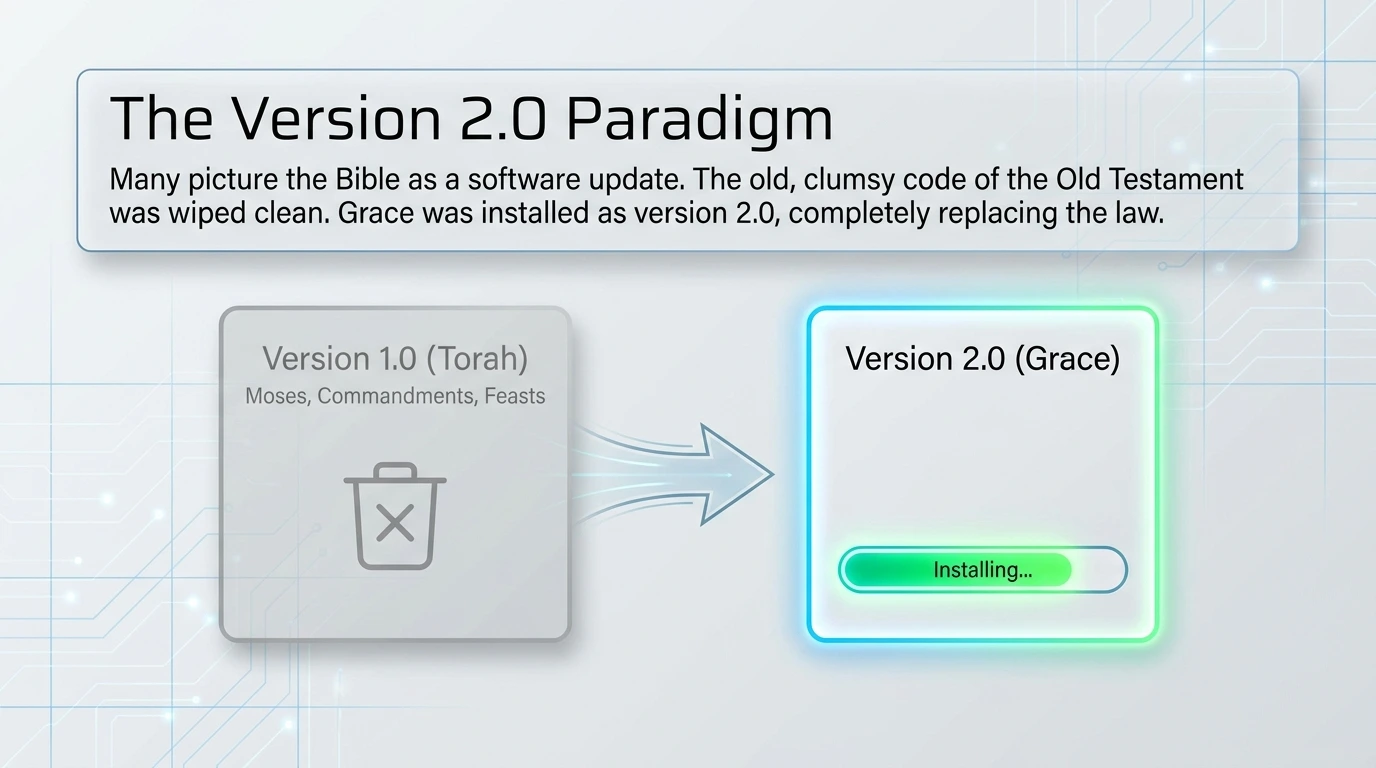
Many Christians picture the Bible in the same way. The Old Testament was version 1.0: the Torah, the law of Moses, with its commandments, its feasts, and its rules about food. Then the Messiah came, and grace was installed as version 2.0. The old code was wiped clean, and now we run on something better. Grace, in this picture, replaced the law.
The picture is clear, and it is a comforting one. It also seems to rest on something real, because grace truly is the heart of the good news. Anyone who has believed this picture all his life is not foolish. He was handed a picture that appears to fit.
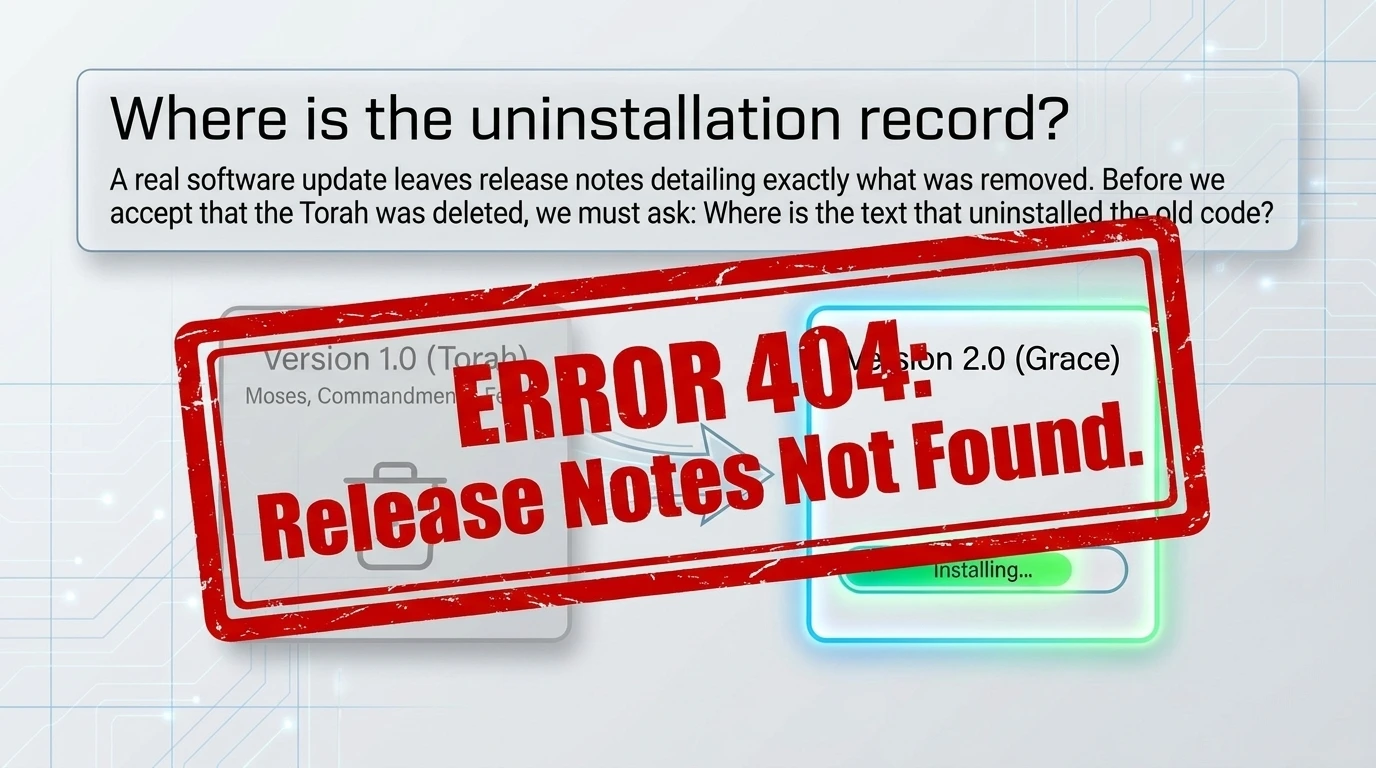
Yet a real update leaves a record behind it. Somewhere there are release notes, a list of what was removed and what was added. Before we accept that the Torah was deleted, it is fair to ask for those notes. Where does the text say so, and which verse announces that the old code was uninstalled?
That is the question this book asks, chapter by chapter. Before it is asked even once, however, one matter must be settled, so that nothing in the rest of the book is misheard.
How a Sinner Is Made Righteous
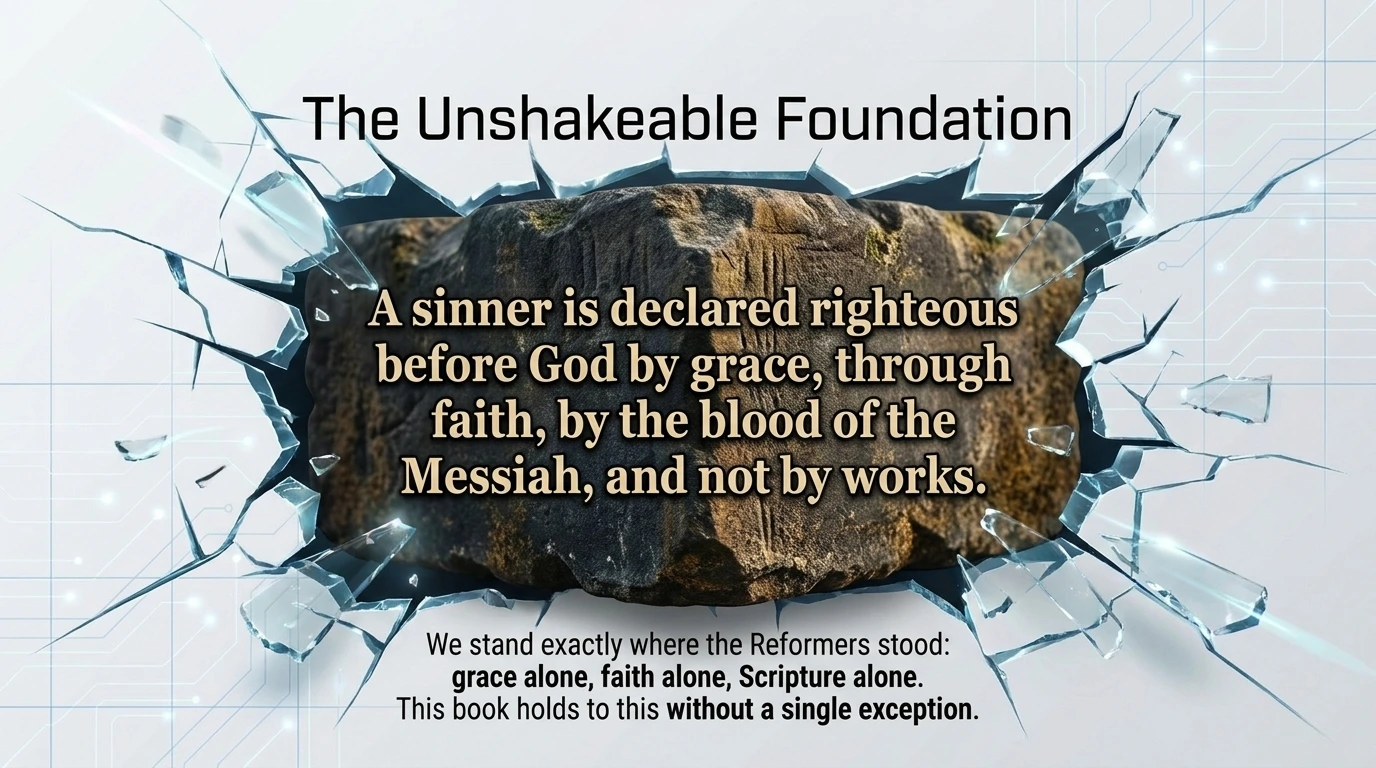
A sinner is declared righteous before God by grace, through faith, by the blood of the Messiah, and not by works. Paul puts it this way:
Romans 3:24-25 being justified dorean δωρεάν do-reh-an'(freely) by His charis χάρις khar'-ece(grace) through the apolytrosis ἀπολύτρωσις ap-ol-oo'-tro-sis(redemption, ransom-release) that is in Messiah Yeshua, whom God set forth as a hilasterion ἱλαστήριον hil-as-tay'-ree-on(propitiation, mercy-seat) through faith in His blood, for a demonstration of His dikaiosyne δικαιοσύνη dik-ah-yos-oo'-nay(righteousness), on account of the passing over of previously committed sins
Three words in this passage deserve attention.
The first is “dorean(freely).” It means as a gift, for nothing. The one who receives it does not pay for it, either now or later.
The second is apolytrosis (ἀπολύτρωσις), “redemption, ransom-release.” In Paul’s world this was the word for buying a captive’s freedom. A prisoner of war or a slave cannot pay his own ransom, because he has nothing to pay with. Someone else pays, and the door opens.
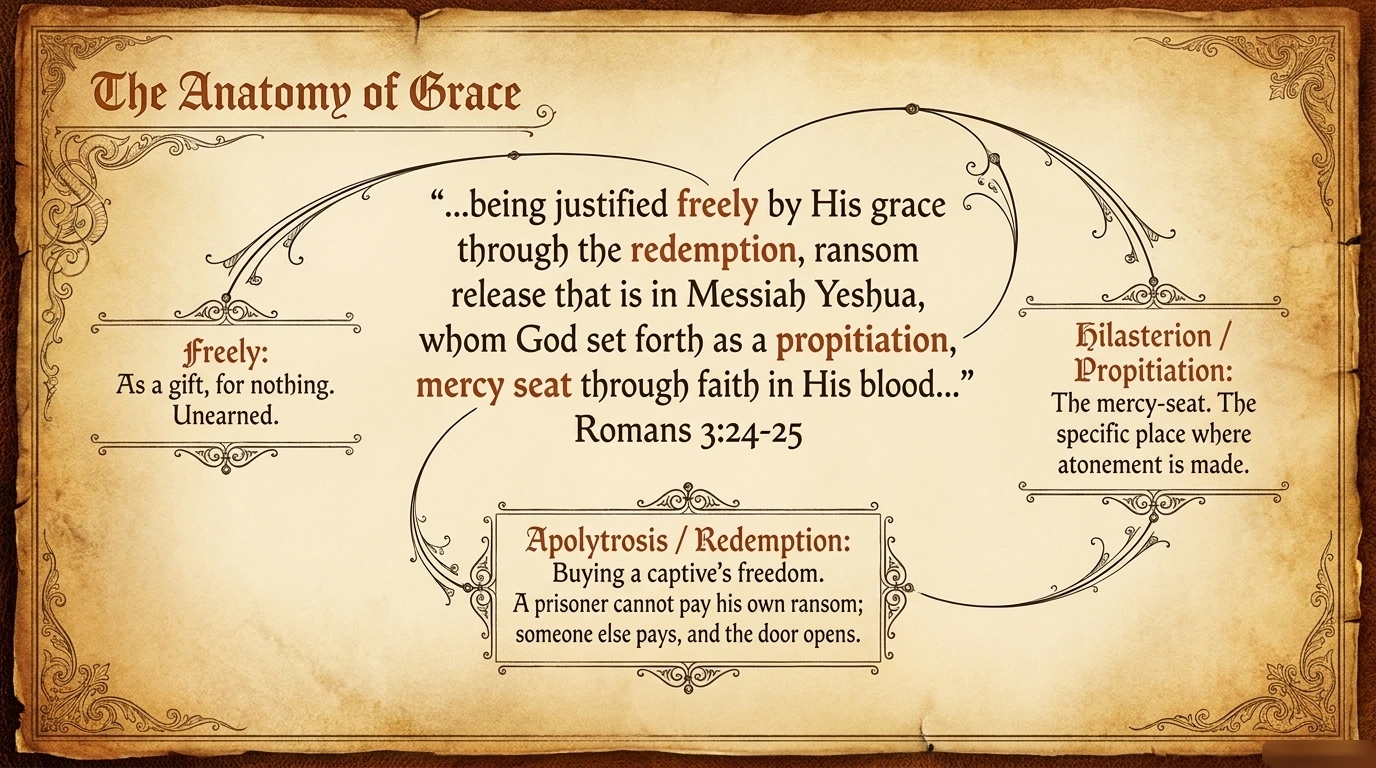
The third is hilasterion (ἱλαστήριον), “propitiation, mercy-seat,” the place where atonement is made. God set the Messiah forth as that place, and the way in is “through faith in His blood.”
Paul says the same to the Ephesians:
Ephesians 2:8-9 For by charis(grace) you have been saved through faith; and that not of yourselves, it is the doron δῶρον do'-ron(gift) of God; not as a result of works, so that no one may boast.
The gift is “not of yourselves,” and it is “not as a result of works.” A gift that could be earned would not be a gift, and a ransom that a captive could pay himself would not be a ransom.
This book holds to that without a single exception. The Reformers summed up their teaching as grace alone, faith alone, and Scripture alone, and on this point we stand exactly where they stood.
What Scripture Rebukes
One thing, then, should be plain from the start. To seek righteousness before God on the ground of having kept the Torah is not what this book teaches. It is what Scripture rebukes:
Galatians 5:4 You have been severed from Messiah, you who are seeking to be justified by nomos νόμος nom'-os(law); you have fallen from charis(grace).
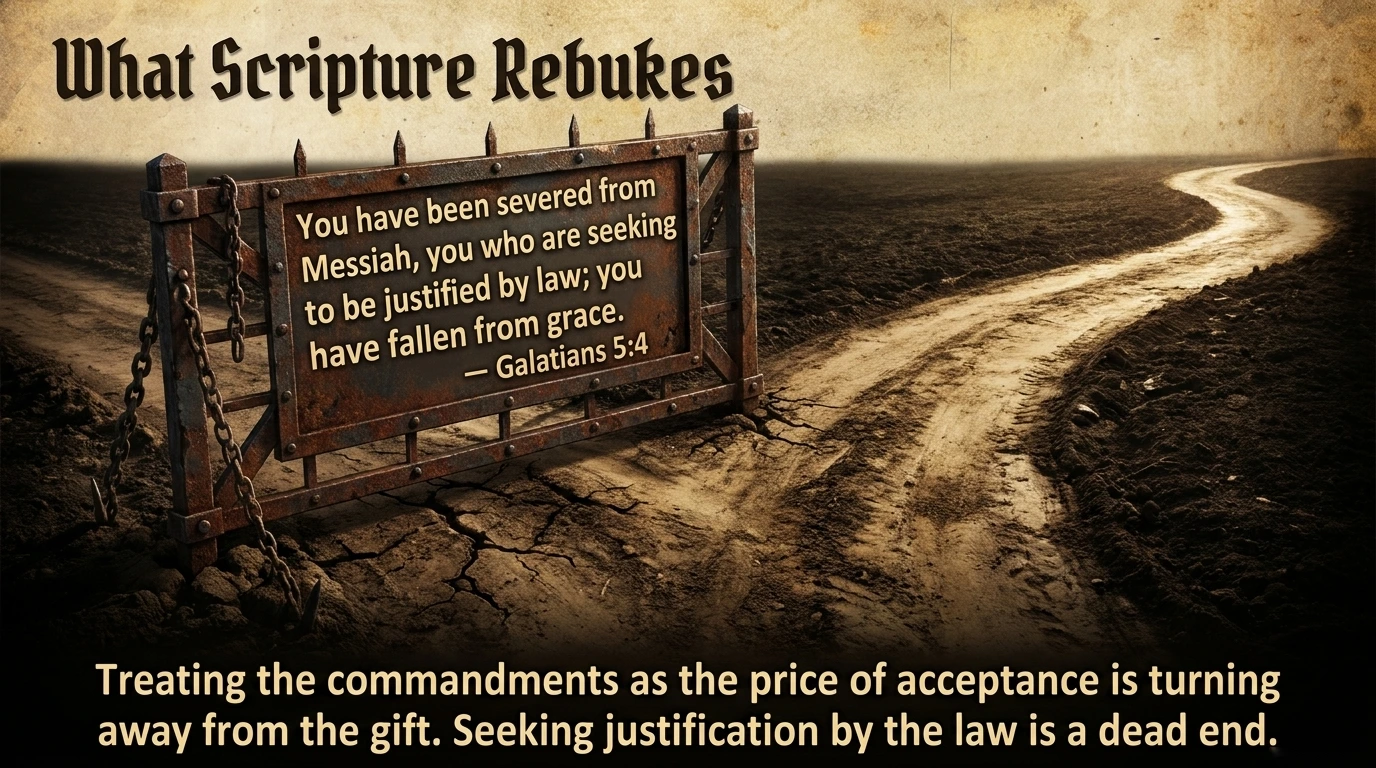
A person who treats the commandments as the price of his acceptance has turned away from the gift. In Paul’s words, he has “fallen from charis(grace).” Book 1 showed that this verse is about seeking justification by the law, and that is exactly how we read it here.
If anything in the chapters ahead ever seems to say that you must keep commandments in order to be saved, come back to this page. That is not the claim.
What the Righteous Walk In
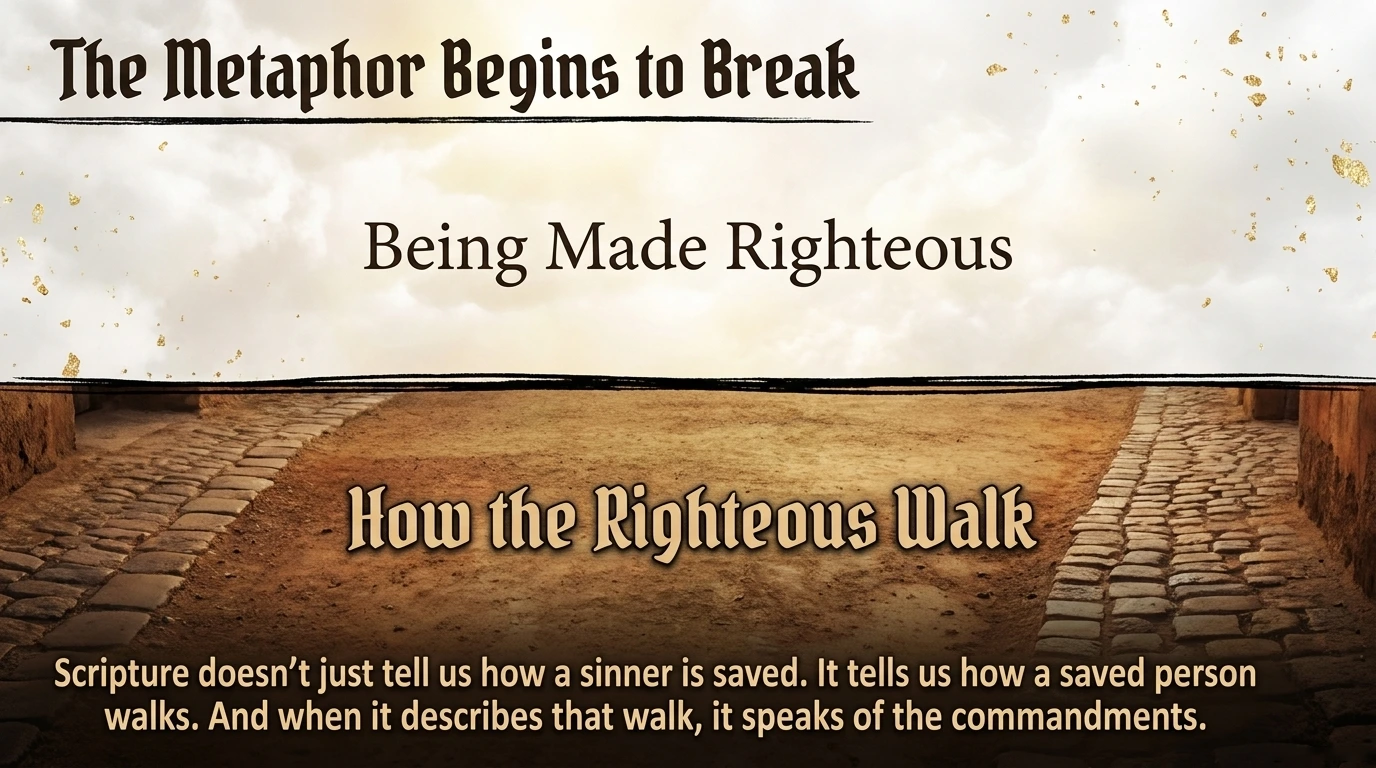
It is here that the picture of the update begins to break.
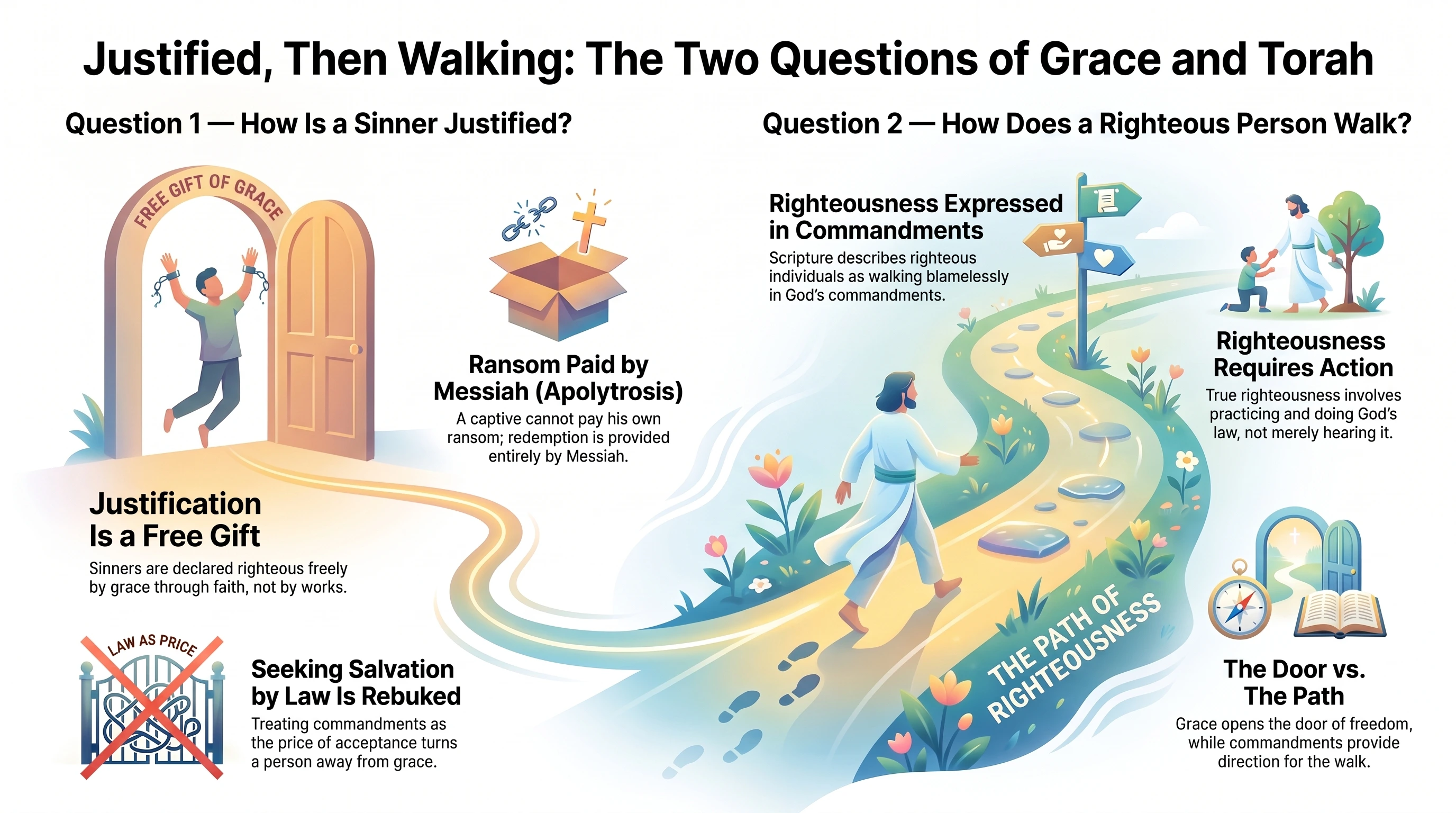
Scripture tells us not only how a person is made righteous but also how a righteous person walks, and when it describes that walk, it speaks of the commandments:
Luke 1:6 They were both righteous before God, walking blamelessly in all the commandments and dikaioma δικαίωμα dik-ah'-yo-mah(ordinances) of the Lord.
These are Zacharias and Elizabeth, the parents of John the Baptist. Luke calls them “righteous before God,” and then he shows what that looked like: “walking blamelessly in all the commandments and dikaioma(ordinances) of the Lord.” A dikaioma (δικαίωμα) is an ordinance, a righteous requirement actually carried out. Luke does not set their righteousness against the commandments. He describes their righteousness by means of the commandments.
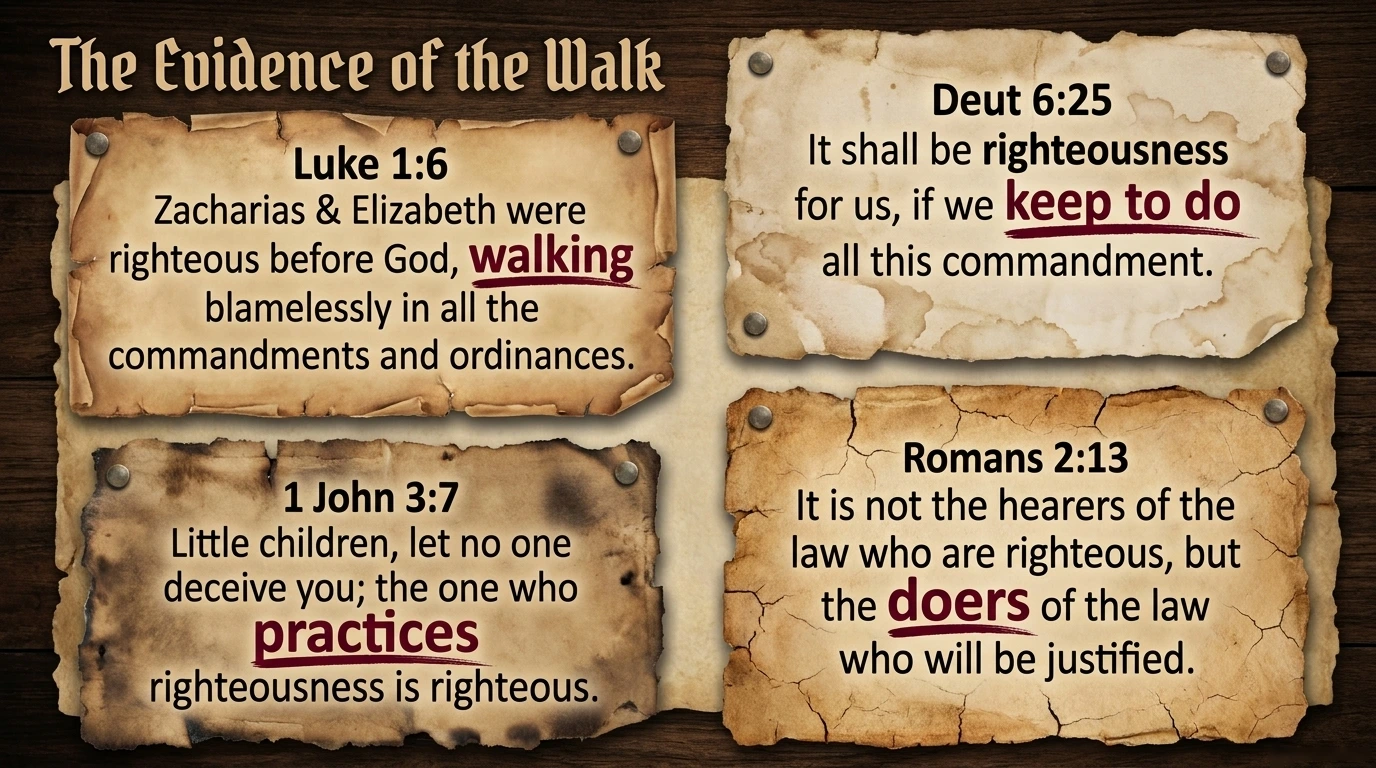
Moses had said the same long before: “it shall be righteousness for us, if we keep to do all this commandment (mitzvah מִצוָה mits-vaw') before the LORD our God” (Deuteronomy 6:25). We will return to that promise in Chapter 4.
John, writing to believers long after the cross, says it as well:
1 John 3:7 Little children, let no one deceive you; the one who practices dikaiosyne(righteousness) is righteous, as He is righteous.
John expects that someone will try to separate being righteous from doing righteousness, and he warns his readers not to be deceived by it. In his words, the one who practices dikaiosyne is righteous.
Paul says the same in Romans: “it is not the hearers of the nomos(law) who are righteous before God, but the doers of the nomos(law) who will be justified” (Romans 2:13). He draws a line between hearing and doing and places the righteous on the side of doing.
Two Questions, Not One
Set these passages side by side. Romans 3 and Ephesians 2 answer one question: how is a sinner made right with God? The answer is by grace, as a gift, through faith in the Messiah’s blood. Luke 1, Deuteronomy 6, 1 John 3, and Romans 2 answer a different question: how does a righteous person walk? The answer is in the commandments of God.
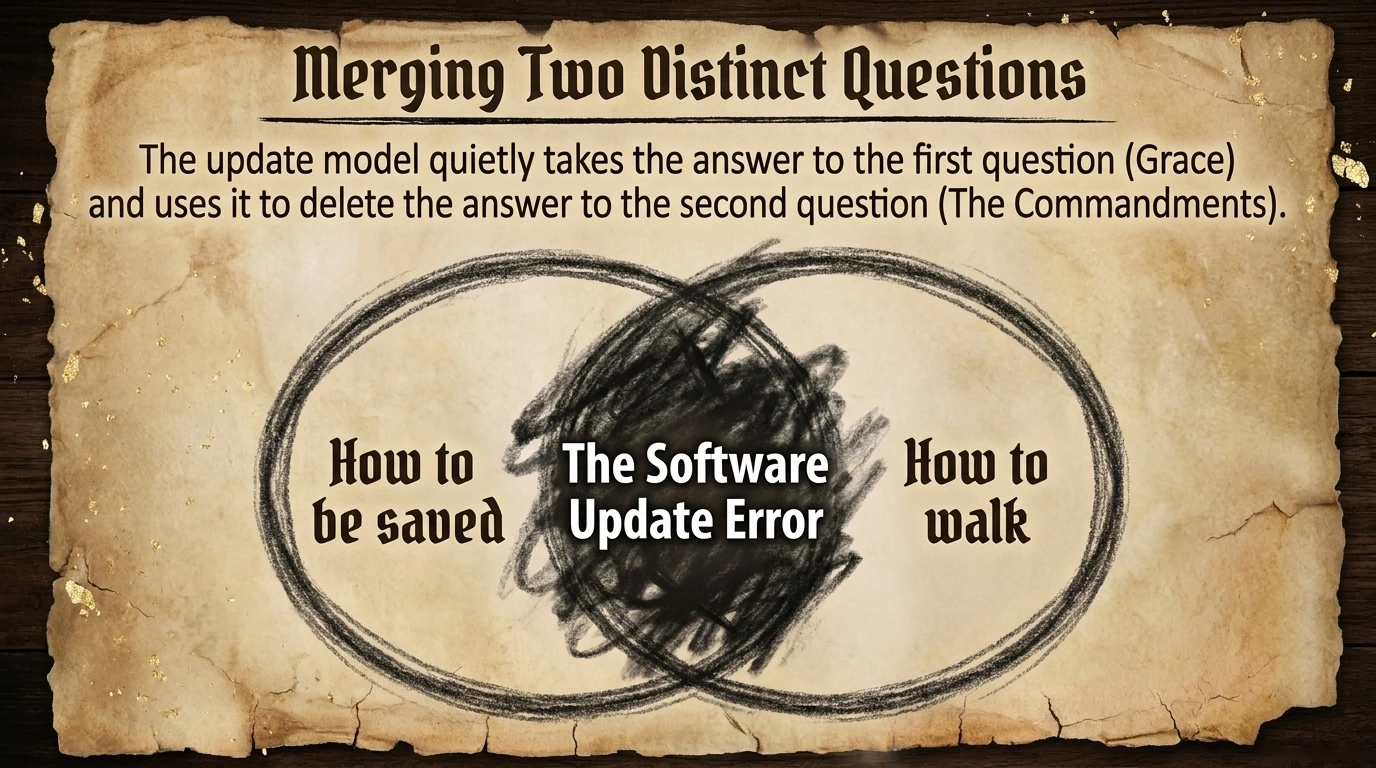
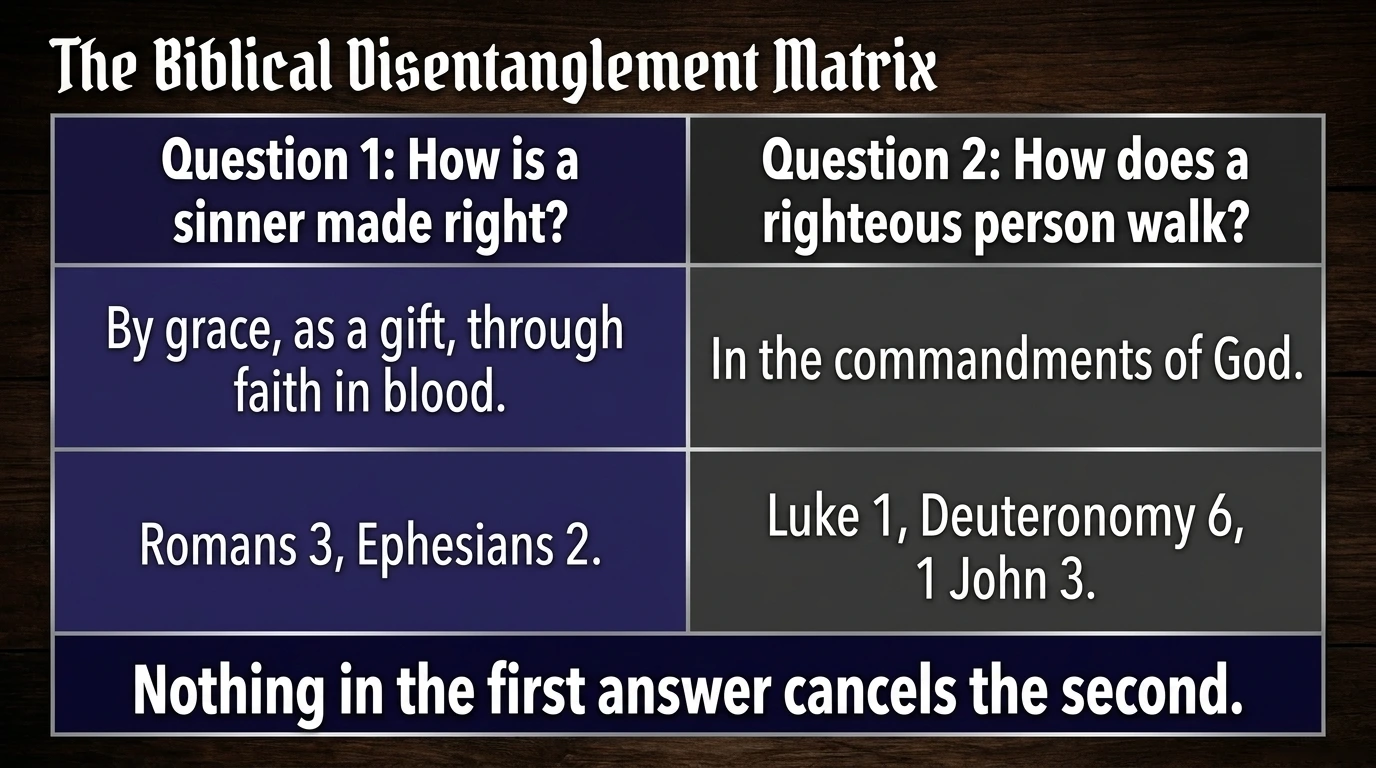
The picture of the software update quietly merges these two questions into one. It takes the answer to the first, which is grace, and uses it to delete the answer to the second. Because we are saved by grace, it reasons, the commandments must have been uninstalled.
Nothing in the first answer cancels the second. A ransomed captive does not pay for his freedom, but once he is free he still has to walk somewhere, and he walks in some way. The gift opens the door. It does not mean that the road beyond the door has no direction.
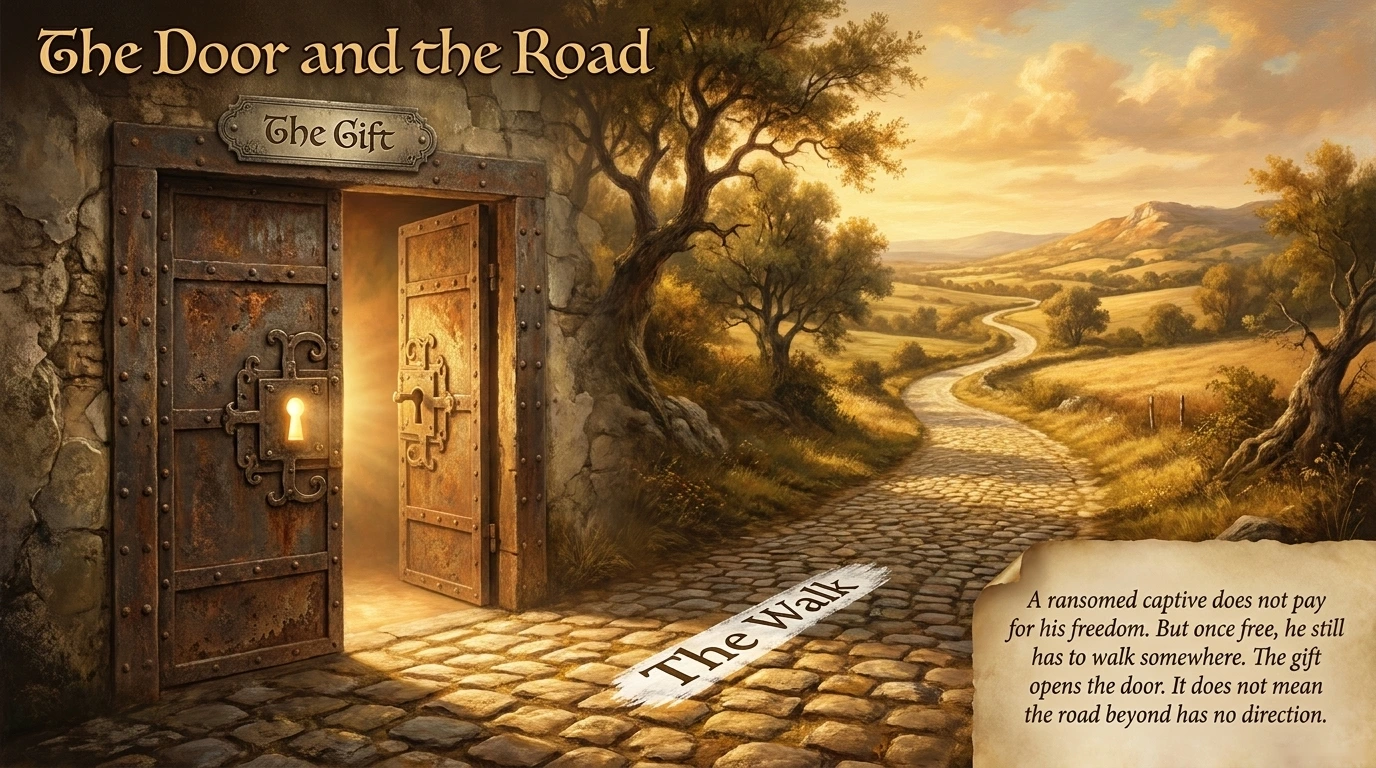
The question of this book, then, is not whether grace saves, for it does. The question is whether Scripture alone was also allowed to decide what became of the Torah. On the matter of how a saved person walks, did the church read the Scriptures alone, or did it read them through the picture of an update that the text never announces?
How to Read This Book
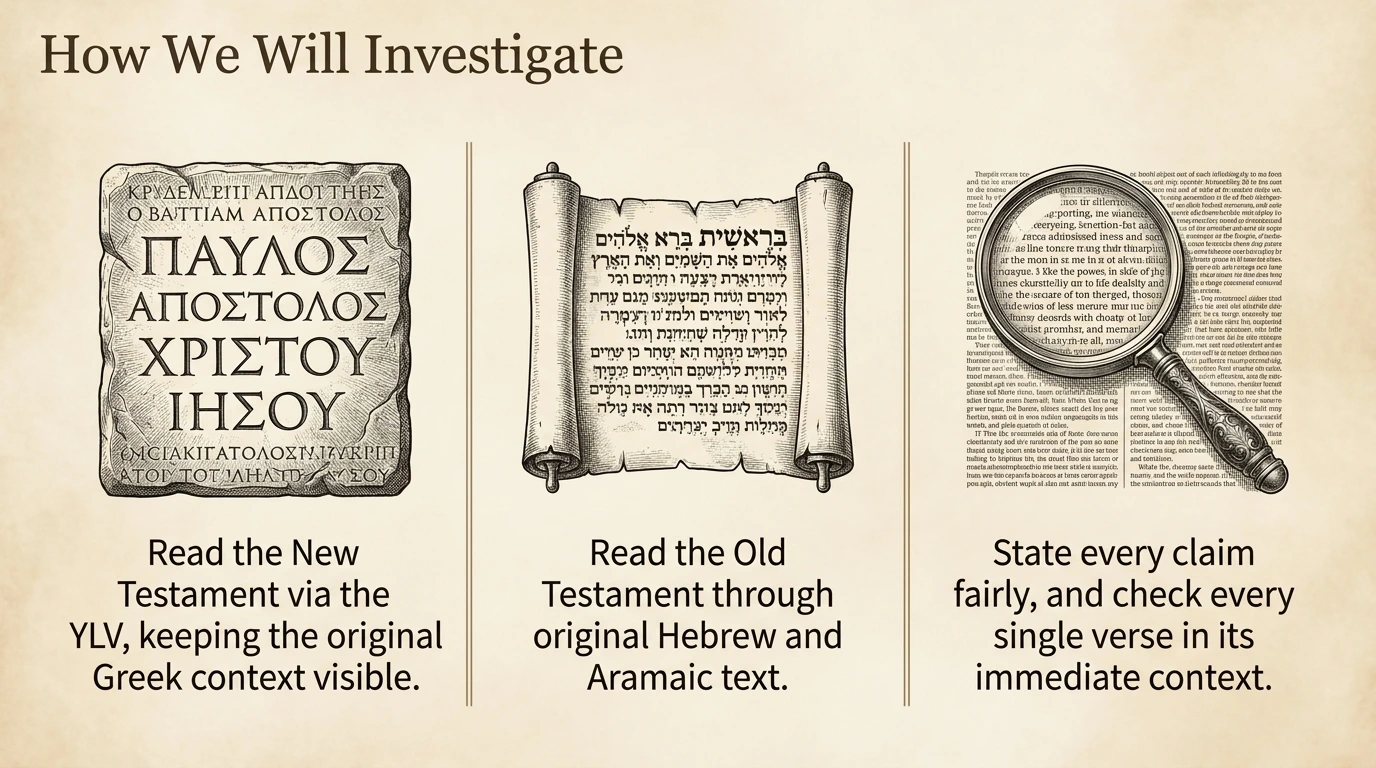
Each chapter in this part takes up one claim that is commonly made, the kind heard in sermons, in Bible studies, and in letters between friends. Each claim is stated fairly and in its strongest form, and then we open the text.
All passages are quoted from the YLV. Its New Testament keeps certain key Greek words visible with a short gloss beside them, such as dorean(freely) and charis(grace), and its reference text is the Byzantine Majority Text (Robinson–Pierpont 2018). Its Old Testament is translated from the Hebrew and Aramaic Masoretic text. None of it has to be taken on trust. Every verse can be checked in your own Bible, together with the verses before and after it, and I hope you will check them.
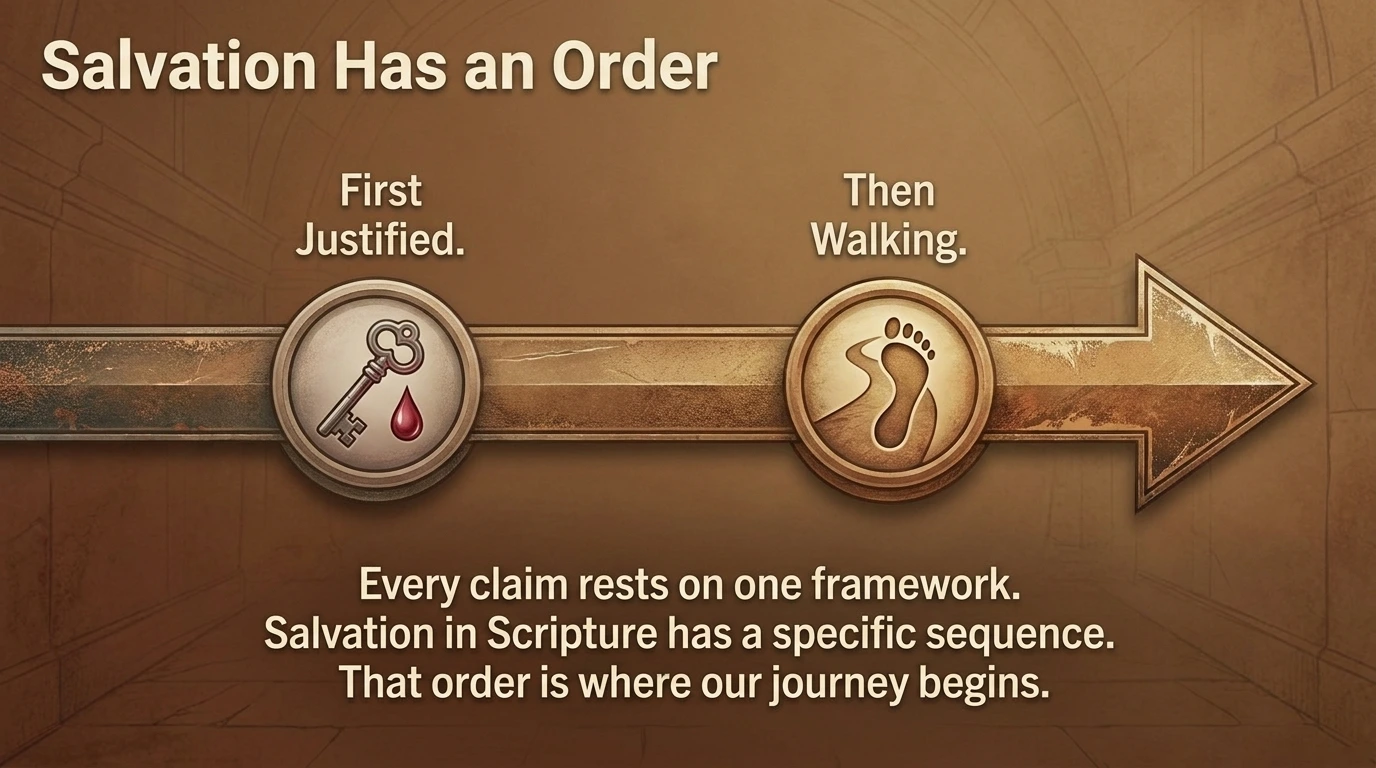
Every claim in this book rests on one simple framework, and so that framework must be laid out first. Salvation in Scripture has an order, and that order is where we begin.