The Holy Temple · Chapter 1 of 45
Solomon at the Dedication
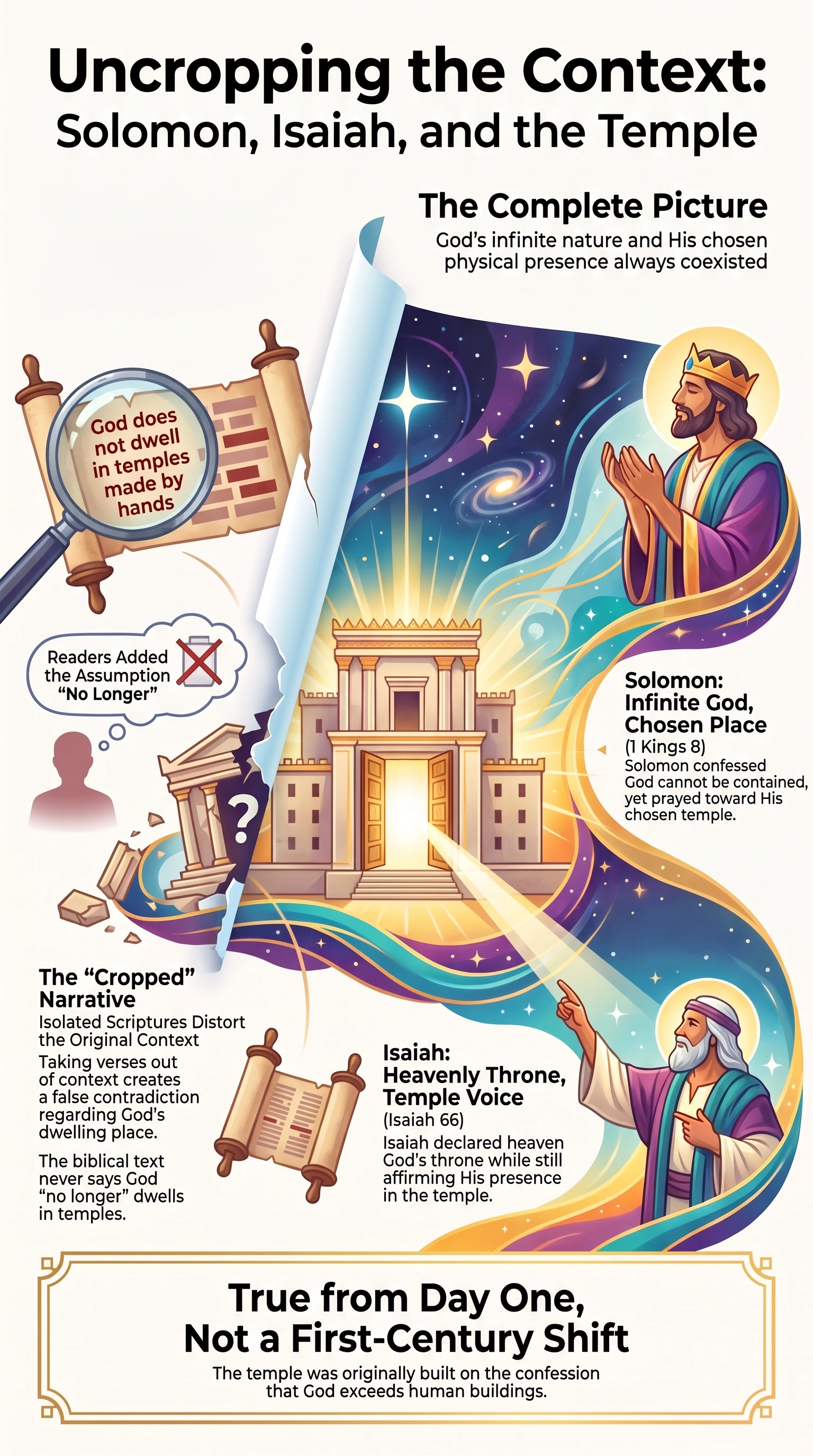
Picture a photograph of a man with his fist raised and his mouth wide open, as if he were shouting at someone in anger. Now widen the frame. He is standing in a ballpark, on his feet with the whole crowd around him, cheering a home run. Nothing in the picture has changed. It was only cropped.

Many Christians have settled the question of the temple from a picture cropped in just this way: two lines of Scripture, one saying that “the Most High does not dwell in temples made by hands,” the other saying that your body is a temple of the Holy Spirit. Set side by side, those lines seem to decide it: God no longer lives in buildings, and the temple in Jerusalem, with the purity laws that guarded it and the feasts that brought the people up to it, belongs to a world that has passed.
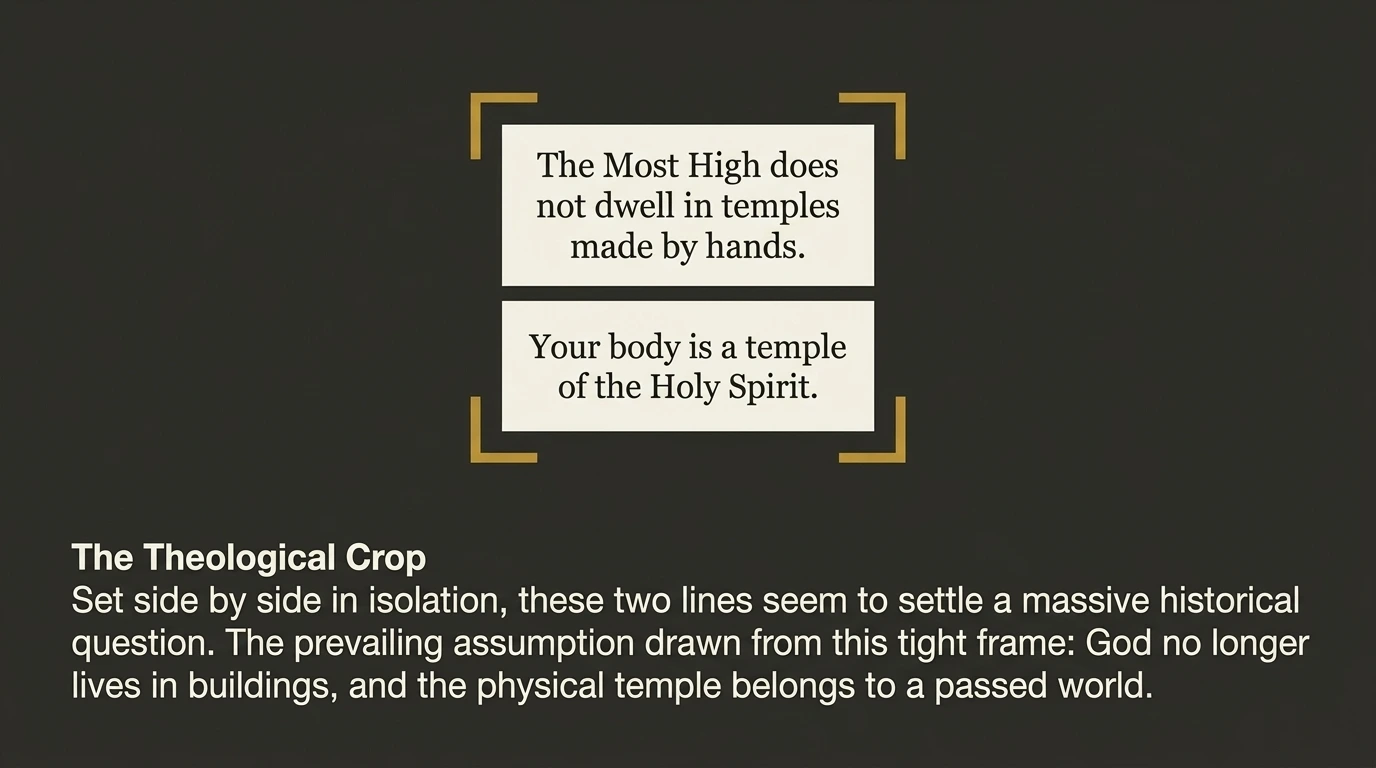
But those lines have been cut out of a larger picture. Each was spoken by someone, at a certain time, in a certain place, with other words standing before and after it. When the edges are put back, the picture changes. That is the work of this book: to put the edges back, and to read each passage in the order in which it was first spoken.
The Builder’s Confession
A man once built a house of worship for the God of Israel. He used cedar and cut stone, and he overlaid the inside with gold from wall to wall. On the day its doors first opened, this same man stood before the whole nation and said that no building could ever contain God.
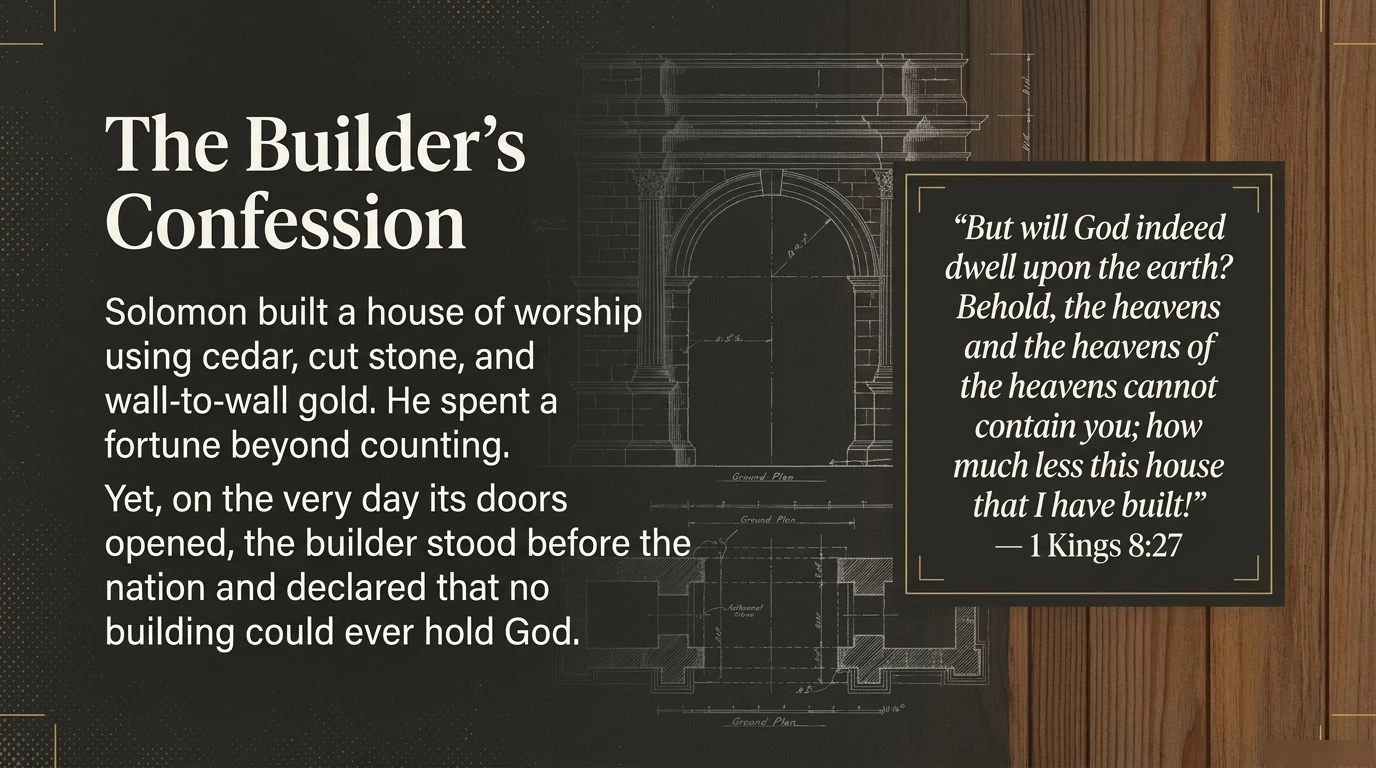
The man was Solomon. Years of labor and a fortune beyond counting had gone into the house, and when he dedicated it, he prayed this:
1 Kings 8:27 But will God indeed dwell upon the earth? Behold, the heavens and the heavens of the heavens cannot contain you; how much less this house that I have built!
His word is contain. Solomon confesses that God cannot be held inside walls, however fine the stone and however thick the gold.
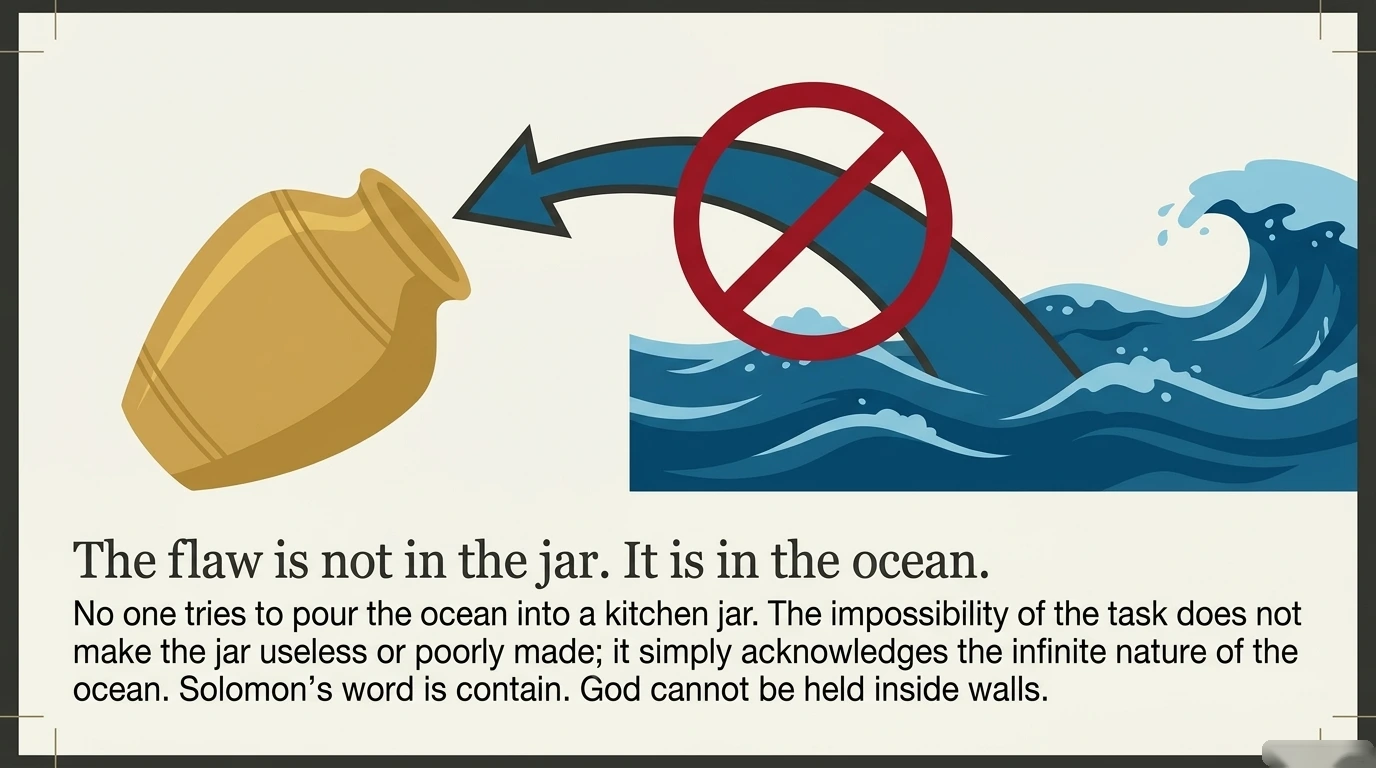
No one would try to pour the ocean into a kitchen jar. The trouble would lie not in the jar, however well it was made, but in the ocean. That is the confession Solomon made on the day he finished his work.
The Same Prayer, Two Verses Later
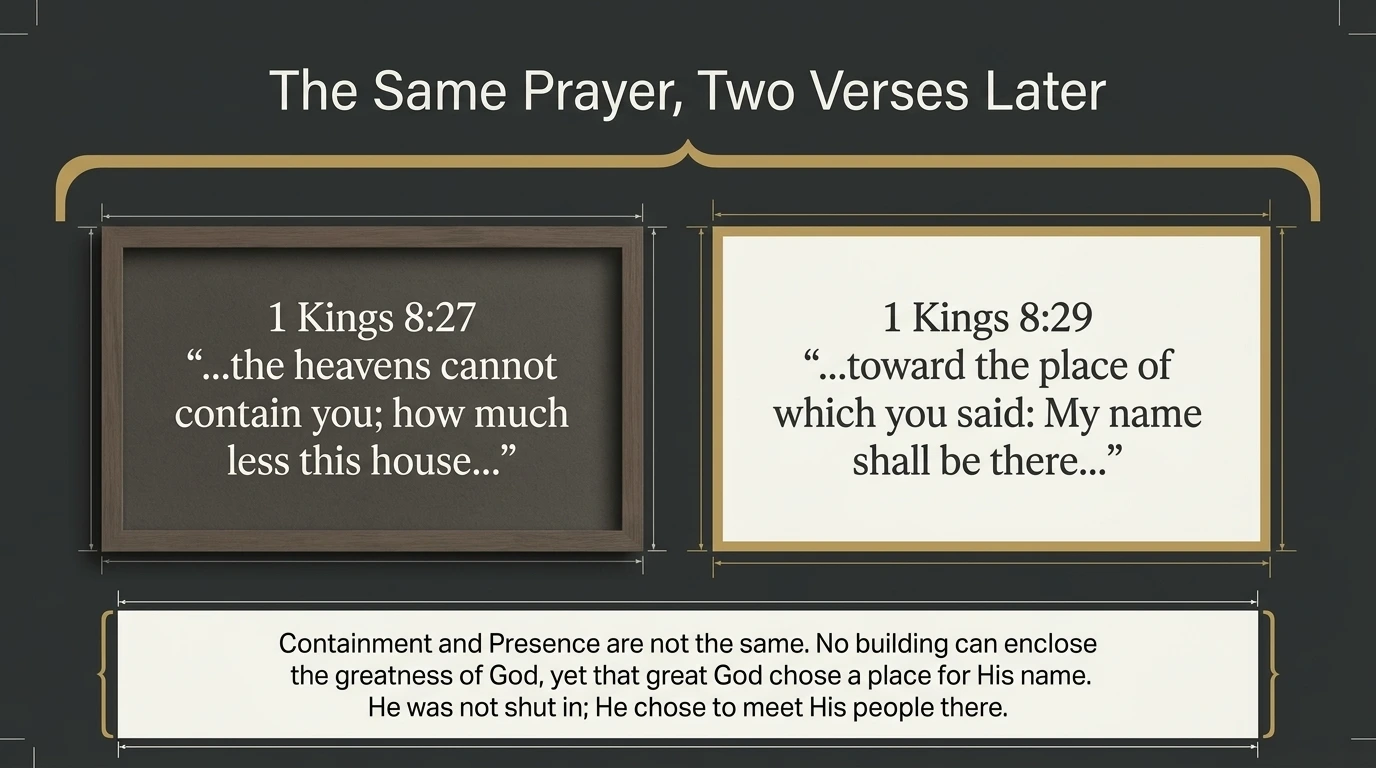
If we stopped reading there, we would be cropping the picture a second time. Solomon did not go on to call the house useless. Two verses later, in the same prayer, he said this:
1 Kings 8:29 that your eyes may be open toward this house night and day, toward the place of which you said: My name shall be there; to listen to the prayer which your servant prays toward this place.
In one prayer, then, Solomon said both things. The heavens cannot contain God. And this house stands in the place of which God said, “My name shall be there.”
The two do not conflict. No building can enclose the greatness of God, and yet that great God chose a place where He would put His name. No one shut Him in. He chose the place Himself, so that He might meet His people there.
Isaiah Says the Same
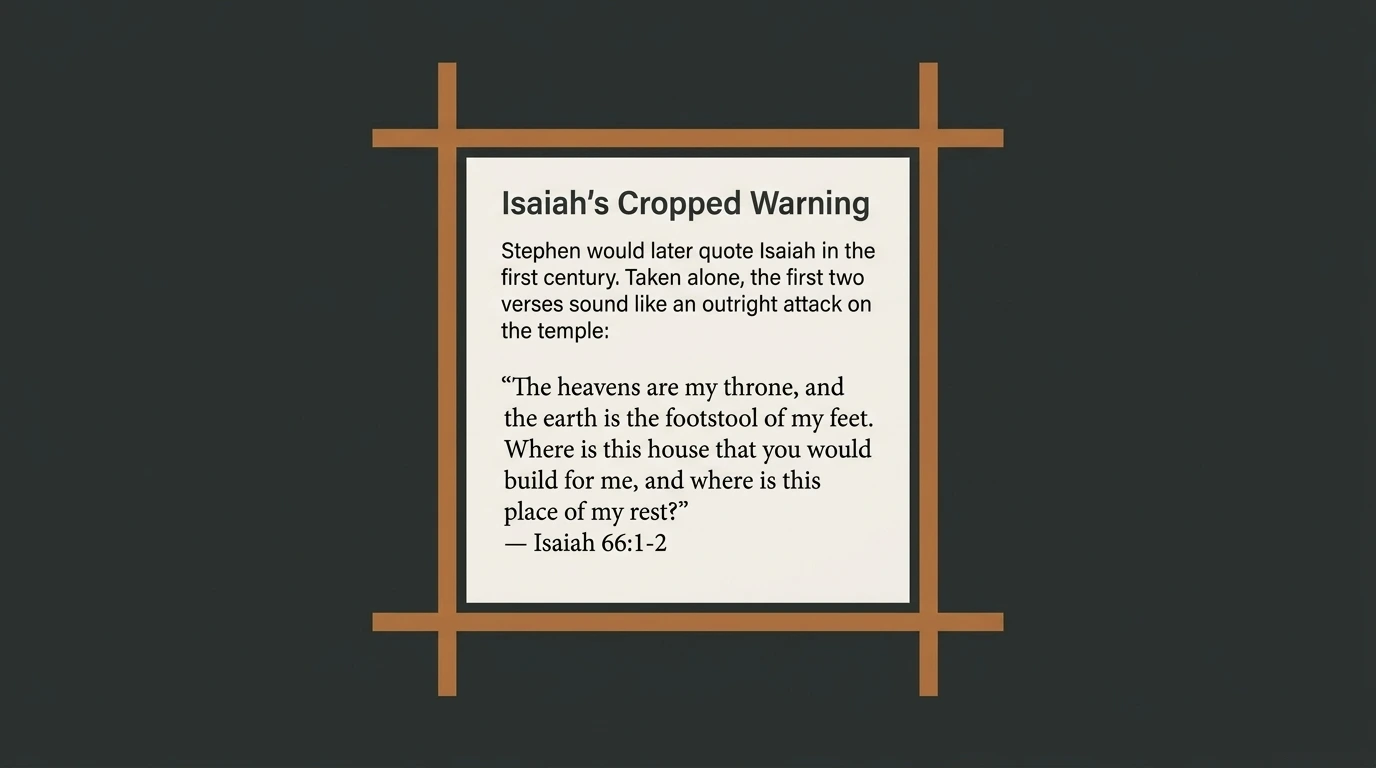
The words of Isaiah that Stephen would later quote hold the same two truths together. The chapter is often read as an attack on the temple, and its first two verses, taken alone, can sound like one:
Isaiah 66:1-2 Thus says the LORD: The heavens are my throne, and the earth is the footstool of my feet. Where is this house that you would build for me, and where is this place of my rest? And all these my hand has made, and all these came to be, declares the LORD. But to this one I will look: to the humble and contrite of spirit (ruach רוּחַ roo'-akh), and trembling at my word.
Now read just four verses further:
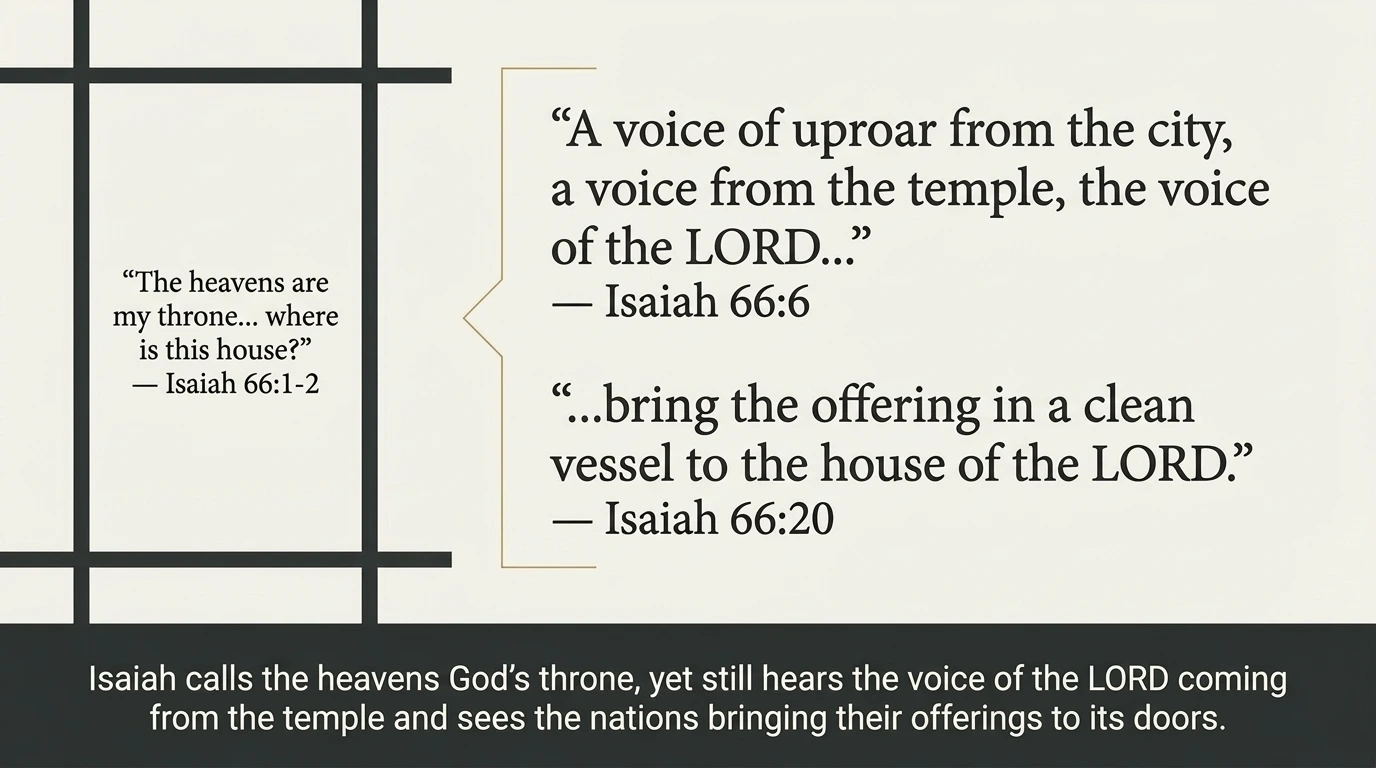
Isaiah 66:6 A voice of uproar from the city, a voice from the temple, the voice of the LORD rendering recompense to his enemies.
And near the end of the same chapter:
Isaiah 66:20 And they shall bring all your brethren from all the nations as an offering to the LORD, on horses and in chariots and in litters and on mules and on dromedaries, to my holy mountain Jerusalem, says the LORD, as the children of Israel bring the offering in a clean vessel to the house of the LORD.
Isaiah, who calls the heavens God’s throne and the earth His footstool, still hears “the voice of the LORD” coming from the temple, and still sees the nations bringing their offerings “to the house of the LORD.”
True from the First Day
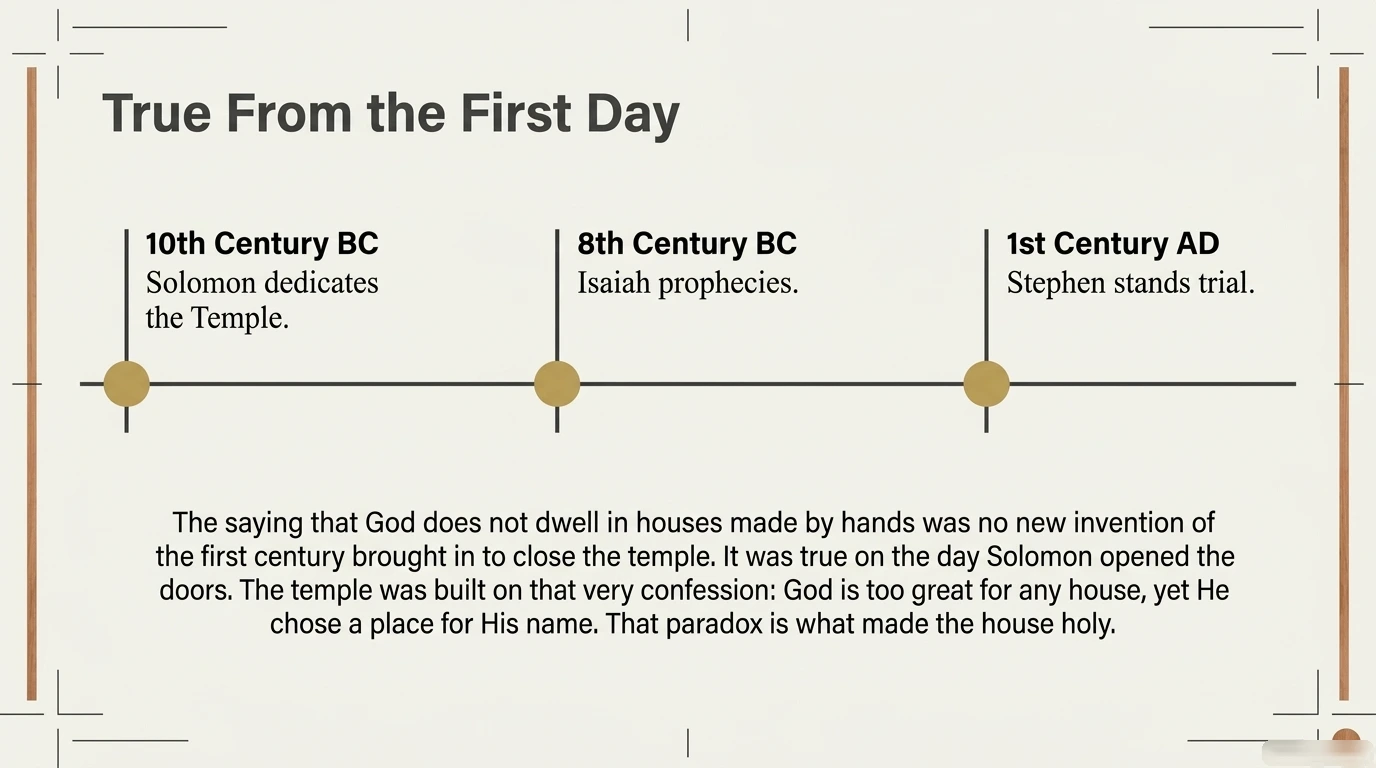
The saying that God does not dwell in houses made by hands was therefore no new idea of the first century, brought in to close the temple. It was true on the day Solomon opened the doors of the first temple. The temple was built on that very confession: God is too great for any house, and yet He chose a place for His name. That is what made the house holy.
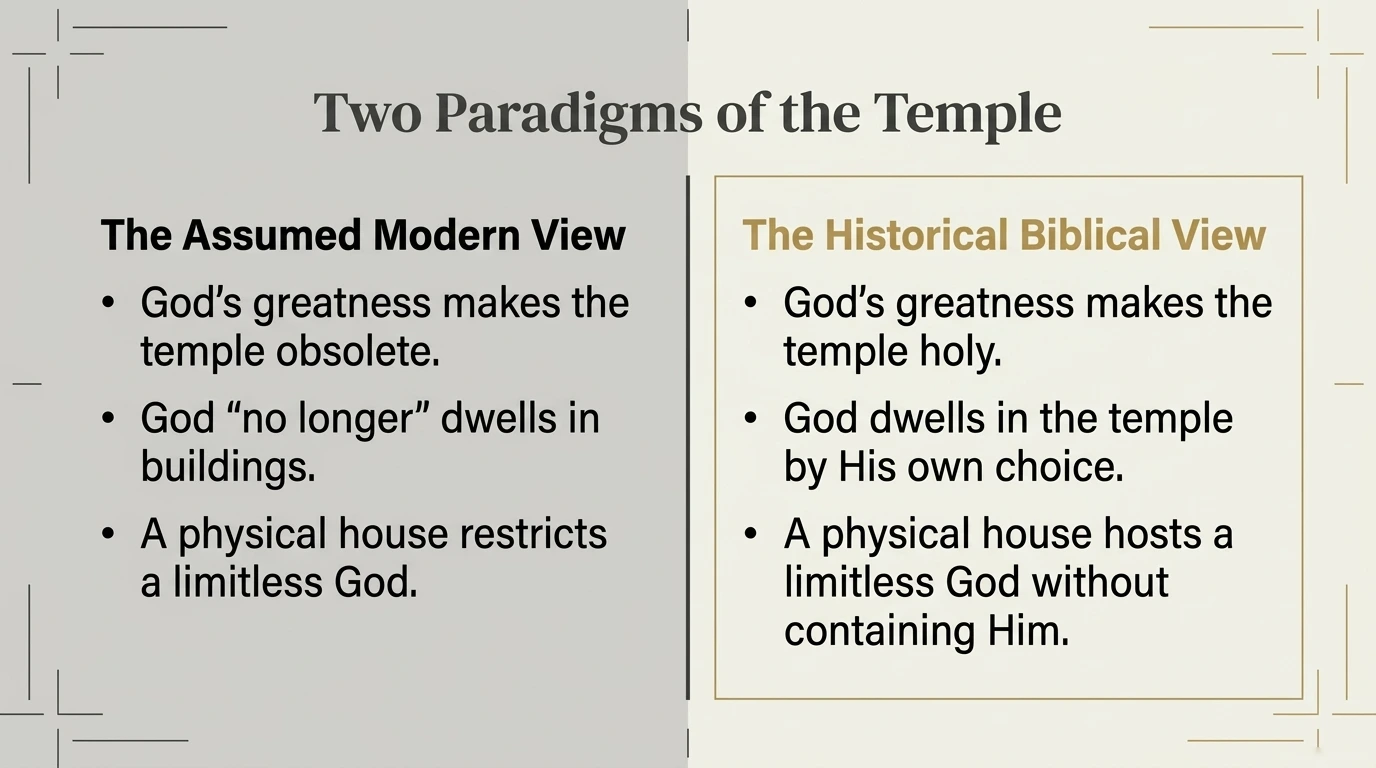
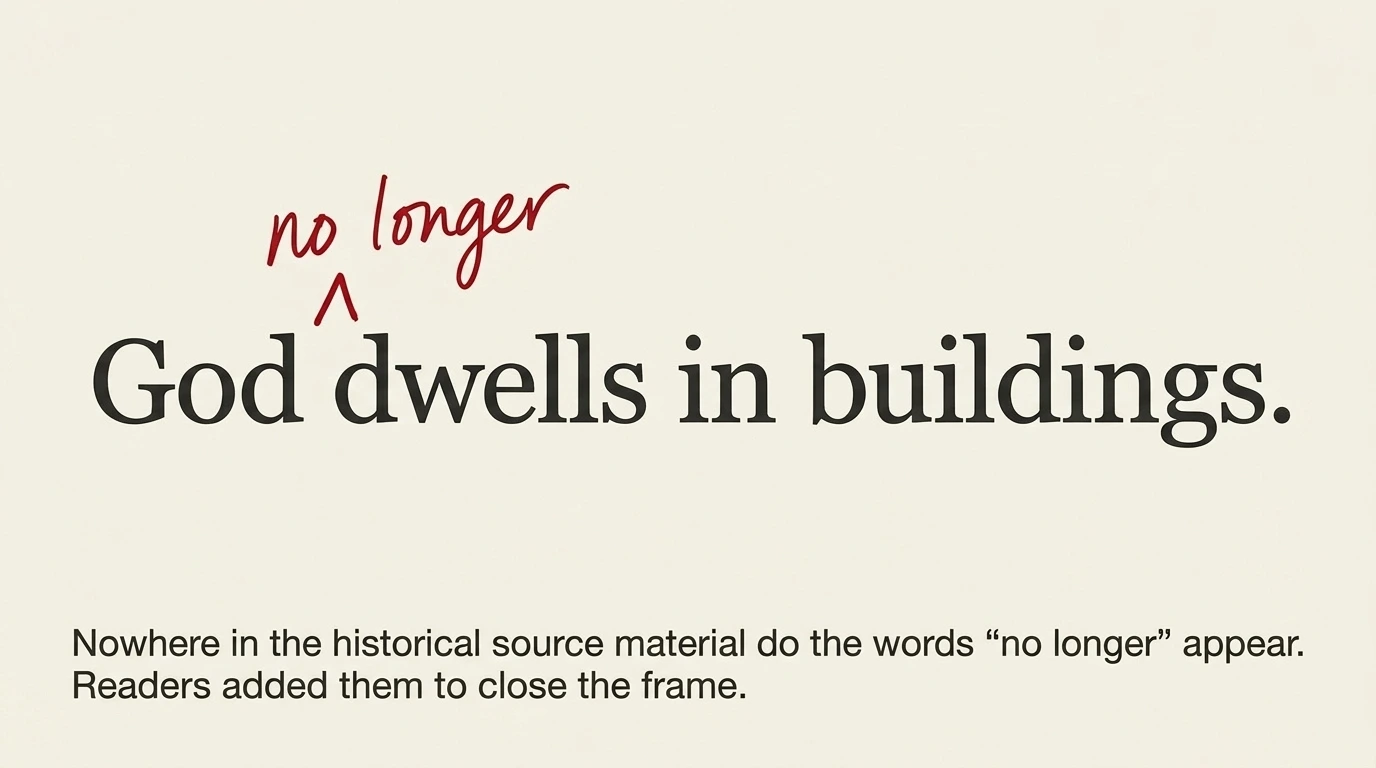
Nowhere in Solomon’s prayer or in Isaiah’s chapter do the words “no longer” appear. Readers added them.
One question remains. If this was known from the beginning, why did Stephen quote these words before the council in the first century, at the trial that ended with his stoning? The answer lies in that courtroom.